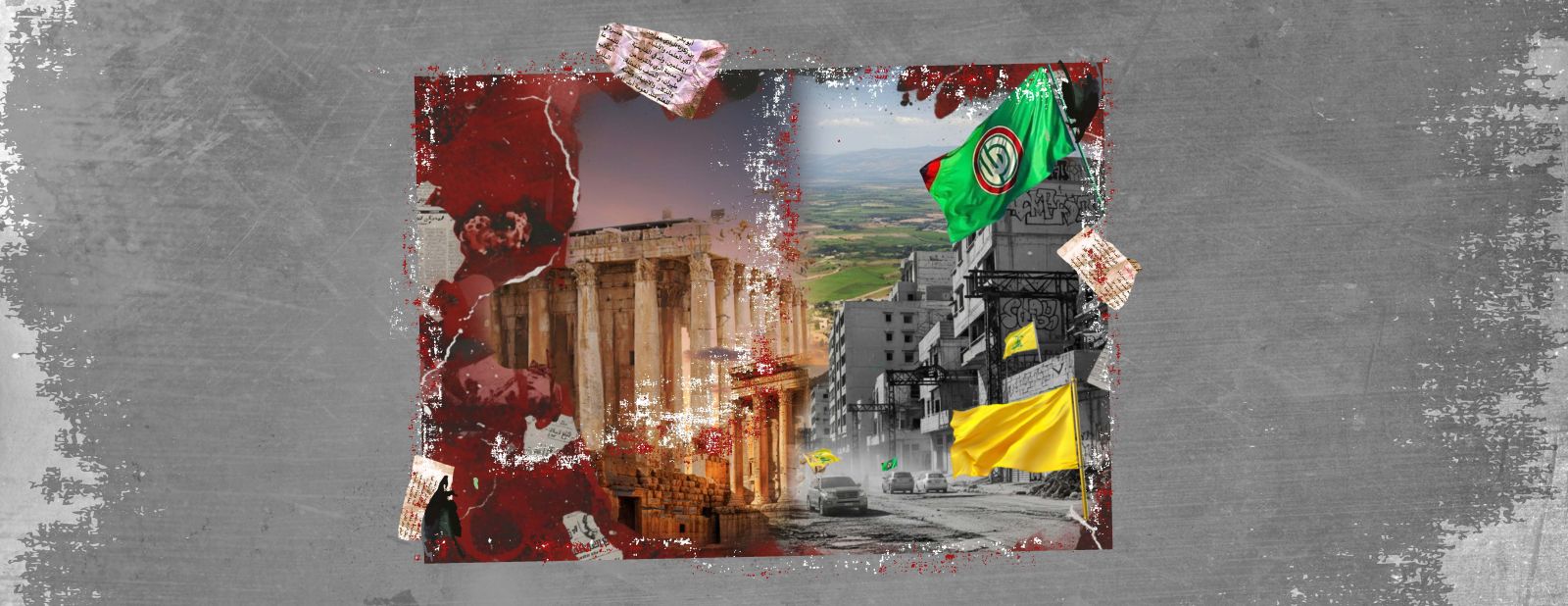
In the eastern part of Lebanon, where the smell of dry soil mingles with the sound of gunfire at weddings and funerals, lies the Baalbek-Hermel region, one of the most embodying areas of the complexities of the Shia identity in the country. It is not only a marginalized geography or an arena of influence for Hezbollah, but rather an area full of contradictions and affiliations, between those who see the resistance as a refuge, and those who feel that the State has never been an option.
In this region, citizenship is not only tested at the ballot box, but is also forged in «Husayniyya», in Ashura sermon, in schools, and while awaiting medical assistance from the «Islamic Health Authority». Loyalty is born not only of faith, but sometimes of need. In this region, overlapping narratives intertwine: an absent State, a present Party, a people living between longing for a republic they cannot see, and a reality governed by a system where doctrine intersects with service.
In Baalbek-Hermel, the question of «Shia identity» becomes a question about healthcare, education, water, and electricity, as it is a question about doctrine, resistance, and political history. Does this identity mean one thing? Are Shia people in Hermel similar to their counterparts in South? Or has regional specificity produced complexities within the single sectarian identity?
How is Shia identity shaped in Baalbek-Hermel? What keeps it linked to the resistance?Is people’s loyalty to Hezbollah a result of the State’s absence, or bypassing it? What is the position of the opposition within this society? How do schools, mosques, and the media play a role in shaping the «Baalbaki Shia individual»?
These questions are raised in the depths of the sociology of belonging, amidst the fragility of the official presence, and in a symbolic and social field that has turned Hezbollah into a parallel state, and the people into subjects of an absent State that they do not ask about, but have become accustomed to its absence.
In Baalbek-Hermel, political and religious affiliation is not born out of nowhere; it is the result of a social and cultural accumulation that is nurtured by collective memory, religious discourse, and early engagement with a value system that illustrates «affiliation» as an existential necessity, not just a political choice. Locals say they are raised on loyalty from childhood, making it a part of their daily lives.
Regarding this reality, Fatima Al Lakis, an Arabic language teacher from Baalbek, says, «Any talk against Hezbollah scares and threatens you. We need a State to protect us, not a Party with weapons overruling it». She points out that inhabitants «live between two major burdens: the absence of the State and its failure to offer any solutions, and Hezbollah’s control over every detail of their daily lives. The latter has failed to resolve their economic or social problems, and many young people are without job opportunities, and even expressing their opinions has become forbidden».
In the same context, Dr. Mustafa Mazloum, a political activist from Brital, asserts that loyalty in the region is not an individual decision as much as it is a heavy inheritance that is passed down just like the land, the name, and the language.Mazloum says, «The relationship between Hezbollah and the Shiite community in Baalbek-Hermel is built on intellectual and religious loyalty that is based on the concept of the Guardianship of the Islamic Jurist (doctrine of Wilayat al-Faqih), which is essentially an Iranian political and intellectual project aimed at exporting the Islamic Revolution and the Iranian regime abroad. This ideological loyalty has significant repercussions for the local community, making Hezbollah an alternative authority to the State and controlling all aspects of daily life».
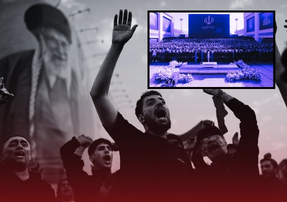
From the moment of birth, the process of shaping the Shia identity in this region begins through clear educational and social tools: Ashura ceremonies, martyrdom stories, pictures of leaders, childhood songs, party’s schools, mosques, and Husayniyyas.In a society where home is linked to the clan, the clan to the religious environment, and the environment to Hezbollah, it becomes almost impossible to separate «Shiite affiliation» from its political and social context.
Affiliation is not only taught, but practiced and rewarded. A child who memorizes Imam Hussein’s sermon on the «Tenth day» of Ashura is praised, and a teenager who participates in the activities of »Imam al-Mahdi Scouts is granted a distinguished social status. As for the young man who joins Hezbollah’s institutions - cultural, social or military - he is seen as a good son of society. Loyalty, in this sense, becomes a social behavior that ensures acceptance, integration, and protection, and instills a sense of affiliation that is difficult to disentangle even for those who hold deep doubts about some of Hezbollah’s practices.
However, affiliation here is not just a religious act, but rather a complex interlinking of tribal, class, and regional factors. The clan plays a central role in supporting or resisting the prevailing political discourse, and may create situations of dual loyalty between the logic of traditional power and the logic of the affiliation to a party. Economic class also creates differences in loyalty patterns: the poor and marginalized may find Hezbollah as a provider and support, while some educated or independent groups take a more critical, although shy, stance.
Affiliation here is not just a feeling, but the result of an accumulation of daily experiences: Who will provide you with medical care? Who will educate your children? Who will bury you with dignity? Who will protect you from the security turmoil? These questions transform loyalty from a theoretical matter into a daily living practice, and then into a conviction that is difficult to detach from it. Perhaps most importantly in this context is that affiliation not only produces loyal individuals, but also an integrated system of values, symbols, and rituals that make affiliation seems natural, even «obligatory» to many. The Shia identity in Baalbek-Hermel is not imposed by force, but rather is built with precise social craftsmanship, beginning at home and not ending at the Martyrs’ Shrine.
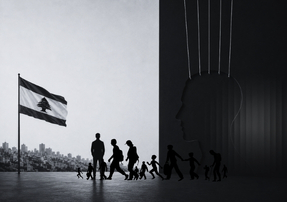
In Baalbek-Hermel, the State is not presented as a natural reference; it no longer exists as a realistic option in people’s consciousness or in their daily lives. For decades, official presence has been gradually emptied in favor of a parallel authority that controls all aspects of life: from health to education, from security to food, from aid to burial. This parallel authority is not hidden, but rather exposes its presence openly and with a clear ideological structure, represented by Hezbollah, which not only manages public affairs but also seeks to shape the society itself according to its ideological vision.
People in the region became dependent on Hezbollah institutions rather than the State. They no longer go to the ministries or wait for court rulings, but rather the directives of the »region’s official. «Dr. Mustafa Mazloum describes this reality by saying, «Hezbollah has become an alternative authority, and the absence of the State reinforces its presence. The weaker the State, the greater the Party’s influence, and more the formal legitimacy declines, more the legitimacy of weapons and resistance system expands«.Hezbollah’s intellectual background is derived from the Iranian concept of the Guardianship of the Islamic Jurist, which forms the backbone of its ideology, and transforms loyalty to Hezbollah from a local affiliation to an extension of a regional policy and an imported political thought. This makes Hezbollah not just a local political force, but an ideological project that extends across the society and influences every detail of the daily life».
Accordingly, Hezbollah does not hide its intellectual background, which is derived from the Iranian «Guardianship of the Islamic Jurist», nor does it deny its ideological and political loyalty to the Supreme Leader in Tehran. This background is no longer merely a religious reference; rather, it has transformed into an authoritarian model that is being replicated in institutions and society, at the expense of the pluralistic civil Lebanese model. Thus, the State, in its constitutional sense, becomes marginal, while Hezbollah has become the center, not as a political partner, but as the de facto ruler. It exercises power outside of State’s institutions, dealing with official institutions as a formal cover-up to conceal its grand project: transforming society into an extension of the «Islamic State», albeit in a soft and gradual manner.
Regarding people’s reliance on Hezbollah rather than the State, Fatima Al Lakis adds, «Even for simple things like medication or receiving aids, we find ourselves needing to turn to Hezbollah institutions, not to the State. The concept of the State has become something absent for people, and Hezbollah is the one that decides and solves problems. Young people are being raised to believe that loyalty to the resistance is more important than their rights or laws».
The most dangerous thing is that Hezbollah does not just fill a void, it procreates the State’s absence, maintaining it as a condition for its existence. The weaker the State, the greater Hezbollah’s influence. The more official legitimacy declines, the more the legitimacy of «weapons» and the «resistance system» expands. This is no coincidence, but rather it is a part of Hezbollah’s logic of power, whereby a real State cannot coexist with an ideological project that rejects the concept of national sovereignty as understood in democratic systems.
Even the language has changed. A national no longer says, »The State has failed«, but rather, «The State has nothing to do with it». The concept of »resistance« has come to cover up every service failure, every corruption, and every lack of accountability. This is not resistance, but a complete expropriation of the State in the name of the cause.
In this context, it is necessary to ask: What is the difference today between the State and Hezbollah in Baalbek-Hermel? The shocking answer is: There is no difference. The State has become merely an official seal of what Hezbollah actually decides.Who appoints at municipalities? Who chooses candidates for the elections? Who sets education policies? Who controls the local media? The answer is always: «Hezbollah».
The Shia identity in the region is no longer just a sect or a social spectrum, but rather an alternative state project growing within a failing state. The Shiite national is no longer asked for his opinion, but is instead asked to join, obey, and be grateful.
In Baalbek-Hermel, Hezbollah’s role is not limited to being an armed force or a political faction, but rather has become the primary provider of social and economic services. This reality is confirmed by Dr. Mustafa Mazloum’s testimony, «Hezbollah did not limit itself to military and political control, but rather became the primary provider of medical care, education, and economic support. This role creates daily dependency among the people, making loyalty to Hezbollah not just an ideological commitment, but a vital necessity to ensure the continuity of basic services».
Ideological loyalty that depends on nationals’ belief in the resistance project and the Guardianship of the Islamic Jurist constitutes part of identity, but functional loyalty, based on need and service, is what sustains Hezbollah’s continuity in social and political power. Many families depend on the Party’s hospitals, schools, charitable associations, and even the infrastructure projects it directly oversees.This functional loyalty becomes Hezbollah’s most powerful weapon, creating awide dependency across people’s basic needs.
Regarding this equation between doctrine and need, Ali Ismail, a construction worker from Brital, describes his experience, saying, «I am a simple young man who works in construction, and I have no affiliation with Hezbollah. I believe that Hezbollah has stolen our future, and our young people are dying in vain in wars that have nothing to do with us, especially in Syria. I also heard that drug trafficking is spreading in the region, and Hezbollah not only does not stop it, but is actually profiting from it. Society is being destroyed because of these problems, and people are frustrated and have no voice».
As for Rokaya Taha, a housewife from Hermel, she believes that the Party’s role in providing certain services does not release it of its responsibility for repressing freedom: «Hezbollah occasionally provides medical and social services, and that is something people appreciate. But there is no real freedom, and no one can express his opinion.Loyalty to Hezbollah has become like a religion, and everyone is forced to follow it. Our young people are being raised to believe that loyalty to the resistance is more important than the existence of state and laws. When we resort to the State’s bodies, we find everything broken and marginalized. Our life here falls between two burdens that we cannot free ourselves from».
This regime reproduces a cycle of dependency, where it becomes impossible to disengage without losing support and services. Many families refuse to confront or criticize Hezbollah for fear of losing medical, educational, or economic support not provided by the State. Herein lies the major dilemma: loyalty becomes more of a tool of social pressure than a free political choice.
The corruption that pervades Hezbollah’s work cannot be overlooked, especially in its funding sources, which are clearly considered suspicious. In this context, Dr. Mustafa Mazloum points out to dark economic dimensions, «According to reports from international agencies, there is confirmation on Hezbollah’s involvement in drug trafficking and sponsorship of this trade in Lebanon and other countries. This trade not only affects the local community, but is also used as a tool for political and economic pressure, thus, increasing the fragility of the social fabric».
Accordingly, Hezbollah’s financial resources, which include Iranian support and other non-transparent resources, as well as its investments in illegal sectors, most notably drug trafficking, are now threatening the social fabric in Baalbek-Hermel. The region is one of the most prominent areas for drug cultivation and trafficking in Lebanon, and «Hezbollah is accused of covering up these activities and preventing the State from exerting its authority to combat this scourge,» says Dr. Mazloum.
The matter did not stop there, he added: «It is believed that Hezbollah has invested commercially and regionally in drug trafficking to increase its financial income, which has led to the disintegration of the local community, the exacerbation of social and economic crises, and turning Baalbek-Hermel into an environment saturated with crime and drugs, which is completely contrary to the image Hezbollah seeks to impose as a protector of society».
As for the military intervention in the Syrian war, it is Hezbollah’s biggest misadventure in the region. Hezbollah’s entry into Syria was not just a strategic choice, but rather an ideological decision linked to the Iranian background of the project of the »Guardianship of the Islamic Jurist». Thousands of young Lebanese men from Baalbek-Hermel paid with their lives as a result of these interventions in a war that is not at the core of their national issues, but rather part of complex regional conflicts. Dr. Mazloum says about this,
«Hezbollah’s intervention in the Syrian war has been disastrous for the region’s youth. Thousands of young men have gone to fight in Syria, far from their homeland, in a war that was not for them and serves only the interests of the Syrian regime and Iran. The partial fall of the Syrian regime or the erosion of its influence sparked new conflicts and crises that have not ceased to this day, and led to the forced migration and destruction of entire communities in Baalbek-Hermel».
He continues, «Hezbollah built its image on the idea of resistance, but in reality, it is part of a bigger problem. Its political culture, imported from Iran, perpetuates a repressive religious state within Lebanon, not a democratic civil state that respects diversity and rights. This is besieging the thinking of young people and preventing them from unleashing their potential for real change»
With the fall of the Syrian regime, which Hezbollah had sought to support with all its might, conflicts increased and interventions multiplied, further complicating the regional situation and negatively impacting Lebanon’s chances for stability and development. Today, the Shia identity in Baalbek-Hermel appears to be imprisoned by a regional ideological and military project, far from building a just civil state that serves its nationals.
However, the question remains: Are there real alternatives within the Shiite community in Baalbek-Hermel? Can independent factions or civil movements compete in an environment dominated by Hezbollah’s economic, military, and social power?
Despite Hezbollah’s clear dominance in Baalbek-Hermel, the region is not devoid of opposition voices or independent movements seeking to present different visions from the path imposed by Hezbollah. These voices, despite their limited reach and power compared to the Hezbollah’s ability to control the situation, reflect growing popular discontent with the reality of political and social dependence and the monopoly imposed by Hezbollah on decision-making and control.
This opposition ranges from individuals and civil society organizations calling for strengthening the role of the State and enforcing the law, to some political parties trying to offer alternatives, despite the difficulty of breaking through the local arena, which is controlled by Hezbollah’s security and social arms. Despite the dominant nature of the «Shiite duo» dominance over the political and social scene in Baalbek-Hermel, civil and popular attempts have emerged in recent years to express independent alternatives. These initiatives remain limited in their impact due to the Party’s grip and the economic and social circumstances, but they express a local need for a different discourse based on citizenship and accountability rather than political loyalty. Among these voices emerged associations such as the «Lebanese Organization for Studies and Training», which is active in citizenship programs and women and youth empowerment, and the «USPEAK» association, which works to spread the culture of democracy and transparency and to strengthen civic engagement in Baalbek. Local civil lists such as «Baalbek Madinati» and «Hermel for All» also ran in the municipal elections against the duo’s lists, albeit with limited resources, alongside the Union of Associations in Baalbek-Hermel, which brought together activists from the civil society, and the October 17 movement to offer electoral alternatives.These initiatives, although they have not yet formed a broad movement capable of changing the balance, are an indication of the presence of a civil movement in the region seeking to instill a culture of citizenship and to break the stereotype of complete adherence to Hezbollah’s discourse.
In some cases, young men and women who believe that the Shia identity in Baalbek-Hermel cannot be reduced to the framework of armed resistance alone are emerging. They seek a broader vision that prioritizes economic development, personal freedoms, and civil rights.
Political activist Dr. Mustafa Mazloum is considered one of the opposition voices within the Shiite community. In his interview, Mazloum explains how the locals’ connection to Hezbollah is based on an ideological foundation linked to the Iranian concept of the «Guardianship of the Islamic Jurist». But this ideological connection does not necessarily reflect the people’s true interests in building a stable national state, he explains,
«The opposition exists, but it faces major challenges, including security restrictions, media blackout, and social marginalization. Any attempt to offer civil or national alternatives is met with communities’ fear of being accused of treason or deviating from the sectarian consensus. As a result, building an alternative project is considered a very difficult task, but it is necessary to restore the reputation of the civil state».
He continues, «Hezbollah built its image on the idea of resistance, but in reality, it is part of a larger problem. Its political culture, imported from Iran, perpetuates a repressive religious state within Lebanon, not a democratic civil state that respects diversity and rights. This matter besieges the thinking of young people and prevents them from unleashing their potential for real change».
Mazloum points out that the real crisis in Baalbek-Hermel is not just Hezbollah’s control through weapons, but rather its dominance over all social, economic, and political aspects of life,
«There is systematic deprivation, marginalization by the State, and an absence of institutions that are supposed to provide job opportunities and services. With this deficiency, corruption is increasing and drug trafficking is expanding, which Hezbollah covers up and uses as a tool for political and economic pressure. This has made Baalbek-Hermel a devastated community, suffering from deep problems in education, health, and security».
Ali Ismail adds from his realistic perspective, «Personally, I believe that if there were independent movements, it could be an opportunity for young people to express their ideas. But the reality is very difficult, because Hezbollah controls everything, from work, to school, and even aids. Anyone who tries to raise his voice against Hezbollah faces great difficulties»
These voices, despite all the restrictions and sieges, confirm that the division within the Shiite community in Baalbek-Hermel is not only between Hezbollah and the State, but also within the fabric itself, between those who choose armed resistance as a central identity, and those who desire a broader vision focused on economic development, personal freedoms, and civil rights.
The future of the region, and particularly the identity of its Shiite sect, will only be determined through in-depth internal discussions that respect citizens’ rights to a dignified life, respect pluralism, and open the door to civil and national movements capable of asserting themselves on the political and social scene, far from the dominance of weapons and dependency.
The Shia identity in Baalbek-Hermel is not just a sectarian color drawn on the political map. Rather, it is the outcome of a complex process that begins at an early age, through educational institutions, the media, and the religious and political discourse that is broadcasted daily. In this region, education is not only considered a means of imparting knowledge, but also a tool for shaping a comprehensive consciousness that aligns with a specific political and religious project, fosters loyalty to Hezbollah, and defines the framework within which young people act.
Hezbollah’s schools and educational institutions focus on instilling concepts of loyalty to »resistance« and the »Guardianship of the Islamic Jurist«, while highlighting Hezbollah’s role as the sole protector of society against internal and external threats. This education often marginalizes critical thought and sets a narrow ceiling on expression, turning education into a tool for instilling ideology rather than broadening youth horizons.
Regarding the educational dimension of this role, Dr. Mustafa Mazloum explains, »The educational process here is not innocent. It is designed to instill early loyalty in children and adolescents and craft their intellectual dependence on Hezbollah’s discourse, rather than encouraging them to think independently. This causes many to associate their personal and social future directly with affiliation to the Party, rather than to the ability to build their future freely«.
Through her daily experience in classrooms, Fatima Al Lakis adds, «I am a teacher and I notice how students are affected by everyday discourse, whether at school, in the Husayniyya, or even at home. Many young people believe that loyalty to Hezbollah is the only path to success and security, and this affects how they think and make future choices».
In the media, the Hezbollah’s influence is evident through its complete control over public discourse, with its affiliated media outlets imposing their narratives and suppressing any opposing or alternative voice. The media here does not just report the news, but it creates a stylized reality that covers up the crisis, justifies political and military interventions, and distorts those who try to criticize this hegemony. As a result, the Shia identity in Baalbek-Hermel has become a mirror image of Hezbollah’s discourse, with the shrinking of free spaces for dialogue and debate.
This reality creates a generation saturated with the discourse of «resistance», but lacking the tools for independent thinking and the ability to propose alternatives.A generation suffering from intellectual and political dependency, which deprives it of the opportunity to form a unified national identity and keeps it trapped in a vicious cycle of conflicting loyalties.
Ultimately, shaping the Hermeli Shia identity today is not just a struggle for political influence or social control, but a cultural and intellectual battle that threatens the future of the entire region, where religion is mixed with politics, and loyalty is imposed rather than built on freedom and choice.
Baalbek-Hermel... The Road to State and Dignity
It thus becomes clear that the «Shia identity» in the Baalbek-Hermel region is not just a superficial religious or political affiliation, but rather a complex fabric taking shape amidst regional and local conflicts, intertwined with factors of «doctrine», «loyalty», economic and social marginalization, and the deep crises of the Lebanese State.Hezbollah, as a political and military actor, controls a significant portion of this «Shia identity». It presents itself as a protector and provider of services, but at the same time, it plays a role that raises widespread controversy due to its involvement in regional wars and its connection to dubious financial sources that have negatively impacted the local community, particularly through its cover-up of the drug trafficking, which is harming the younger generation and exacerbating the region’s suffering.
The greatest challenge lies in the ability of the people of Baalbek-Hermel to transcend this duality between the «orbit of the resistance» and the «shadow of the State», and to rebuild a new societal awareness that believes the true future lies in an independent State that guarantees justice and development for all its citizens, regardless of sectarian and political affiliations. We must start from the ground up, by supporting education, developing economic sectors, strengthening State institutions, and opening the way for independent voices calling for real change, away from political and partisan monopoly.
In the end, the main question remains: Will Baalbek-Hermel succeed in breaking the restrictions imposed on it and reformulating the «Shia identity» within the framework of a civil state, or will it remain trapped in the conflicts of external axes and the control of militias? The answer is not easy, but it begins with acknowledging the painful reality and working together and seriously to build a better tomorrow that restores the dignity of Baalbeki and Hermeli and guarantees them a decent and stable life.