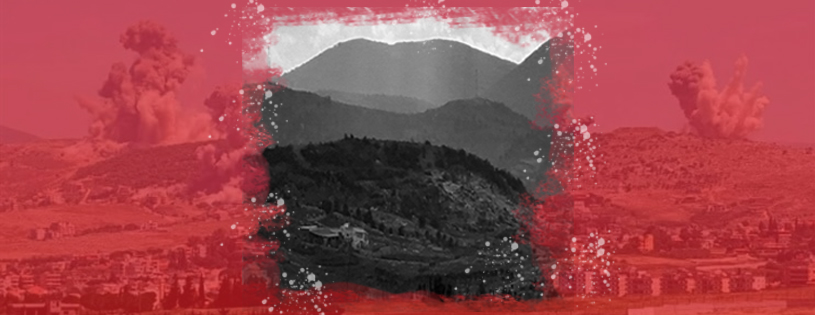
On February 18, 2025 the Israeli army withdrew from the southern border villages in Lebanon while maintaining its presence in five strategic points overlooking the settlements of Galilee, which are: Aaziyyeh Hill, Hamames Hill, Labbouneh Hill, Mount al-Deir, and Mount Blat. Crowds of people began heading to the far south of Lebanon to check the effects of the war and to closely examine their villages, homes, and livelihoods. The scenes seen with the naked eye were more than what was transferred by camera lenses and distant images. In addition to the unprecedented destruction of border villages, turning homes and residential landmarks into rubble, the environmental, food, and agricultural security are now facing a long-term and unprecedented threat. Life means were cut off, agricultural lands were significantly damaged, the tree cover and natural habitat were damaged, and wildlife conditions deteriorated. People noticed the traces of moving ancient olive trees to Israeli land, and observed the intentional cutting of trees and the pollution of the water harvesting ponds spread widely in the border villages. Moreover, the spread of unpleasant odors was a clear evidence of the heavy use of chemicals during the bombing. The whole scene suggests that the South in general, and the villages on the border in particular, will need decades to return to the period before October 8, 2023, when Hezbollah decided to open the «Support front» following «Al-Aqsa Flood Operation» in Gaza, opening the abyss of endless devastation in the South, and bringing about this great death.
The official authorities responsible for inspecting the environmental damage have not yet released final figures. Noting that in the period preceding this war, the country was suffering from a marked deterioration in its official institutions, which lead to a weak funding for scientific institutions and research centers. However, preliminary figures from UN-ESCWA and the «Conflict and Environment Observatory (CEOBS)» reveal a tragic scenario that threatens the long-term public health of citizens, their food security, the region’s ecological diversity, and the Natural environmental wealth.
What are the most significant risks to the environment in Lebanon due to the war? What are the means of recovery?
Throughout the war, media sources reported the Israeli military’s use of internationally banned white phosphorus, known for its direct effects on soil and groundwater. According to figures from the «National Council for Scientific Research», the Israeli army used 284 phosphorus bombs between October 8, 2023, and November 27, 2024, the date of the ceasefire. As a result, 2,192 hectares of land were burned, 873 of which were in dense forests. These fires led to the soil being saturated with pollutants, making it unsuitable for cultivation and grazing. The western sector in Southern Lebanon was the most affected by these fires, specifically in the villages located between the borders of the villages of Naqoura and Bustan, and most of the fires were of medium intensity. Whereas, a report prepared by the American University of Beirut indicated that at least 10,800 hectares were destroyed, according to satellite image analysis, an area four times larger than the capital Beirut.The same report confirmed that these fires caused extensive damage to forested areas along the 120-kilometer southern border, penetrating up to 10 kilometers inland in some areas. It also indicated that much of the land was no longer usable, not only due to soil contamination but also due to the burning of polyethylene irrigation pipes, many of which were severely damaged.
To date, there are no accurate reports or figures from the Ministry of Agriculture or the Ministry of Environment addressing the damage to livestock in the southern regions, nor is there any definitive official information that can confirm or deny the presence of white phosphorus and other chemicals in seawater. To date, the official relevant authorities, such as the «National Center for Marine Sciences», have not headed to the South to conduct surveys. Consequently, there is no evidence yet indicating that seawater is at serious risk of contamination.
Naqoura port was the most damaged one in this war, with nine boats sinking in its basin, and one boat disappearing and never being found. The director of «Lebanon Diving Center», Youssef Al-Jundi, told Van No. 4. that Israel deliberately cut the port ropes, which led to the sinking of boats. The beach and the sea in the South were affected by some raids that fell nearby, and there was a raid that fell near Abu al-Aswad area, another in the Shouran area north of Tyre, and one in the vicinity of Tyre port. Although the Tyre Coast Nature Reserve was not directly affected by the raids, the recent war halted foreign-funded studies and projects that had previously been on the reserve’s agenda. The war was disastrous for the fishermen, impacting them and their economic activity for nearly two years. They were initially affected by Israel’s interference with the Global Positioning System (GPS), which they rely on to determine the locations of freshwater and sulfur wells, caves, and the depth of water in the sea, and based on which they lay their nets. This interference resulted in the loss of many nets and equipment, and many fishermen, especially new and inexpert ones who rely exclusively on modern equipment for fishing during their night trips, became lost. The extended war contributed to a complete halt in their economic activity, which led to the damage to their equipment and the breakdown of their boats, which were rusted due to being docked in the port and not being moved for long periods.
The striking irony is the positive impact this war had on the marine environment. The Israeli military’s complete ban on fishing resulted in the cessation of random fishing operations. Fishermen often do not use sustainable fishing methods and do not adhere to the Ministry of Agriculture’s schedule. During an inspection conducted by «Lebanon Diving Center» after the war, they have noticed that fish populations have increased in areas previously abandoned.
Economically, marine tourism remains severely affected to this day, and is almost totally at a standstill. Boats used for recreation and leisure are completely out of service, and many yachts and other marine equipment have been damaged as a result of the bombing near the areas designated for their parking, as well as the thefts that the area was exposed to after its inhabitants left it. Professional and amateur diving has been completely absent from outside the region for more than a year and a half, while the majority of visitors who used to visit the region before the war were foreign tourists or Lebanese from outside the South Governorate.
It is worth noting that nearly four months after the end of the war, there have been no signs of any form of compensation from the official or Party actors in the region for the fishermen or workers in the maritime sector and those directly affected, with the exception of some unofficial entities in the city of Sidon, which have provided very limited aids.
In the same context, our sources learned that according to close persons to the employees at the Ministry of Agriculture all aid and benefits that could be granted to the fishing sector - like other sectors - are directly linked to the complete disarmament of Hezbollah. This also applies to any subventions or projects previously provided by organizations, associations, and international or non-governmental entities concerned with these matters, especially those supported by the United States and the European Union, and particularly following the new policies regarding the region.
On the ecological level, the consequences of the war, combined with global warming and the delayed rainy season, have created a different scene in the nature of the South. The fields in the South are witnessing a significant decline in the number of field birds, which farmers await and which help mitigate the impact of harmful insects on crops. The Indian myna (bulbul) and the Streptopelia (dove) are almost absent from the skies of the South in the post-war period. Despite the absence of scientific studies on the direct causes, the stunting of wild spring grasses that usually fill the valleys and foothills has also been observed. The continuous bombing has also exposed the valleys and mountains to erosion, and desertification has dominated the general scenery.
In turn, the «Green Southerners» organization stated in a publication that the war exposed the South to an environmental genocide against nature reserves and river basins, and endangered wildlife habitats. Due to the use of phosphorus, the death of the spur-thighed tortoises) was documented, and burrowing animals such as the Rock hyrax, the Meles, and owls moved away from their habitats. However, more than three months after the end of the military operations, the environment began to recover some of its health, with the appearance of the kite and the Eurasian hoopoe in the prairies, in addition to the reappearance of the red fox and herds of golden jackals in the outskirts of the towns of Bint Jbeil, Blida, and Aitaroun. Livestock groups returned to grazing the grassy fields of the villages on the border.
The engineer Mohammed Daibes told Van No. 4 that the figures of the Ministry of Agriculture indicate that more than 60,000 chickens died in the South during the war, as did more than 1,286 sheep and goats, and more than 309 cows, due to direct and indirect bombing. Meanwhile, Abbas Malkani, head of the Cattle Breeders Union in South, says that initial data indicates that losses are much higher. The number of cows in the South was estimated at 8,000, with 35 percent of that number lost due to the war. Thus, losses for cattle breeders alone amounted to one and a half million American dollars.
In this regard, Malkani also confirms to Van No. 4 that many farmers who remained in the South during the war deliberately destroyed their milk due to the lack of market. They also reduced the amount of feed given to cows to reduce milk production, leading to a crisis that continues to this day. This crisis began with a decline in fresh cow milk production in the Lebanese market and extended to the shrinking of areas allocated to livestock grazing due to the ongoing shelling in some regions and the burning of many grassy areas in the southern villages.
Today, farmers and livestock breeders in the South are the most affected by the repercussions of the war. After many farmers rushed to sell their cows for less than a sixth of their original price (a cow usually costs more than $2,700, but was sold during the war for less than $400), farmers lost their economic and livelihood security and their capital without which they cannot recover. They are now left to an unknown fate, as no official or local entity or a party has yet conducted accurate surveys and examined the losses of farmers, most of whom belong to the poor class. All leaks confirm that the active partisan groups on the ground are not interested in compensating the farmers. Despite the fact that Hezbollah’s Jihad al-Binaa conducted partial surveys after the end of the last war, there is still no evidence of any serious intention to pursue the survey or compensation, and no one has received any form of compensation.
While some expect to receive paltry compensation similar to that received after the July War (Hezbollah’s Jihad al-Binaa compensated at that time at a rate of approximately one-fifth of the price of each head of cattle), the majority of farmers are settling for the probability of not receiving even this small rate today, as all indicators point to a deep funding crisis for Hezbollah.
In an attempt to closely examine the deterioration of the agricultural sector after the war in South, we visited some agricultural stakeholders and got some testimonies:
* Mahmoud Issa, a farmer who has secured lands for more than thirty years, has 100 dunams (10 hectare or 100,000 m2) planted with wheat, lentils, and barley, which he exploits in the border village Ainata. He told us that he stopped visiting and taking care of this land for more than six months before the expansion of war in September 2024. After the war ended, he found all of his agricultural land burned, as the Israeli army had used incendiary bombs during artillery shelling, in addition to phosphorus.
With much resentment, Mahmoud speaks of the lack of any form of compensation, survey, or even an inquiry from any party or civil authority. Day after day, he becomes more certain of the absence of any form of compensation. He assures that after asking one of the actors in the region, he was told that he was not the owner of the land, and that if compensation would be granted, he would receive nothing as a third party. Mahmoud laughs in pain, as he still does not know the reason that let him incur all these losses.
* Hussam Ayyad owns agricultural tents in the Adloun and Loubieh areas of Sidon District. He confirms that the tomato and eggplant season was completely destroyed due to the war. The agricultural tents require daily care and systematic control of the irrigation systems, and many of the agricultural tents made of nylon were burned due to the intensity of the nearby raids. The crop was damaged due to the lack of care, and the effects of the war continue to this day due to the cascading impact of the disrupted planting schedule. Hussam, like others, confirms the absence of any kind of survey or compensation, noting that when he asks Hezbollah committees in the area, they assure him that there will be no compensation for this type of damage. In the same context, he questions the lack of responsibility for the ongoing damage by both governmental and party bodies. No one has conducted soil tests to determine its suitability for cultivation, and no one has informed the farmers about the proper handling of the land, despite all the talk about the repercussions of the war on the soil.
* Abdul Rahim Baydoun has been working in olive cultivation for twenty years. For the second year in a row, he lost access to his olive groves in the village of Mhaibib in Bint Jbeil district. Despite his sadness for not being able to harvest his olives and leaving them «untouched on the tree branches», he was optimistic that he would return just to see his groves, but tragically when he returned to Mhaibib after the military operations ended in late February, he found his lands completely burned. Abdul Hamid says angrily: «What upsets me most is that the parties that entered this war without our permission, we the owners of the land, did not offer us any support when we lost our livelihoods», referring to the absence of any form of responsibility.
The beekeeping sector, too, has been severely affected by this war. Ali Choucair, president of the Association of Farmers and Beekeepers of Renewed Lebanon, told us that bees are animals that need peace to maintain their productivity, and noise pollution can lead them to abandon their hives. The sounds of reconnaissance aircrafts have disrupted the bees’ nervous navigation system that allows them to return to their hives and pastures. The constant sounds of airstrikes have also affected their nervous system, increasing their violence. Choucair confirmed that losses to the beekeeping sector in the South exceeded 60 percent of the season’s value and these losses not only affected the apiaries, but also affected equipment, and sorting, packaging and maintenance methods.
* Ghassan Abdallah, who owns 60 apiaries in the Tyre region, confirmed that his business was severely damaged in the period preceding the expanded war. After the military operations expanded, he lost 45 apiaries due to the bombing, in addition to his equipment, and the burning of a ton and a half of packed honey. Ghassan indicated that he is not alone, as all of his friends have suffered losses of this kind, without any kind of compensation or mitigation of the damage.
Finally, preliminary World Bank estimates indicate that agricultural and environmental losses and damages resulting from the destruction of the livestock are estimated at over one billion American dollars.
According to agricultural engineer Mohammad Daibes, the «Litani River Authority» will begin conducting surveys in the South region in the coming days to accurately examine the remnants of the war and their effects on the river basin. This comes after recent general periodic tests revealed that the river’s water is currently not suitable for use due to exceeding the permissible phosphate levels. The war also caused a significant increase in phosphorus and phosphate levels, nearly 20 times the average over the past five years. These substances seeped into the river either directly or through polluted soil during the recent Israeli war. Although no measures have been taken to mitigate the risk of this pollution, the Authority confirmed that the pollution is likely to spread to groundwater and springs, causing long-term harm to the population.
It is worth noting that the presence of phosphorus in the soil directly limits plant growth. Although phosphoric acids are used as soil fertilizers, higher levels than allowed lead to harmful soil acidity, which reduces agricultural production and contributes to damaging its organic materials.
In a related context, Batoul Kassem Ali, Chairwoman of the Board of Directors of «Environmental Observers», spoke on her page about the need to be aware of the possible presence of toxic asbestos and its potential airborne due to debris from destroyed buildings and their remains, estimated at 350 million cubic feet, according to the «Conflict and Environment Observatory».
It is noteworthy that exposure to asbestos increases the risk of pulmonary fibrosis and lung, throat, and ovarian cancer. However, there are currently no live tests or official studies analyzing air pollution in the South in general, or in the villages on the border in particular.
Despite the release of many international reports calling for sustainable methods to address rubble resulting from wars that mitigate its long-term negative impacts, it appeared from the first moment the war ended that political forces were seeking to legalize dumping the debris from destroyed buildings into the sea. All data indicates primitive and chaotic handling of rubble in all regions. In the South, it is being collected in random landfills, while on the southern coast of Metn - the Southern Suburb of Beirut (Dahieh) - the Union of Municipalities of Dahieh is the entity responsible for conducting contracts and agreements for the removal of rubble and debris. Sadek Alawieh, a member of the Economic, Social and Environmental Council, confirmed in an interview with the Lebanese newspaper «An-Nahar» that rubble removal and demolition of buildings damaged by the Israeli aggression are being carried out in violation of the specifications approved by the Council of Ministers, and that the most frightening about these operations is their violation of public safety regulations.
For example, the Haret Hreik municipality was involved in an illegal landfill for war remnants in early February. The debris was amassed under the Sfeir Bridge, in a residential area crowded with residents who complained of odors and dust causing respiratory problems. The municipality, which cited the high cost of transporting the debris to legal landfills such as the Costa Brava landfill as an excuse, does not appear to be the only one adopting this approach. Ultimately, despite numerous objections from environmental activists and the rejection of some members of the Parliament of the idea of dumping the debris into the sea, as well as all reports highlighting its environmental damage and considering it a haphazard solution, it is clear that rubble from Dahieh is dumped into the sea in the Ouzai area, between Saint-Simon and the Ouzai port.