In addition to the near-daily targeting of Hezbollah fighters in southern Lebanon—which Hezbollah is keen to avoid portraying in the media as direct strikes against its personnel or positions—this month was marked by a prominent debate over Hezbollah’s weapons, a topic that dominated the Lebanese scene in general and the Shiite community in particular.
Ahead of the Government sessions on August 5 and 7, heated discussions erupted over the issue of “restricting arms to the state,” and thus disarming Hezbollah. The army was tasked with preparing a timeline to present at the beginning of September, later postponed to the September 5 session. While the move was hailed by the Presidency of the Republic and the Premiership as a pivotal step to restore state sovereignty and confine weapons to legitimate institutions, it also triggered sharp disputes among political forces and deepened internal divisions.
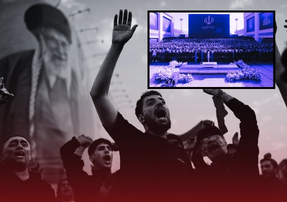
For parties opposing Hezbollah, particularly within the Christian political arena, strong support emerged for government and army efforts to monopolize arms under the Lebanese state, whether Palestinian or Hezbollah weaponry. The Lebanese Forces and the Kataeb Party were at the forefront of this support, joined by Sunni, Druze, and other Christian factions, all of which considered the step a bold move to restore state authority and protect the military institution. Conversely, Hezbollah and Amal ministers withdrew from government sessions, while the “Loyalty to the Resistance” parliamentary bloc described government decisions as “serving Israel” and a “grave mistake” threatening civil peace, warning of possible street mobilization to express rejection. Supporters of Hezbollah organized motorcycle rallies in Hezbollah strongholds, some extending into mixed-sectarian areas. Reports suggested that Hezbollah was directly behind these demonstrations.
Media outlets affiliated with or owned by Hezbollah—such as Al-Akhbar, Al-Ahed, and Al-Manar—focused on accusing the government of submitting to American and Israeli dictates, warning that its decisions risked dragging the country into civil war. These platforms also pushed a narrative that the government was ignoring security threats facing Shiites in the South and the Bekaa.
In parallel, Hezbollah’s Secretary-General adopted a religious-ideological framing in his speeches, describing any forthcoming confrontation as “Karbala-like.” Hezbollah’s media sought to portray that the “majority” of Lebanese opposed disarming the party, claiming that national interests required its retention.
At the same time, widespread distrust toward government measures grew within the Shiite public. Decisions had not translated into concrete reconstruction or the safe return of residents to frontline villages, nor were there international guarantees binding Israel to its obligations. Hezbollah media reinforced this sense of abandonment by depicting disarmament discussions as a trap targeting Lebanon’s Shiites. Party officials’ rhetoric varied by region to intensify these fears: in the South, emphasis was placed on the direct Israeli threat, while in the Bekaa, the focus shifted to dangers posed by Syrian armed groups.
Hezbollah-affiliated outlets also advanced the narrative that the Lebanese Army distances itself from government decisions, striving to avoid internal divisions or direct confrontation with the “resistance community,” as they described it. The September 5 Government session was framed against this backdrop.
Meanwhile, dissenting Shiite voices—such as the “Coalition of Lebanese Democrats” and the “Lebanese Shiite Gathering”—reiterated that arms should be exclusively under state authority.
In this climate, fears mounted, particularly within the Shiite environment at the popular level, that failure to find a solution or avoid internal escalation could pave the way for a major Israeli strike. Several media outlets reported displacement from Beirut’s southern suburbs and other Hezbollah strongholds, especially as Tel Aviv warned that the Lebanese government bears responsibility for any Hezbollah military activity. Between external pressures and internal divisions, the file remains open to scenarios ranging from gradual de-escalation to a slide toward confrontation that threatens both civil peace and stability along the southern border.