The Taif Agreement, in one way or another, marked a new beginning for internal Lebanese coexistence and external relations. Since then, one could say—though this statement is tinged with a degree of illusion—that we have lived for nearly thirty years under a political system and governance framework that are entirely different from what existed before.
From September 30, 1989, to May 25, 2000, the Lebanese were divided into those supporting the resistance movement aimed at liberating occupied land, and those who were either indifferent or too ashamed to express opposition. This division did not affect the first group, particularly under Syrian dominance.
After May 25, 2000, with the withdrawal of the Israeli army from Lebanese territories it had occupied, the voices of the second group grew louder. They were driven by a fundamental question regarding the necessity and relevance of the continued presence of the "resistance," especially in the absence of an occupying force. Some of those who had previously supported the resistance also joined in questioning its purpose. However, the sense of excessive power, bolstered by the withdrawal in 2000 and the propaganda that reinforced the notion of fatherly dominance to the point of infallibility, did not allow for serious consideration of this opinion or even the acknowledgment of the right to dissent.
Moreover, the resistance, which had once presented itself as a "liberation movement" against occupation and in the absence of a functioning state, evolved into an entity that capitalized on its gains and built sustainable private institutions, ultimately becoming a quasi-state that thrived on and consumed the resources of the legitimate state.
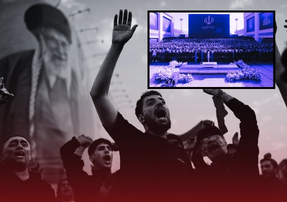
This model became more entrenched following the assassination of former Prime Minister Rafik Hariri in 2005 and the subsequent withdrawal of Syrian forces from Lebanon that same year. At this point, the "resistance" transformed into one of Hezbollah's projects, aimed at subjugating the state and bending it to serve its own goals and those of Iran. The concept of resistance was used as a tool to metaphorically unlock all doors, control and direct alternative narratives, stifle any opposing discourse, and justify actions against any dissenter—even to the point of murder.
Hezbollah became adept at both physical and political assassination, reveling in corruption and excelling at managing it. The party embraced schadenfreude, rejoicing in the bloodshed of every opponent, violating their dignity, and imposing its wars on everyone. From plunging the country in 2006 into a fierce war, to its active participation in the killing and displacement of the Syrian people; Hezbollah has continued to control all aspects of negotiations, signing of agreements in the name of all Lebanese, and dominating the course of the country’s natural resources.
Hezbollah also used force and repression to prevent people from demanding their most basic rights, positioning itself as the guardian of a corrupt system that plundered and killed its own people. Despite all this, the party demanded gratitude from the public, portraying itself as the "father/patriarch" who knows his children's interests better than they do, continuously imposing punishment to discipline them and ensure they follow the "right path" as defined by him.
Hezbollah's arrogance and blatant display of excessive power towards everyone have contributed to the shrinking of its popular base. Where its Secretary-General once addressed the peoples of the region, his rhetoric is now aimed exclusively at a portion of his audience, bound to him by sectarian, tribal, or financial ties. Over time, his speech has been reduced to that of a social media influencer, attacking and responding to every comment that does not suit him or causes unrest among his followers.
On October 8, 2023, Hezbollah made a unilateral and deliberate decision to engage in a war that later proved too far exceed its capabilities. It opened the southern front, giving Israel the excuse to destroy dozens of villages, thousands of homes, and inflict dozens of casualties among Hezbollah’s ranks—about 25% of whom were young men. In addition, the war targeted Hezbollah’s key leaders, both civilians and military, and exhausted its support base.
Nearly a year after this war, Hezbollah's weakened status has become apparent to all—friends and allies as much as opponents and enemies. The party’s inflated image has been punctured, revealing its vulnerabilities and making it an easier target. It is now on a sharp military decline.
As a Lebanese citizen and an opponent of Hezbollah on all fronts, I did not approve of this war, nor did I give any indication of a desire or capacity for the war, as I am still trying to recover from the losses inflicted by the corrupt system Hezbollah protects.
However, the reality today is that the most politically and morally appropriate action is to embrace Hezbollah's base more than ever before, avoiding any form of schadenfreude or reopening the old wounds caused by the party. A lack of desire for war must necessarily contradict engaging in games of provocation and mockery, which are often played after every crisis or blow the party or its followers suffer. Challenging Hezbollah and taunting its followers over their weakness is the quickest way to push them towards adopting suicidal options, and we all know the inevitable outcome of that.
We will not forgive Hezbollah for everything it has done to us. But today, we must seek to help it find a lifeline to escape the black hole that is pulling it down and dragging us along with it. Helping begins by reassuring the followers of Hezbollah that we can live together, that they have a place in this country, that they are like us, sharing in everything, and that they are not aliens. We are not seeking revenge, but rather justice, law, and a state that preserves their rights as well as ours.