The concepts of state and authority have evolved through various phases, transitioning from overlap to separation. The state can be broadly defined as a network of institutions responsible for organizing the affairs of society or the people. On the other hand, authority, or the regime, refers to a group of individuals tasked with managing these institutions and accountable for them. These two terms can be seen as a general definition of the modern or civil state.
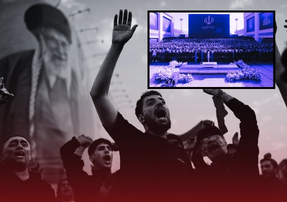
It is evident that the Arab region as a whole has not yet fully embraced the concept of the modern state. The religious state still enjoys relatively wide popularity, especially among political Islamist movements that have dominated the Arab political scene for decades. Analysts may differ on whether these movements’ adoption of political Islam is merely to attract followers or if it stems from genuine belief by their leaders. However, the outcome in both cases is the same in terms of its influence on people and the shaping of their political principles, which align with their religious beliefs based on the notion: "Our politics is our creed." Among the most prominent of these movements within Shia Islam is the one that emerged with the rise of the "clerical class" to power in Iran in 1979 under the banners of "Wilayat al-Faqih" (Guardianship of the Islamic Jurist) and "Exporting the Revolution." Under these two banners, Hezbollah was established in Lebanon following the Israeli invasion in 1982. Despite the numerous controversies surrounding Hezbollah, its relationship with the Lebanese state remains one of the most complex, with the party working diligently to keep this relationship ambiguous both for its supporters and its opponents.
Hezbollah's relationship with the Lebanese authority began in opposition to it. It is no exaggeration to say that Hezbollah's formation was initially more about opposing the Lebanese government than resisting the Israeli occupation. The party's early beginnings can be traced back to Hussein al-Musawi and his Iran-aligned faction’s founding of what was known as the "Islamic Amal Movement" after splitting from the "Amal Movement" due to the latter’s leader, Nabih Berri, participating alongside Bashir Gemayel in the "National Salvation Committee”. This committee held its first meeting on June 19, 1982, chaired by President Elias Sarkis, with the participation of Prime Minister Shafiq al-Wazzan, Foreign Minister Fuad Boutros, MP Nasri Maalouf, Bashir Gemayel, Nabih Berri, and Walid Jumblatt. The “Islamic Amal Movement” rejected the Amal Movement's involvement in this committee, which represented the "authority," thus forming the nucleus of Hezbollah, alongside a number of Lebanese and Iranian fighters whose deployment to Lebanon faced widespread Lebanese opposition, particularly from the Shia community.
Hezbollah's relationship with the state is based on the theory of Wilayat al-Faqih, which forms the party’s politico-religious ideology. According to this theory, governments during the occultation of the Mahdi are illegitimate unless they are ruled by the "Guardian Jurist" (Waleey al-Faqih), who acts as the “deputy of the Imam” in his absence. The current Secretary General of Hezbollah, Hassan Nasrallah, summarized the party’s vision for Lebanon, stating: "At present, we do not have a project for a regime in Lebanon. We believe that we must first eliminate the colonial and Israeli presence, and then the project can be implemented. The project we are committed to, as devout believers, is the establishment of an Islamic state and the rule of Islam. Lebanon should not be a singular Islamic republic but part of the greater Islamic Republic governed by the Mahdi and his rightful deputy, the Guardian Jurist, Imam Khomeini”.
Iran played a pivotal role in splitting the largest Shia organization at the time, the "Amal Movement," and founded Hezbollah. This resulted in the emergence of two competing Shia parties within the Shia community, each vying for its share of influence. Although Hezbollah's establishment was approved by Syria, the competition for influence between Iran and Syria in the Shia geographical sphere gradually escalated until it erupted into a bloody war between Hezbollah, supported by Iran, and the Amal Movement, backed by Syria, between 1988 and 1990.
Lebanon's Shia regions, especially the south, hold great geopolitical importance due to their proximity to the Lebanese-Palestinian border. Notably, this war mentioned above coincided with the signing of the "Taif Agreement” ending the civil war which Hezbollah opposed. After reaching an Iranian-Syrian understanding that ended the conflict by delineating spheres of influence between the two countries, and after Hezbollah's role within the Shia community had been solidified, the party decided to enter the state — the "Taif State" — without fully engaging in the “Taif” itself. The war with the Amal Movement can be seen as Hezbollah's first use of its weapons to define its role and share within the state.
Sheikh Sadiq al-Nabulsi described the agreement that ended the fighting between Hezbollah and Amal as a coexistence arrangement, stating it was “a formula where Amal coexisted with Hezbollah’s advantage in running the military operations against the Israeli occupation; whereas Hezbollah coexisted with Amal’s advantage in managing the internal political and institutional affairs, as well as the Shiite sect’s relation with the state and other sects and whatever is necessary in communicating with the outside world.".
Hezbollah entered Lebanese political life by participating in parliamentary elections beginning in 1992, securing seats as follows:
- 1992: 12 seats
- 1996: 10 seats
- 2000: 8 seats
- 2005: 14 seats
- 2009: 11 seats
- 2018: 12 seats
- 2022: 15 seats
When counting the seats of its allies, the combined numbers were:
- 1992: 48 seats
- 1996: 44 seats
- 2000: 33 seats
- 2005: 57 seats
- 2009: 56 seats
- 2018: 68 seats
- 2022: 57 seats
Hezbollah became a key player in Lebanon’s legislative body, actively participating in the development of laws and legislation. The party tries to exploit the official status of its MPs for illegal activities. For example, the United States imposed sanctions on MPs Mohammad Raad and Amin Sherri for allegedly "exploiting their positions in parliament." Raad was accused of meeting with Hezbollah-affiliated businessmen Ahmad Tabaja and Hussein Ali Faour and collaborating with them to bypass U.S. sanctions in order to finance the party; while Sherri was accused of “pressuring Lebanese financial institutions” to help Hezbollah evade sanctions. Several of Hezbollah’s MPs have also been implicated in corruption cases,
Hezbollah has participated in local elections since 1998 and has dominated most municipalities in areas under its control in the Bekaa, Southern Lebanon, and the Southern Suburb of Beirut, either alone or in alliance with the Amal Movement. In addition, Hezbollah has placed greater importance on mukhtar (local representative) elections than on municipal elections, before forming a duo with the Amal movement, as electing a “mukhtar” loyal to Hezbollah reflects the party’s influence in the particular area. Mukhtars are often more advantageous for Hezbollah than municipalities, particularly in facilitating party activities in rural areas of the Bekaa and the south.
After the Syrian withdrawal from Lebanon in April 2005, Hezbollah began participating in successive Lebanese governments. Hezbollah ministers have held several key ministries, including energy, labor, administrative development, agriculture, industry, youth and sports, health, culture, and public works. Its allies have also held numerous significant portfolios, such as foreign affairs, health, agriculture, environment, telecommunications, social affairs, industry, youth and sports, energy, agriculture, defense, interior, tourism, labor, education, finance, public works, economy, justice and information.
A review of ministerial positions shows that Hezbollah and its allies have controlled the Ministry of Finance since 2014, the Ministry of Energy since 2005, Public Works since 2014, Foreign Affairs since 2005; and the Ministry of Agriculture since 2005, with the exception of the Tammam Salam government (2014-2016). The same applies to the Ministry of Industry between, 2005- 2011, 2014- 2016 and 2020- 2021.The Ministry of Finance, in particular, holds significant importance for Hezbollah, as the party insists, along with the Amal Movement, that the finance portfolio should always be under Shia control. This demand, however, is not constitutionally mandated and violates the Taif Agreement, as constitutional expert Hassan Rifai stated.
In fact, the four key financial positions in Lebanon are distributed as follows: the Central Bank governor (Maronite), the Ministry of Finance (Shia), the financial prosecutor (Shia), and the head of the Court of Accounts (Shia). The first deputy governor of the Central Bank is also a Shia. Hezbollah’s insistence on controlling the Ministry of Finance, a position held by its allies since 2014, is part of its strategy to secure financial influence over the state.
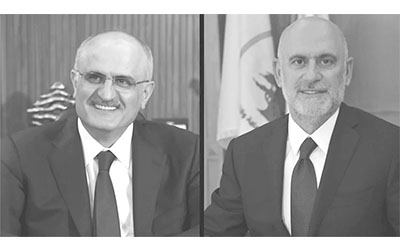
After the term of Central Bank Governor Riad Salameh ended, Hezbollah has blocked the appointment of a new Central Bank governor, as articulated by its Secretary General, and pushed for the first deputy (a Shia) to assume the governor’s role, emphasizing the party's desire to control Lebanon’s financial sector; hence holding with Amal movement the four key positions. The current finance minister, Youssef Khalil, played a role in halting the investigation into the Beirut port explosion of 2020 by refusing to sign a decree for judicial appointments in 2022, effectively stalling the investigation. Moreover, Hezzbollah’s Secretary General threatened judge Tarek Bitar in a televised speech. It is worth noting that Khalil’s move is illegal because the decree was signed by the Minister of Justice, and his own signature was only procedural and related to the mere presence of new funds for the decree.
In addition, the U.S. imposed sanctions on former Finance Minister Ali Hassan Khalil (2014-2020) for allegedly transferring funds from government ministries to Hezbollah-affiliated institutions to help the party evade sanctions. Khalil also reportedly exempted a Hezbollah member from paying taxes on imported electronic devices.
Before the financial crisis of 2019, Hezbollah leveraged its influence and control over the Ministry of Health to coordinate with pharmacies in the South, Bekaa, and Southern Suburb to supply its members and employees with medicine at reduced prices. However, after the crisis, the party purchased struggling pharmacies and flooded them with smuggled Iranian and Syrian medications through land, sea, and air borders. Under Saad Hariri’s last government and that of Hassan Diab, Hezbollah took control of the Ministry of Health and used it to finance its healthcare institutions and hospitals. During Minister Hamad Hassan’s tenure, Hezbollah allowed the import of Iranian and Syrian medicines into Lebanon, raising concerns about necessary health and legal standards. Dr. Mona Fayyad, a social psychologist, confirmed in an interview with Al Arabiya TV channel that Hezbollah appointed several loyalists to strengthen its presence in the ministry.
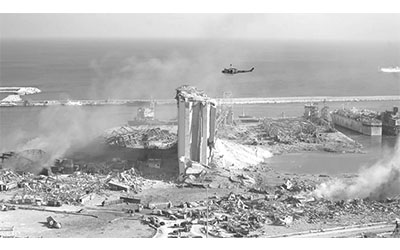
After its grip on the Ministry of Health, Hezbollah took control of the Ministry of Public Works for the first time in its history in the current government of Najib Mikati, through Minister Ali Hamieh. Dr. Khaled Al-Ezzi explained to Al Arabiya that Hezbollah had three primary reasons for taking over the ministry: overseeing the reconstruction of Beirut Port, which falls under the ministry’s authority; enhancing its control over the airport, and tightening its grip on border crossings. The Ministry of Public Works oversees land, sea, and air ports and is allocated a substantial annual budget. Al-Ezzi added that Hezbollah is using this service-oriented ministry for electoral purposes, which is why it insisted on holding onto it in this government. The most significant reason, however, is related to Beirut Port, as Hezbollah did not take control of the ministry until after the port explosion on August 4, 2020. Dr. Fayyad also noted that Hezbollah benefits from deals related to infrastructure projects, particularly in laying communication networks in municipalities, which are awarded to private companies. Moreover, Hezbollah sought oversight over the Egyptian gas import agreement to Lebanon, which the Ministry of Public Works is expected to supervise.
These analyses align with U.S. sanctions on former Public Works Minister Youssef Fenianos (2016-2020), who was accused of facilitating Hezbollah’s operations and securing government contracts for companies affiliated with Hezbollah, such as "Arch" and "Maamar", both of which are linked to Hezbollah’s Executive Council. Fenianos reportedly ensured these companies received government contracts worth millions of dollars. He is also accused of helping Hezbollah gain access to sensitive legal documents related to the Special Tribunal for Lebanon investigating the assassination of former Prime Minister Rafik Hariri.
In addition to appointing loyalists in several ministries, Hezbollah, in coordination with Amal Movement, participates in appointing first-category Shiite employees who number 33 out of 157 positions, according to “The International Information Company” specialized in producing statistics. The Shiite share, monopolized by the two parties, includes positions such as: President of the Lebanese University, President of the Higher Council of Customs, First Deputy Governor of the Central Bank of Lebanon, Director General of the Ministry of Economy and Trade, Director General of the Ministry of Social Affairs, Director General of General Security, Director General of Political and Refugee Affairs at the Ministry of Interior, Governor of Nabatieh, Secretary General of the National Council for Scientific Research, Director General of the Ministry of Information, Director General of Emigrants, General Inspector of Education, President of the Court of Audit, Director General of Ministry of Youth and Sports, Director General of the National Social Security Fund, Vice President of the Council for Development and Reconstruction, Director General of the Council of the South, Director General of the National Litani River Authority, a member of the Banking Control Commission, Director General of Technical and Vocational Education, Director General of the Economic and Social Council, Director General of the Tobacco and Tumbac Authority, President of the Executive Council of the National Pharmaceutical Organization, a member of the Higher Disciplinary Council, General Inspector at the Central Inspection, Head of the Legal Affairs Department at the Prime Minister’s Office, Director General of Investment at the Ministry of Energy, President of Intra Investment Company, Director General of Bank of Finance, Director General of the Southern Lebanon Water Establishment, Secretary General of Parliament, and Director of the Regie. Some observers claim that Hezbollah, through Wafiq Safa, the head of the Hezbollah’s Liaison and Coordination Unit, facilitated the admission of several cadets to the military academy in exchange for large sums of money. The United States has also claimed that Hezbollah is making significant efforts to appoint hundreds of its loyalists in various official state sectors.
Hezbollah has also seized control of the official Shiite institution, the Shiite Council, following the death of its former president, Abdul Amir Qabalan. The party’s dominance over the council became apparent in several instances, most notably during a recent visit to Bkirki, which was initiated by the Papal Nuncio and attended by all heads of religious sects in Lebanon. Sheikh Ali Al-Khatib of the council refused to attend the visit based on Hezbollah's wishes, despite Amal Movement's approval.
Some analysts suggest that Hezbollah has become more involved in naming employees from the Shiite quota, a responsibility that was previously delegated to Amal Movement according to the agreement that ended the war between them in 1990. The party and the movement even agreed on sharing the Shiite quota for vacant first-category positions in 2019. In 2022, this understanding between the party and the movement was evident again when the political aide to Speaker Nabih Berri, Ali Hassan Khalil, and the political aide to the party’s Secretary General, Hussein Khalil, visited Prime Minister Mikati and the three agreed on appointing a deputy director general for the State Security apparatus, which was vacant at the time. Additionally, journalistic literature has increasingly used the phrase "affiliated with the Shiite duo," signaling the extent of Hezbollah’s influence in the employment dossier, contrary to its claims.
However, Hezbollah’s relationship with senior state officials dates back quite some time, the most famous case being that of airport security chief Wafic Shqeir. The decision by the Fouad Siniora government at the time to dismiss him and shut down Hezbollah’s private communications network led to the party using its weapons internally during what became known as the May 7, 2008 events. These events concluded with the Doha Agreement, which granted Hezbollah and its allies 11 out of 30 ministers, effectively giving them veto power in the government.
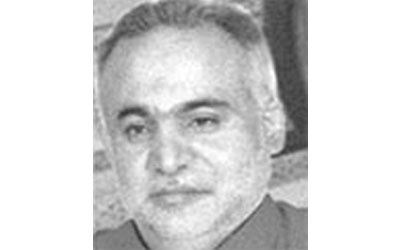
In 2018, an international investigation revealed that Hezbollah is deeply embedded within Lebanese state institutions, especially security ones. The investigation reported that Hezbollah established a special unit called the Security Unit or "Unit 900," led by commander Youssef Nader, also known by the aliases Nour ed-Din and Izz ed-Din. This unit interacts with numerous employees and directors of various sectors within Lebanese institutions. The investigation also pointed to Hezbollah’s presence at senior levels in the army, judiciary, banking, government offices, and ministries. The unit's primary function is intelligence gathering within the Lebanese state and its institutions. Coordination between government officials and Unit 900 is facilitated by Hezbollah security officers Saeed Bayram and Nazih Saleh.
Al-Hurra News Channel reported, based on testimony from a former Hezbollah member, that elements of this unit transport military equipment to areas not directly controlled by the party. Hezbollah purchases properties and lands under the names of companies owned by his Christian ally, “the Free Patriotic Movement” affiliates; and Unit 900 members transfer equipment to these properties. Members of this unit carry military identification cards issued by a security agency close to Hezbollah, facilitating their operations, which Hezbollah describes as external – meaning beyond its areas of direct influence.
Hezbollah has established a direct presence in state institutions and become a key player in monopolizing the Shiite share in Lebanon’s post-war sectarian power-sharing system. It is evident that Hezbollah, adept at political maneuvering, prefers having its allies occupy positions in state institutions rather than directly taking those roles itself. This strategy allows Hezbollah to exploit state resources for its own agenda while avoiding direct accountability for the country’s collapse in the eyes of its supporters. Furthermore, its allies, such as Nabih Berri, serve as important intermediaries with both internal and external actors.
It is worth noting that Hezbollah's involvement in the power-sharing system differs from that of other parties. While others seek to benefit from it for political gains, Hezbollah uses its position to advance its broader political project, both within Lebanon and within the Shiite community. This strategy often comes at the expense of the Amal Movement, as Hezbollah operates on the principle that a weakened state weakens Amal, thereby strengthening Hezbollah’s position. Despite not explicitly mentioning the "Wilayat al-Faqih" (Guardianship of the Jurist) in its 2009 political manifesto, Hezbollah’s long-term objective of bringing Lebanon under Iranian influence remains intact. The party leverages its presence in state institutions to advance this goal while simultaneously distancing itself from agreements it signs, including ceasefire agreements with Amal.
Therefore, Hezbollah’s defense of the Lebanese political system during the October 17 protests of 2019 was not because it seeks to protect the system, but rather because it is an influential partner within it.