Table of Contents
Introduction
Preface: The Lebanese Press: A Shining Face
Chapter One: Written Media: The Narrative of the Shiites with the Pen
1. History of Journalism among the Shia in Lebanon
2. Shiite Political Newspapers in Lebanon
3. Shia Writers in Lebanon
4. Shiite Partisan Newspapers in Lebanon
Chapter Two: Radio between the Deprived and the Voice of the Vulnerable
a. Shiite Radio Voices: Sherif al‐Akhawi and his catchphrase “Passable and Safe”
b. Shiite Radio Stations: Partisan and Religious
Chapter Three: Visual Media: The Distinctiveness of the Approach
1. Shiite Experiences in Visual Media
2. War Media: The Star of Axis of Resistance
Chapter Four: The Internet and Social Media: The New Weapon
1. Shiites and the Internet in Lebanon
a. Hezbollah and the First Cyber Initiative
b. Supreme Islamic Shia Council Online
c. Fadlallah and Alternative Media
2. Social Media: Between Mobilization and Cyber Armies
a. Amal Movement and Electronic Media
b. Hezbollah on Social Media: The Subsidiary Militaries
Conclusion
Appendix
Research Sources and References
Photos Sources and References
On February 5, 1909, Ahmad Arif al-Zayn published the first issue of the magazine Al-Irfan as an entirely Shiite product from a Shiite religious scholar. On June 4, 1991, Al-Manar TV Channel, affiliated with Hezbollah, a Shiite political and military party, began broadcasting. These and other sources, institutions, and personalities well-known in Lebanese media have left their mark on Lebanese media, in different forms and visions. Therefore, the objective of this research is to present the history of the Shia in media in Lebanon by presenting Lebanese Shiite media institutions and their stated goal, and by narrating the working method in order to reach results and recommendations related to this sector in Lebanon.
This research is divided into a preface and four sections. At the outset, it presents a historical introduction that provides a general overview of the state of journalism in Lebanon and key milestones. The first section of the research transitions l to delineating the narrative of the Shia in written media. This section includes a discussion of their history in the press, particularly in political and partisan journalism, highlighting notable figures. As for the second section, it is dedicated to radio and the position of the Shia within it. The third section then focuses on the presence of the Shia in visual media and r television channels, while the fourth section provides space dedicated to showcasing the presence of the Shia online and on social media platforms.
This research employs a narrative methodology due to its capability to cover various chronological periods , and primarily relies on open sources, including books, newspapers, magazines, websites, and social media platforms. The difficulty with this approach appears in the fourth section, as it is a contemporary subject that requires careful selection and diversity of sources.
At the beginning of the twentieth century, members of the Lebanese Shia community entered the arena of journalism and media. Despite not being pioneers in this sector, they faced challenges well; some excelled in various fields within this sector, assuming leadership positions, while some others distinguished themselves with innovative ideas and creativity.
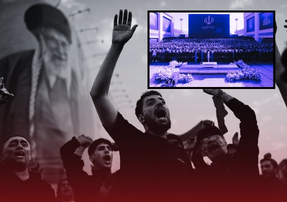
However, what can be clearly inferred is that the largest Shiite media system established in the last century is the “Hezbollah system.” It has provided Hezbollah with the tools capable of influencing and managing public opinion within the Shiite community, and, more broadly, influencing public opinion across Lebanon, as well as the creation of awareness and the construction of knowledge intended to be conveyed to the Shiite environment that Hezbollah is aiming to control. Hezbollah’s ownership and systemic management of media has given rise to significant influence of the group as it has placed substantial power in the group’s hands in the realm of soft and intelligent warfare,both domestically and internationally. Furthermore, Hezbollah has excelled in leveraging imagery to counter their adversaries, notably in actively documenting their military operations against them as part of a formidable psychological warfare.
In light of these findings, it is necessary to delve deeper into Hezbollah’s systematic media experiment and to further analyze it in order to understand it more deeply and accurately, and to identify the sources of its success, especially due to the fact that its media has played a significant role in the mobilization, attraction, military, and even security success of this group. Its media has also contributed greatly to concealing fundamental aspects of the group, and presenting it as a moderate faction that advocates for the deprived and the vulnerable in the face of "arrogance" and Western audacity, while monopolizing the term "resistance" as a registered trademark exclusively for itself. Furthermore, this experiment has generated new concepts and objectives for the media, particularly in the fields of war and security. In short, it can be said that the beginnings of Shiites in the media in Lebanon were enlightening, intellectual, nationalistic, and liberating, but today they have turned into a focus on achieving intelligence, power, and military priorities.