Table of Contents
Introduction
Chapter One: The Shias in their Rites and Rituals
Preface
1) Rituals and ceremonies
- Visiting the holy shrines
- The Day of Al-Ghadir
- The Fatimid Gatherings
- Ashura
- Ashura and Husayni Gatherings and Processions
- Food and drink
2) Commemoration of the Ashura in Lebanon
- Historical Introduction
- In the Ottoman era
- The beginnings: secrecy and abbreviation
- The expansion: Bint Jbeil as an example
- The Iranian ceremonies: the prevalence of Tatbir
- The rituals of Baalbek and Mount Lebanon
C. From the Beginning of the Mandate to the late 1960s: Arabization and Expansion
- The centrality of Nabatieh: the Dramatization and the Tatbir
- Tyre (Sur), Bint Jbeil, and Baalbek
- Ashura in Beirut: transcending sectarian borders D. From the Late 1960s to the Early 1980s: between the Ritual and the Politicization
- The Era of Musa Al-Sadr: Political Implications and Official Holiday
- The Iranian revolution and the Disappearance of Al-Sadr
- Iraqi Reciters
E. From the 1980s to the Present
- The Ceremonies of the Traditional Leadership
- The Ceremonies of the Supreme Islamic Shiite Council
- The Ceremonies of Amal Movement
- The Ceremonies of Hezbollah
- Early Female Presence
- Involvement of Leadership and the Iranian Revolutionary Guard
- After the Syrian Revolution: Expansion despite Caution
- The Iranian Embassy
- The Shirazi Movement
- Newly Invented Rituals
- Al-Ameliyya and the Continuation of the Traditional Ceremonies
3) Ashura in Politics: Exploitation and Implications
4) Control through Systematizing Ashura rituals
Chapter Two: The Literary and Cultural Movement of the Shia in Lebanon
Preface
1) A Historical Introduction up to the Beginning of the Ottoman Era
- Jabal Amel: The rise of Religious Sciences
- Tripoli: The House of Wisdom (Dar Al-Hikmah)
- Mount Lebanon and the Beqaa
2) The Literary and Cultural Movement of the Shia in the Ottoman Era
- The Literary and Cultural Movement in Jabal Amel
- The Literary and Cultural Movement in the Bekaa Valley
- The lLiterary and Cultural Movement in Mount Lebanon
- The Nature of the Literacy and Cultural Movement at the End of the Ottoman Period
3) The Literary and Cultural Movement of the Shia from the French Mandate to the Present Day
A. Literature and Thought
- The A’meli Quartet: The Rida, Zahir, Al-Zein, and Al-Safa Families
- Sharaf Al-Din and Al-Amin Regions of Jabal Amel
- The Elites of the Bekaa, Beirut, and Mount Lebanon
- Nationalist and Leftist Ideas… and Assassinations
- Poets and Zagalun (Vernacular Poets)
- Contemporary Names
- Associations and Institutions
B. Theater, Cinema, and Television
- Theater
- Cinema
• Exhibition Halls
• Production, Direction, and Acting - Television
- Amal Movement: Culture in the Service of Religion
C. Painting and Sculpture
D. Singing
4) Amal Movement and Hezbollah in Arts and Culture: Painting a Balanced Picture
- Hezbollah: Culture in the Service of Jihad and Mobilization
- Islamic Art and Iranian Influence
- Special Theater: Dazzling Production and Specialized Units
- Personalities and Book Exhibitions
Chapter 3: Appearance and Customs of the Shia in Celebration and Mourning
Preface
1. Uniform and Appearance among the Shia
- A. Historical Introduction
- B. Development of Women’s Clothing
- C. Development of Men’s Clothing
2. Shiite Customs and Traditions in Celebrations and Mourning joy and sorrow
- A. In Celebration
- B. In Mourning sorrow
Conclusion
Resources and References
The subject of sociology is based on the study of human society in its complex collective phenomena, its interconnected structure, and the relationships that exist within it in order to understand the function that these phenomena perform. The scope of this science is broad and includes many topics, including religious rituals and ceremonies, cultural movements, customs, traditions, and external appearance. This is what this research addresses in regard to the social life of the Shia community in Lebanon.
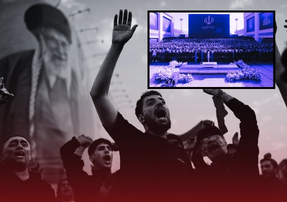
The religious rituals and ceremonies of the Shia community in Lebanon represent the essence of their religion and ensure the connection of their individuals and groups with the sacred. These religious rituals and ceremonies also reflect the identity of their community and preserve it through the collective repetition of behavior that ensures the continuity of their past. As for the cultural movement, it is in various literary, poetic, and other aspects, and leads to specialized knowledge that leaves its mark on their communities and beyond, and distinguishes them culturally and socially from others. As for the customs and traditions, they are a reflection of social behavior that becomes entrenched over time and reflects a certain pattern. A part of these customs and traditions has become an official aspect that expresses belonging and social and religious identity. As for clothing, while being a basic need shared by all human groups, the self-differentiations in various fields are reflected in its types, shapes, and boundaries, and can sometimes define and express the sectarian identity of the Shia across diverse societies.
This research was therefore conducted to collect and analyze elements of these topics within the Lebanese Shia community by presenting their origins and historical development in different chronological periods. The spatial scope of this research covers the Lebanese geography where Shia are present, with occasional excursions to other geographies in the region. As for its temporal scope, it covers the period from the 10th century AD, the golden age of Shiism, to the present day.
This research faced reference difficulties related to the lack of knowledge sources: there are topics on which not much information could be found before the Ottoman rule at the beginning of the 16th century. Meanwhile, the situation of some of the other topics deteriorated over time, leading to their disappearance or the scarcity of information towards the end of the 19th century.
This research is divided into an introduction, three chapters, and a conclusion. The first chapter deals with the reality of the Shia of Lebanon in their rituals and ceremonies, with a focus on Ashura and its rituals as a model. The second chapter presents the cultural and literary movement of the Shia in different stages, while the third chapter touches on their clothing, customs, and traditions. The methodology primarily followed historical and descriptive methods, while interpretive methods were used when necessary. For historical methodology, the research followed the sequence of the studied phenomena and how they followed and developed over time. The descriptive method relied on describing the phenomena in each chronological period in specific geographical locations. As for the interpretive method, it was needed to interpret the meanings of some texts and discourses.
This research explored the reality of the Shia in Lebanon through their rituals, culture, and traditions by presenting their origins and development over the successive chronological stages. The first chapter covered the various Shiite rituals and ceremonies, with a focus on Ashura as a paradigm due to its significant impact on Shiite identity. It presented a historical overview of its observances, tracing them back to the golden era of Shiism in the tenth century AD and continuing through to the present day. The chapter also scrutinized and characterized the reality of these observances during each epoch. Additionally, it delved into the political implications of these rituals throughout different periods, culminating in the current era's political party dominance over them.
The second chapter presented the cultural and literary movement of the Shia through their works in poetry, prose, language, art, and more, leading up to the present time when these pursuits have increasingly been directed towards serving explicit partisan, political, and religious interests. Consequently, they have become integrated into a comprehensive political and religious project. The third chapter encompassed various Shiite traditions and customs, shedding light on attire and addressing the alterations it underwent due to political reasons. It also examined the circumstances surrounding joyous and mournful occasions. This research has aspired, based on the adopted methodology, to the best of its ability to shed light on the Shiite reality across the mentioned topics, and serves as a basis for further works exploring these dynamics.