The year 2005 was not an ordinary one in Lebanese history. On February 14, amid Valentine's Day celebrations, the motorcade of former Lebanese Prime Minister Rafik Hariri was struck by a massive explosion near the St. George Hotel, killing him along with several of his bodyguards and Lebanese citizens present at the scene. In response, an international investigative committee was formed, leading to the establishment of an international tribunal, which, after fifteen years, convicted Hezbollah members in absentia for their involvement in the assassination.
Hariri’s assassination sent shockwaves through Lebanon, sharply dividing the country. On one side were those aligned with Syrian influence under Iranian patronage, known as the "Ain al-Tineh Bloc," primarily composed of Hezbollah and the Amal Movement. On the other side was the "Bristol Gathering," consisting of various forces rebelling against the entrenched Syrian dominance, that launched the “2005 Independence Uprising”, challenging Syria’s political, security, and military control.
Amidst this political struggle, pro-Syrian forces organized a massive demonstration under the slogan "Thank You, Syria." In response, the Lebanese public held an even larger demonstration on March 14, 2005, a watershed moment in Lebanese history known as the "Cedar Revolution," which ultimately led to the withdrawal of Syrian military forces from Lebanon on April 26, 2005.
Although the political leadership of Lebanon’s Shiite community, primarily Hezbollah and Amal, was at the core of the March 8 Bloc, nationalistic/patriotic Shiite figures participated in the Independence Uprising. They sought to establish a national Shiite Lebanese choice within the framework of the March 14 forces; in opposition to the choices of the political leadership within the Shiite community, which was organically and loyally tied to Syria and Iran.
These nationalist/patriotic Lebanese Shiites viewed the Independence Uprising and the Cedar Revolution as the embodiment of Lebanese patriotism, a path to transcending sectarianism and confessionalism, and a gateway to true citizenship in a civil state. However, they were met with resistance from some leaders within the March 14 Bloc, who pursued personal and political compromises, leading to the so-called "Quadripartite Agreement" in 2005. This agreement overlooked the national/patriotic Shiite option and instead engaged in temporary political alliances with the duo dominating Shiite political leadership. As a result, the political alliance of March 14 unraveled, and the duo, Hezbollah and Amal, extended their influence, tightening their grip on Lebanese political decisions; while the opposition remained fragmented between those seeking sovereignty and others calling for reform.
Lebanese National/Patriotic Shiite Initiatives
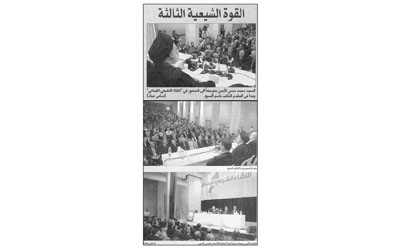
Held on April 21, 2005, at the Amiliyeh High School in Ras Al-Nabaa, this meeting was convened under the auspices of the esteemed scholar, Sayyed Mohammad Hassan Al-Amin. It brought together 300 prominent Shiite figures, including politicians, writers, academics, media professionals, activists, and social influencers. Notable attendees included MPs Basem Al-Sabe’ and Dr. Mahmoud Awad. Among the speakers were Sayyed Al-Amin, the late writer and journalist Nasir Al-Asaad, and author Mohammad Hussein Shamseddine. A follow-up committee was established, comprising several prominent individuals. However, this gathering soon dissolved due to the "Quadripartite Alliance" between Hezbollah, Amal Movement, the Sunni Future Movement, and the Druze Progressive Socialist Party.
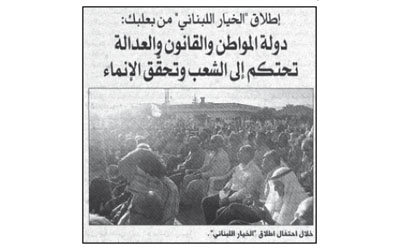
The "Lebanese Option Gathering" was established in Baalbek on June 16, 2007, officially recognized by the Ministry of Interior under registration number 150. It was launched on September 7, 2007, in a large public meeting attended by over 5,000 people, including notable local dignitaries and tribal leaders from families such as Al-Masri, Jaafar, Nasreddine, Hamiya, Allaw, Al-Laquis, and Al-Moqdad. The initiative aimed to present an alternative option in the Bekaa region, particularly in Baalbek-Hermel. However, it faced pressures on its members, coupled with limited financial resources.
.jpg)
This gathering took place on June 15, 2007, at the Commodore Hotel in Beirut, attended by MPs Basem Al-Sabe’ and Ghazi Youssef, along with Mufti Ali Al-Amin and other prominent figures. The founding committee included lawyers Duraid Yaghi, Mohammad Farid Matar, Ghaleb Yaghi, Sharaf Zaiter, and Majed Fayad; media figure Okab Sakr; political activist Youssef Mortada; academics Dr. Mohammad Ali Mokalled, Harith Suleiman, Mona Fayad; Lokman Slim, and Abdullah Rizk; journalist Malek Mroueh, Fadi Younes, Ghada Al-Arabi, and engineer Fadi Fawaz. The gathering declared its commitment to advancing the nation and building a state based on justice, the rule of law, democracy, meritocracy, equal rights and duties, equal opportunities, social justice; and sustainable, balanced development. It also supported constitutional institutions, citizenship, and a free, sovereign, independent, and democratic Lebanon with an Arab identity and affiliation. The meeting denounced violations of national sovereignty, supported the Lebanese army, and condemned political assassinations.
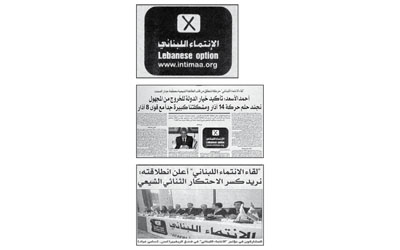
This gathering was launched on Friday, July 13, 2007, at the Riviera Hotel in Beirut, bringing together Shiite scholars and public figures. It received official recognition under license number 661 on May 28, 2008, from the Lebanese Ministry of Interior. Led by Ahmad Al-Assaad, the group ran in parliamentary elections in Shiite-majority regions in both 2009 and 2018. Its members and candidates faced threats, harassment, and violence, particularly in areas controlled by the Hezbollah-Amal alliance. On June 9, 2013, the head of the group's student sector, Hashem Salman, was assassinated during an anti-Hezbollah protest in front of the Iranian embassy. Demonstrators were attacked by people believed to be Hezbollah supporters; Salman was killed and 11 injured. Despite clear evidence, the Lebanese judiciary has not resolved the case to this day. Internal struggles eventually led to the disbandment of the group.
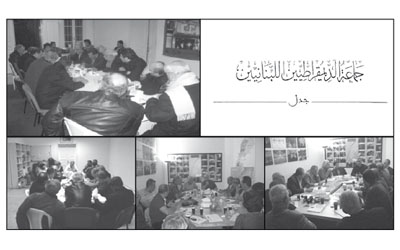
On June 7, 2007, meetings at the Slim family home in Ghobeiry led to the establishment of an association named "Lebanese Democrats Group" (JDAL), headquartered in Ain El-Remmaneh, Baabda district, officially recognized under license number 205 on February 11, 2009. The group held various events and discussions aiming to promote a patriotic Shiite option advocating for a civil state, away from intimidation and accusations of treason. Many Shiite figures participated in these discussions.
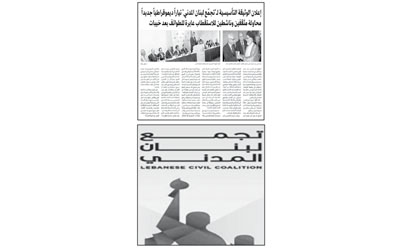
On October 13, 2011, a group of politicians, activists, and intellectuals announced the founding of "Civil Lebanon Gathering" at a press conference held at the Habtoor Hotel. Inspired by “the Arab Spring and its promises, dreams and noble objectives”, they sought to “foster a political and popular dynamic in defense of the state”. Three founding members, Malek Mroueh, Ghaleb Yaghi, and Abdullah Rizk, spoke at the event. The group received official recognition under license number 527 on April 3, 2013. Though it organized several conferences addressing Lebanese, particularly Shiite, issues, the group’s momentum faded over time due to financial constraints and political disillusionment of some members, especially after the 2016 presidential settlement.
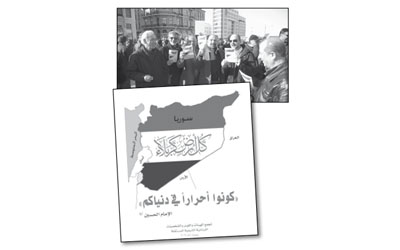
This coalition emerged with the Syrian revolution, as a Shiite group rejecting the Syrian regime's oppressive actions and supporting Syrian freedom. It participated in all the protests opposing the violence of the Syrian regime and its allies. It adopted the slogan "Be free in your world" during a March 17, 2012, demonstration, in solidarity with the Syrian people's fight for freedom and dignity.
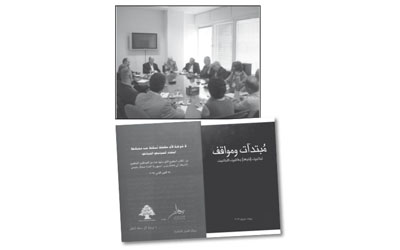
On June 5, 2013, a group of Shiite figures issued a statement titled "Beginnings and Positions – Lebanese Shiites Addressing Lebanese," signed by figures such as Rached Sabri Hamadeh, Khalil Kazem Khalil, Lokman Mohsen Slim, Ibrahim Mohammad Mehdi Shamseddine, Shawki Mohammad Safieddine, Majed Samid Fayyad, Mona Abdallah Fayyad, Mohammad Farid Matar and Ghaleb Abbas Yaghi. They expressed a commitment to a collaborative Shiite-national effort to preserve Lebanon’s sovereignty and statehood along with fellow Lebanese. This marked the inception of the "Shiite Consultative Meeting," which engaged in various dialogues, including with the "Lady of the Mountain Meeting”, seeking to form a national coalition amidst the challenges Lebanon faced, particularly Hezbollah's intervention in Syria. The group also sent letters to the UN Secretary-General, the Arab League, and Lebanese President Michel Sleiman, emphasizing the need to keep Lebanon neutral from regional conflicts and strengthen the civil state. The meeting gradually lost momentum due to political settlements, but its members remained active in national initiatives, including the "Lebanese Home" meeting in 2019.
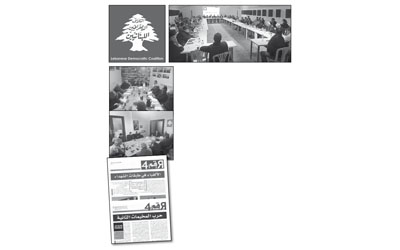
On April 14, 2014, the license of the "Lebanese Democrats Group" (JDAL) was amended, transforming the group into the "Coalition of Lebanese Democrats." This was a new effort to institutionalize and unify dissident Shiite voices, working collectively within a patriotic and civil framework to confront extremism and uphold Lebanon's social contract and constitution, refusing alliances outside the frame of the Lebanese state. The coalition continued to hold weekly meetings, conferences, and issue statements reaffirming a patriotic Lebanese choice for the Shiites, rejecting any form of external subordination or internal dominance. It also published a regular bulletin titled Van No. 4.
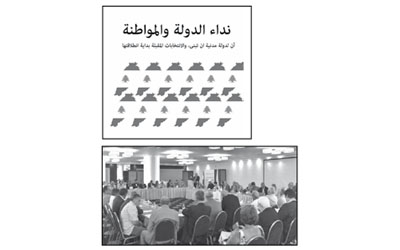
On October 4, 2017, a meeting of independent Shia figures was held, during which a call was addressed to the Lebanese people, delivered by the former mayor of Baalbek, Ghaleb Yaghi. The meeting gathered a wide range of those opposing Hezbollah’s project, whether geographically in the Bekaa, the South, or Beirut; or politically, encompassing left-wing activists, independent figures, civil society, and clerical representatives; along with members of political families (such as Khalil Kazem Khalil and a representative of Wael Kamel Al-Asaad). Sheikh Sobhi Al-Tufaili was represented by the former mayor of Brital, Abbas Zaki Ismail. Also in attendance were two members of the "Democratic Renewal Movement," Dr. Harith Suleiman and Malek Mroueh. The statement focused on several key themes, primarily "state-building and confronting the de facto state," while presenting a different vision for the Shia community and its national priorities. The statement emphasized the necessity of change within the Shia community, considering it a gateway to breaking the national deadlock. Without initiating this change from within the Shia community, no significant national-level transformation can be expected. The change in question involved contesting parliamentary elections with the primary goal of breaking the monopoly of the Shia political duo, Hezbollah and Amal, through alliances with political forces that could facilitate this objective.
The individuals associated with this meeting attempted to participate in the 2018 elections, particularly in the South, but faced harassment, even physical assault, such as what happened to Sayyed Ali Al-Amin from the "We've Had Enough Talk" list in his hometown of Shaqra on April 22, 2018.
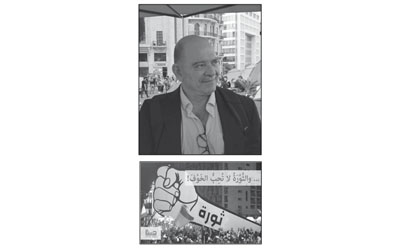
Following numerous meetings and consultations with various activists, after 50 days of the October 17 Revolution in 2019, a coalition was formed across the Lebanese geography under the name "October 17 Revolution – Peaceful Resistance." In its first statement, the coalition affirmed the need to "overcome the culture of fear and intimidation that the de facto powers have continually sought to impose on the Lebanese over the past decades, employing both soft and hard tactics. This also led to the collapse of political and social taboos that were attributed to uniqueness and sanctity, and were considered untouchable and immune from criticism."
Lokman Slim, one of the founders of this coalition and its president, was subject to accusations of treason and threats on December 11, 2019, when a tent he was in at Martyrs' Square was surrounded, followed by an organized gathering inside the garden of his residency in Haret Hreik, where chants of treason and insults were shouted. On the night of December 12, the same individuals plastered slogans of treason and death threats on the walls and entrances of his house.
Lokman Slim's life was ended on February 3, 2021, through assassination at the hands of hateful criminals. He passed on to the afterlife, but his ideas, visions, aspirations, and hopes remain deeply embedded in what he said and wrote, especially what he documented during the days of the October 17 revolution, as a path to saving Lebanon from dominance, monopolization, corruption, murder, terrorism, and impunity.
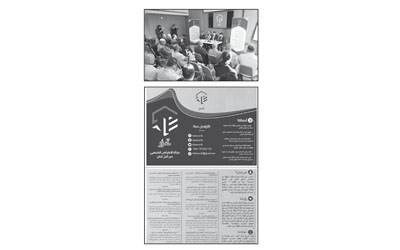
On October 26, 2023, at the Smallville Hotel in Beirut, the "Movement for Liberation" (The Shia Objection Movement for Lebanon) was announced. This movement represents a milestone in the ongoing Shia objection against the dominance of the arms-and-corruption duo over the Shia political, religious, social, and economic life. It aims to reveal the true face of the Shia community, which is deeply rooted in the Lebanese formula based on the spirit of coexistence among the Lebanese people, enshrined in the Lebanese constitution, and far removed from the politics of intimidation, coercion, and obstruction embodied by the ideologies, concepts, and methods of the duo, Hezbollah and Amal.