April 10, 2013
 |
| an-Nahar, 9 April 2013 |
Significant progress was made on Monday, April 8 in the trial of Sheikh Hassan Mchaymech when Lebanon’s Military Court finally sentenced him on some of the charges. The trial itself was conducted in two sessions, with the allegations of misconduct while in prison being examined collectively during the April 8hearing, while the more global charges of conspiracy will be addressed separately.
The allegations of misconduct while in prison were based on the Sheikh having possessed a cellphone during his incarceration—a common practice that rarely prompts criminal charges—and an attempt to “foment sectarianism” for having held a Majlis Aaza’ (a traditional Shia religious recitation that commemorates the martyrdom of Imam Hussein) in Roumieh Prison in August 2011. The court dismissed the charges of possessing a cell phone and at the end of the day, sentenced Sheikh Mchaymech to two months in prison for stirring sectarian sentiment! However, it also declared that making a decision about the original charges (of treason) would require more time than was originally allotted. As a result, that action was postponed, yet again, until Monday, April 15.
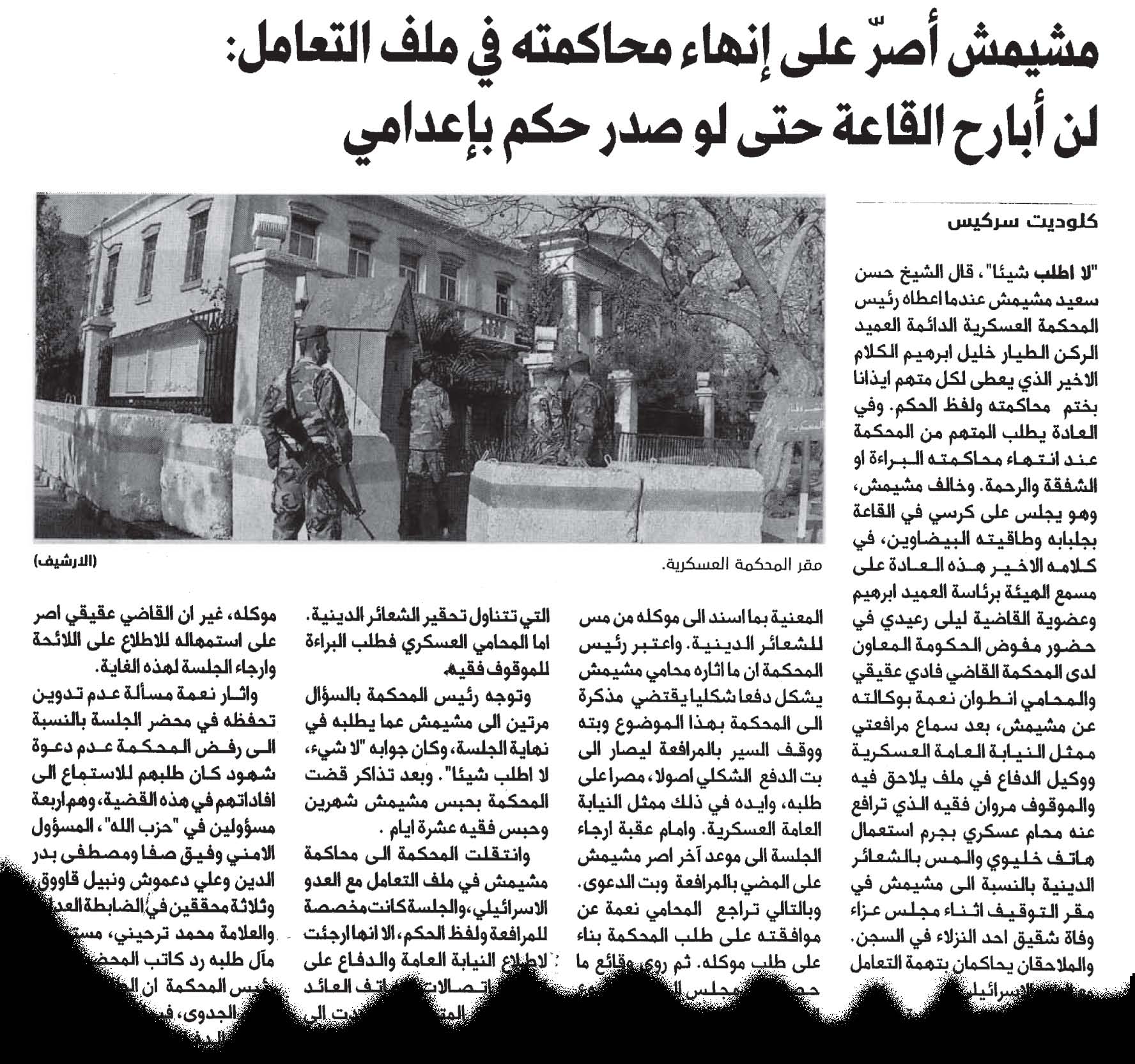
Nevertheless, the decision to take final action concerning the relatively minor charges against the Sheikh represents a significant step forward in his trial, as the court is now free to address the principal issue—conspiracy—rather than remain mired in assessing the remaining minor accusations. It is expected that the Sheikh’s lawyer will deliver his defense during the next session. Interestingly, on Tuesday, April 9, the Lebanese daily an-Nahar reported on some of the proceedings from the April 8 session:
“I ask for nothing.” This is what Sheikh Hassan Mchaymech told the Military Court when its President General Ibrahim asked him if he had any final statements—an offer that is usually given to any accused and which signifies the closing of a trial and the readiness of the court to announce its sentence. Usually an accused would ask the court for [a judgment] of innocence or mercy. Sheikh Mchaymech did not do so.