.jpg)
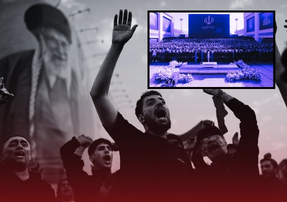
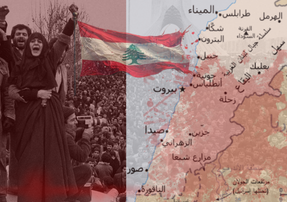
In a single week of June 2026, Lebanese citizens were confronted by a succession of pivotal moments: an American–Iranian memorandum of understanding that named Lebanon in its very first clause; a provocative statement by the speaker of Iran's parliament, Mohammad Bagher Ghalibaf; televised arguments that swelled into a storm; and, finally, the signing of a trilateral framework agreement between Lebanon and Israel under American sponsorship. These were, of course, events of very different weight and significance; one cannot place a journalist's sarcastic quip on the same scale as a regional agreement that draws the fate of a country. Yet what binds them together is not their magnitude, but the way the Lebanese received them. With each event, they split into two camps: one celebrating an illusory victory, the other sinking into an illusory defeat. Then, between one moment and the next, the roles would reverse: yesterday's celebrant is today's despondent, and yesterday's broken man is today's exultant one.
This oscillation between elation and despair, shifting with every change in the direction of the regional wind, is itself the clearest proof that the Lebanese have become prisoners of reaction rather than agents of action. More dangerous still is that this preoccupation with raw emotion blinds them to what is actually unfolding: that the fate of their country is now being drawn entirely elsewhere, without reference to them, and without their playing any role beyond that of the obedient recipient; and that the formula of governance on which Lebanon was built is eroding before their eyes, without anyone troubling himself to read, calmly, the scale of the catastrophe. For many treat the Lebanese question as a position to be occupied rather than a cause to be carried; each measures an event by how far it brings him closer to a share in the coming order of power, so that the national stance turns into a bargaining chip in a haggling over roles.
When Victory and Defeat Become a Mutual Illusion
Upon the signing of the American–Iranian memorandum, in which the Lebanese file was embedded as part of the understanding, the base of Hezbollah and its allies held that Iran had “won”; that it had imposed Lebanon as a clause in its negotiations with Washington. The party's opponents, and those of Iran, fell by contrast into something resembling defeat and despondency, as though the Lebanese file had been handed over wholesale to Tehran.
Then, days later, came the signing of the trilateral framework agreement between Lebanon and Israel under American auspices, and the scene flipped on its head: the opposition camp felt the rush of triumph, while Hezbollah's base and its allies felt loss; indeed, betrayal. The very camp that had been victorious yesterday was vanquished today, and vice versa; within a handful of days, and without any substantive change in Lebanon's own position, nor in the situation of the displaced, nor in the status of the occupied villages, nor in the daily attacks Israel carries out, nor in the bewildering and anxious scene that governs the daily life of every Lebanese.
At a deeper level, this paradox reveals something the antagonists fail to notice: that the Lebanese, across their differing alignments, have all become willing to negotiate with Israel and reach a settlement. The dispute is no longer over the principle of negotiation, but over the identity of the party who leads it. Each camp wants to hold the upper hand at the table, convinced that whoever steers the course and signs the agreement will hold the keys to power in the coming phase. This is an illusion piled atop the others; for the only fixed truth in the scene is that all parties are no more than recipients of what is decided far from them, with no real role in what unfolds across the region. They quarrel over leading a caravan whose reins they do not hold to begin with.
Statements Are Not Slips of the Tongue
Amid this oscillation came Ghalibaf's statement, made during a television interview, in which he addressed those raising the slogan “Neither Gaza nor Lebanon” inside the Islamic Republic of Iran, declaring that “Lebanon offered four thousand martyrs for the sake of Iran”; a number exceeding the total of Iran's own martyrs in its latest war[1]. It ignited a wide wave of anger, and hostile social-media feeds filled with comments treating it as further proof that Iran deals with Hezbollah as a tool waging its regional wars, and that Lebanese youth are pushed into combat in the service of projects unrelated to the national interest.
Yet the indignation at these words overlooks that they are neither a slip of the tongue nor a passing remark, but speech intended in every letter, issued by a senior official at a delicate political moment. More importantly, it reveals nothing new. Whoever rages today at the party's “subordination” to Iran behaves as though discovering, for the first time, a relationship the party has never concealed; one it has openly proclaimed since its founding.
The same pattern recurred days later in a smaller but more telling incident. In a televised exchange on Al-Arabiya–Al-Hadath bringing together the journalists Qassem Kassirand Ali al-Amin, and responding sarcastically to the narrative that it is Iran doing the fighting in southern Lebanon, Kassirquipped that there were “fifty thousand Iranian soldiers” fighting in Lebanon, that “ten thousand of them had fallen,” and that arrangements were under way to resume flights between Beirut and Tehran to transport the bodies[2]. It was plainly a joke, a piece of sarcasm; yet the program's host treated it as information warranting verification; the clip then spread, and the party's opponents seized on it as a “dangerous confession,” with activists demanding an investigation of Kassirand that Iran withdraw its fighters, while the party's supporters retorted that the remark had been wrenched from its sarcastic context.
The irony is that both sides busied themselves with the joke and ignored that it adds nothing to, and subtracts nothing from, a known fact. The organic relationship between the party and Iran is no matter of revelation or conjecture; the party declared it openly in its 1985 “Open Letter to the Downtrodden in Lebanon and the World,” when it defined itself as an extension of the Islamic Revolution in Iran and part of a nation transcending borders, and committed itself to the principle of wilayat al-faqih (Guardianship of the Jurist). Nor was this a fleeting founding slogan; the leadership translated it into actual practice: the decision to contest the first parliamentary elections in 1992 was taken on the basis of a religious consultation (istiftaa) of the then-Guardian Jurist, Ali Khamenei, and the party continued to hold that the decision of war and peace ultimately rests with the Guardian Jurist rather than with the institutions of the Lebanese state. This is what its current Secretary-General, Naim Qassem, codified in his book Hezbollah: The Curriculum, the Experience, the Future, where, enumerating the Guardian Jurist's powers, he writes:
“... Evident is the scale of the powers vested in the Guardian Jurist: he is entrusted with applying Islamic rulings and safeguarding the Islamic order, and with taking the major political decisions bound up with the interests of the nation; he is the one who holds the authority over the decision of war or peace, and bears responsibility for the security of the people, their wealth, and their honor...”[3]
Nor was Iranian support a secret; the former Secretary-General, Hassan Nasrallah, declared in 2016 that the party's budget, salaries, weapons, and missiles all come from the Islamic Republic, and he often described himself as “a soldier in the wilayat al-faqih.” Treating Ghalibaf's statement or Qosayr's joke as a “discovery,” therefore, proves one thing only: that we have not read the party well, and do not know what it has been saying about itself for four decades.
What the Agreement Actually Reveals
Had the Lebanese paused their indignation and read the scene calmly, they would have discovered that the most dangerous element of that week was neither a statement nor a joke, but what the documents themselves contained. The American–Iranian memorandum, known as the “Islamabad Memorandum,” named Lebanon explicitly and stipulated “the immediate and permanent cessation of military operations on all fronts,” as well as the two parties' commitment to “ensuring the unity of Lebanese territory and its sovereignty”[4]. With this, the fate of Lebanon's security arrangements became a clause discussed inside a bilateral document between Washington and Tehran, one that treats Iran as a party that cannot be bypassed. Tellingly, the Iranian side signed it through Ghalibaf himself; meaning that the author of the statement that provoked the anger is among the signatories of a document addressing Lebanon and its war.
Then came the trilateral framework agreement between Lebanon and Israel under American sponsorship to complete the picture from a different angle. The agreement, composed of fourteen clauses, does not merely manage the status quo; it stipulates explicitly that Lebanon shall “rebuild the state's monopoly on the use of force” and “disarm all non-state armed groups fully and verifiably,” in exchange for a gradual redeployment of Israeli forces. It further stipulates that “the Lebanese government alone holds the sovereign authority to decide matters of war and peace,” and that the flow of funds to any entity linked to those groups be prevented[5].
Nor can one ignore what the thirteenth clause specifically carries. Although framed reciprocally, obliging both parties to halt all hostile or harmful actions in international political or legal forums, its practical effect falls on Lebanon more than on anyone else; for it is Lebanon that holds genuine legal files to bring before international forums in the face of occupation and Israeli aggression. By this, Lebanon effectively relinquishes one of the weak state's most important tools against the stronger: the legal and diplomatic weapon of international recourse. In its deepest sense, this is farther-reaching than military disarmament itself, for it pulls Lebanon out from under the international umbrella on which it long relied, placing it exclusively under an American–Israeli cover. And this shift; from an international reference to a bilateral tutelage; may itself become a fuse for internal explosion rather than a guarantee of stability.
Here it must be noted that Hezbollah, specifically, bears the largest share of responsibility for what we have reached. Its entry into the “support war” for Gaza, then its fighting in defense of Iran and in revenge for the killing of the Supreme Leader, was not a decision springing from the national interest, but a choice that dragged the country into a war it did not choose, and that handed Israel the pretext and the means to tighten its grip on land and decision alike. For this reason, the party's objection to the conduct of the government and the two presidencies may be just in essence; yet whoever brought Lebanon and the Lebanese to this impasse cannot set himself above others or brand them traitors.
Here the deeper paradox, obscured by indignation, comes to light: that the Lebanese state signed a document restoring to itself the decision of war and peace at the very moment Hezbollah, through its Secretary-General, renews its attachment to Iran and its axis; drawing on a firmly rooted doctrine that makes the decision of war and peace a matter for its own vision and creed rather than for the institutions of the state. It is a flagrant contradiction that strikes at the heart of sovereignty and the legitimate monopoly on violence; but it is a contradiction between two sides that are, together, incapable: the state signed a text of unclear contours and consequences, with no power to implement what it pledged; while the party, for its part, cannot implement what it declares, and does not, in fact, hold the decision over it outside the path of Iranian interest.
Nor was the party slow to settle its position. In his address during the Ashura (tenth of Muharram) procession in Beirut's southern suburb, Secretary-General Naim Qassem rejected any normalization, any abandonment of hostility toward Israel, or any acceptance of any Israeli presence on Lebanese soil, and called on the state to change its negotiating course; holding fast to the ceasefire arrangement and to the position that sovereignty is complete only if its application remains confined to south of the Litani. He stressed, accordingly, that the party would remain with Iran and its axis, describing Tehran as “the path of salvation,” and declaring that Palestine remains “the compass” and that he believes in its liberation and in standing alongside its people[6].
With this, the scene is no longer a “consensual international management” of the party's existence, as it may appear to a superficial reader, but a direct collision: a state that signed onto disarmament, and a party that publicly refuses it and ties its survival to Iran's. And most dangerous of all, this collision turns not on policy or borders, but on the question unresolved since Lebanon's founding: who holds the decision of war and peace; the state, or a force outside the state?
The Greatest Danger: The Erosion of the Formula of Governance
Behind all this noise lies the catastrophe no one attends to: that Lebanon has fallen into the winds of regional agreements, its fate drawn in Washington and Tehran and at negotiating tables, while its own people busy themselves distributing medals of victory and defeat among themselves. But more dangerous than the loss of external decision is what this scene reveals about the interior: that the formula of governance on which Lebanon was built is no longer truly in place. What we are witnessing is not a disagreement over policy or negotiation, but an erosion of the minimum shared conception of the state. The factions no longer see a single common denominator between them; they have become two camps, each lying in wait for the other, each awaiting the moment of its rival's collapse to declare its own victory; and amid this vigilance they are not prepared, to begin with, to expend any effort in reading the scene calmly, contenting themselves with reacting to every passing event and leaving the great questions unanswered.
The Lebanese experience has proven, across the decades, that groups do not relinquish their sources of strength when the state is weak, incapable, or bereft of its citizens' trust. Hence the lesson lies not in whether an agreement is signed; the government has, in fact, signed a framework pledging to restore the state's monopoly on arms. The lesson lies in the capacity to implement what was signed; a capacity no external text can grant, but one built from within: by a state that recovers its citizens' trust and persuades the party's own community that its weapons are no longer necessary for its protection. Any serious talk of the exclusivity of arms passes first through rebuilding the state; not through an agreement signed abroad, nor through a wager on international or Israeli pressure to do, on the Lebanese' behalf, what they failed to do themselves. The wager on Israel to effect internal change has produced, over the past two decades, nothing but a legitimization of the occupation on one hand, and a strengthening of the party's position within its community on the other.
From this angle, what is required of the two presidencies and the government is not to content themselves with the signature and brandish it before their opponents as a victory, but to translate it into facts that grant the state genuine legitimacy: extracting a full Israeli withdrawal, securing the return of the displaced to their villages, launching a real reconstruction, and building institutions the citizen trusts. Most important is that these steps not be made conditional on disarmament; for tying the fate of the people, their return, and the rebuilding of their villages to the fate of the party and its weapons would be read as a form of collective punishment, and would serve only as material bolstering the party's position and re-entrenching its authority over its community. There is in this no leniency on the question of arms: the exclusivity of arms in the hands of the state is a demand from which there is no retreat and which must be accomplished; but the road to it runs through building the state, not through punishing an entire community. The party did not grow in confrontation with the state so much as it grew in its absence, and every vacuum the state leaves is filled by a power other than it; hence the sharpest weapon against its influence is the presence of the state where it has been absent. A signature without the capacity to implement remains ink on paper; indeed, it may become a burden if the state pledges what it cannot deliver, and perhaps a gateway to an internal strife whose elements take shape day after day.
As for contenting oneself with anger at the statements of Iranian officials, or celebrating the signing of an agreement as if it were an achievement in itself, or reproducing the old quarrels over loyalties; this will lead to one result only: confirming that the Lebanese still prefer indignation to politics, and reaction to the building of alternatives.
Perhaps the question every Lebanese ought to ask himself, before celebrating or breaking with every piece of news, is this: when will we stop reacting, and begin to read what is more dangerous?
[1]Mohammad Bagher Ghalibaf, Speaker of Iran's Parliament, interview on the program “Goftogu-ye Vizheh-ye Khabari” (Special News Talk), Iranian state television, 27 Khordad 1405 / 17 June 2026; reported by Al-Jadeed TV, 19 June 2026.
[2]“Iran's Fighters in Lebanon and Qassem Qosayr's ‘Joke’,” Al-Modon – Media, 23 June 2026; referring to an interview bringing together Qassem Kassirand Ali al-Amin on Al-Arabiya–Al-Hadath.
[3]Naim Qassem, Hezbollah: The Curriculum, the Experience, the Future, 3rd ed., 1425 AH / 2004 CE, p. 84.
[4]The American–Iranian Memorandum of Understanding known as the “Islamabad Memorandum,” the text of which was published in mid-June 2026.
[5]Official text of the Trilateral Framework between the United States of America, the State of Israel, and the Republic of Lebanon, Office of the Spokesperson, U.S. Department of State, 26 June 2026; the text is signed in English.
[6]Address by Hezbollah Secretary-General Naim Qassem at the procession of the tenth of Muharram 1448, southern suburb of Beirut, 26 June 2026, Al-Ahed News website (Hezbollah Media Relations).