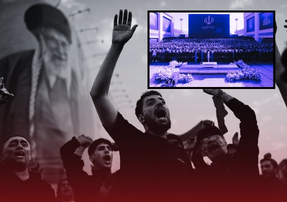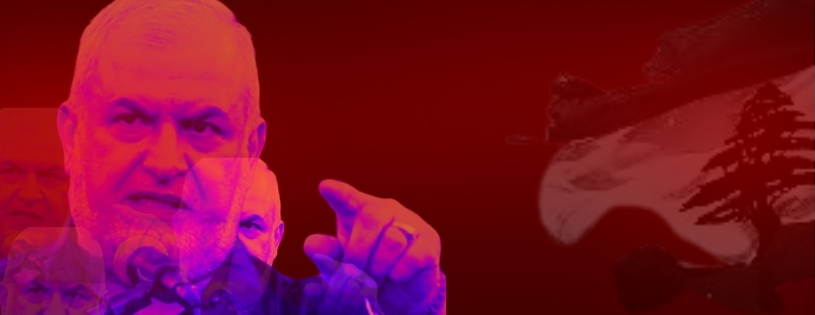
In his recent address, Mohammad Raad, head of Hezbollah’s Loyalty to the Resistance parliamentary bloc, presents a crisis that extends far beyond the realm of war itself. It is a crisis of meaning, identity, function, and historical purpose. Despite its heavily mobilizational language, saturated with religious and ideological references, the speech reveals a deeper psychological and political transition: from the discourse of strength to the discourse of justification; from the logic of initiative to the logic of refuge in symbolism; and from a project centered on victory to an effort aimed at containing the moral and social consequences of defeat within Hezbollah’s own Shiite constituency. The speech is directed almost exclusively toward “the people of the resistance,” the families of the martyrs, the displaced, and those who have lost their homes. This in itself is significant. It suggests that the leadership is no longer addressing the outside world as a force capable of imposing realities and shaping outcomes, but is instead speaking primarily to an anxious, fractured, and uncertain internal audience. The objective appears to be the restoration of confidence and cohesion within a collective consciousness shaken by profound transformations affecting the foundations of the entire project.
In many respects, the text resembles a lengthy elegy more than a mobilizational speech. The repeated invocation of themes such as patience, martyrdom, displacement, destruction, and existential targeting indirectly reflects the leadership’s awareness of the scale of the collapse affecting its constituency—not only on the material level, but also at the level of ideological and political certainty. It is here that the speech’s central dilemma becomes apparent. It offers no tangible promises to its audience. It presents no political horizon, no clear reconstruction plan, no social protection measures, no process of review or accountability, and not even a realistic vision for overcoming the current crisis. Instead, it seeks to transform loss into moral value, defeat into an ethical test, and collective rupture into a form of spiritual superiority.
Such moments are among the most critical in the life of any political or ideological movement. When the capacity to offer a viable political project diminishes, suffering itself risks becoming the primary source of legitimacy. Rather than explaining how the crisis can be overcome, the discourse elevates endurance in the face of catastrophe into a virtue in its own right. In doing so, it attempts to preserve cohesion not through a promise of change, but through the symbolic valorization of pain and sacrifice.
Within this context, Mohammad Raad appears to be speaking from a place shaped by a profound personal sense of loss that has lingered since the death of his son, Siraj. Since that moment, his public performance has changed noticeably, and his discourse has increasingly carried the tone of an existential rupture rather than the spirit of confrontation that long characterized Hezbollah’s rhetoric. The confident language once associated with strategic transformations, shifting balances of power, and decisive divine victories has largely given way to a discourse marked by an acceptance of profound loss. The death of his son seems to have constituted a psychological and political turning point, reflected in his language, demeanor, tone, and even in the way he addresses his audience.
The deeper problem is that this type of discourse contains an implicit acknowledgment that almost everything has been lost. The repeated references to displacement, the destruction of villages, societal collapse, and existential targeting—combined with the absence of any concrete vision for deterrence, reversal of fortunes, or a reconfiguration of the balance of power—confront the audience with a troubling reality: the leadership itself no longer appears to possess the certainty it once projected. For this reason, the speech seemed less like a call to victory than an attempt to manage the aftermath of loss. This is precisely where the shock emerges within Hezbollah’s Shiite constituency. Over the past decades, this community was not psychologically mobilized around a culture of uncertainty or coexistence with defeat. Rather, it was built upon narratives of enduring superiority, historical victory, and the transformation of the community into a rising regional force. When the leadership suddenly shifts toward a discourse centered on patience amid devastation, it inevitably shakes the psychological foundations upon which that mobilization was constructed.
More troubling still is the way the text appears to treat its audience primarily as a reservoir of sacrifice rather than as partners in decision-making. People who have lost their children, homes, livelihoods, and ordinary lives hear little acknowledgment of the scale of the catastrophe they are experiencing. Instead, they encounter a reproduction of the same discourse that helped lead them to their current predicament. It is here that the sharpest critical question emerges: is the glorification of martyrdom sufficient to justify the collapse of an entire community? Can people continue to be asked for greater patience when they are already losing nearly everything? There comes a point at which rhetoric itself risks becoming a form of cruelty, because the excessive valorization of suffering can evolve into a genuine disregard for the lived realities and hardships of ordinary people.
The text also reveals an unprecedented internal crisis of confidence. When Raad attacks the “defeatists,” those “betting on foreign powers,” and those allegedly “taken in by the Americans,” it suggests that the leadership senses that parts of its own constituency have begun asking questions that were once considered taboo: What have we gained? Where is the state? Why have the Shiites borne such a disproportionate share of the cost? And why does the community today appear more isolated, poorer, and more fearful than it did only a few years ago?
These questions are no longer marginal. They have become part of everyday consciousness within the Shiite community, even if they are not always voiced openly. It is precisely for this reason that Mohammad Raad’s speech appears out of step with the historical moment. He is not addressing a victorious generation, but rather a generation marked by exhaustion, shock, and accumulated losses. A society experiencing social, economic, and psychological collapse on this scale can no longer be sustained solely by the same slogans that proved effective during periods of ascent and empowerment. Communities confronted with major losses inevitably begin to reassess the narratives upon which they were built. This is precisely what the leadership appears to fear, which helps explain why the speech adopted such a defensive tone and relied so heavily on religious and emotional language.
Yet the most painful paradox may be that thousands of Shiite families who have lost children, homes, livelihoods, and years of their lives were perhaps expecting something different from a leadership of this stature: a moment of moral courage, a genuine process of self-examination, an acknowledgment of the scale of the tragedy, or even a statement recognizing that bloodshed can no longer serve as the fuel of an open-ended conflict. For many, therefore, the speech appeared less an attempt to help people move beyond their suffering than an effort to keep them anchored within it. For this reason, the most significant aspect of Mohammad Raad’s appeal may not lie in its explicit political content, but in its overall spirit. It reflects the spirit of a movement that senses internally that an entire historical phase may have come to an end, yet lacks the willingness to acknowledge that reality publicly. Instead of recognition, it turns to an intensified use of ideological, historical, and religious language in an effort to postpone a deeper psychological reckoning within its support base.
Communities that experience losses on this scale, however, cannot live on language alone. They require a horizon—a vision of what comes next. Yet throughout the speech, such a horizon is largely absent. Its underlying message seems to ask people simply to endure loss and death in silence, and to transform what many perceive as defeat into a form of historical virtue. For this reason, the Shiite community, after all that it has endured in terms of losses and transformations, no longer needs closed mobilizational discourses built on the perpetual reproduction of the same pain and the same ideological certainties. What is needed instead is a profound process of reassessment—of leadership, methods, content, and modes of thinking.
Lebanon cannot be governed according to the logic of rigid ideological communities. Rather, it functions through delicate balances, shared anxieties, and negotiated partnerships among its diverse components. Any discourse that continues to address people solely through abstract appeals to steadfastness, while they are searching for a state, a livelihood, stability, and a future, risks deepening the psychological and political fractures within the community itself.
What is required is a genuine transition from a discourse of mobilization to a discourse of national partnership, and from a mindset of permanent confrontation to one centered on the protection of society. When an ideological structure is exhausted by successive wars and mounting losses without a credible horizon, it becomes increasingly vulnerable to internal erosion and external shocks. Lebanon’s social and political fabric, by its very nature, cannot sustain closed projects indefinitely. It requires flexibility, pragmatism, and the capacity to redefine priorities in ways that place the well-being of people before the preservation of slogans.
Researcher – PhD Candidate in Media and Communication Studies