.jpg)
When Hezbollah launched rockets at Israel on March 2, a state of confusion prevailed even within its own media environment. Some of its journalists, media figures, and supporters initially found it difficult to believe that the operation had in fact been carried out by the party.
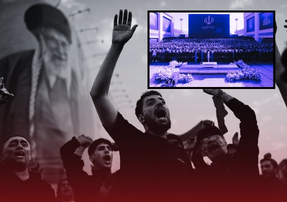
This uncertainty persisted until the release of the first statement, which framed the operation as an act of “revenge for Ali Khamenei.” That framing, however, proved insufficient to contain growing unease, particularly among displaced populations whose reactions appeared cautious and concerned about the consequences of further escalation. At that point, Hezbollah’s media apparatus intervened once again through a second statement that effectively rewrote the event in different terms: “in defense of Lebanon and its people.” The operation was now linked to Israeli violations that had resulted in civilian deaths since the ceasefire.
In this way, Hezbollah shifted from a narrative of revenge to one of defense in an effort to contain and redirect public discontent. Once it became apparent that presenting the operation within a broader regional framework had failed to generate the desired effect, a national and defensive discourse was invoked as an alternative frame. This shift can be understood as part of an attempt to absorb the shock felt by a segment of its audience, particularly given the limited military impact of the six rockets, while also easing reservations within Lebanese circles that were opposed to, or unconvinced by, further escalation.
Hezbollah did not limit itself to issuing statements. Its Secretary-General, Naim Qassem, also delivered a speech seeking to justify the rocket launch as a response to what he described as the continuing Israeli-American aggression and ongoing violations of the ceasefire.
In his address, Qassem emphasized that the operation constituted a legitimate act of self-defense within the context of what he portrayed as the continued violation of Lebanese sovereignty. At the same time, he held the Lebanese state responsible for what he characterized as the weakness of its political and diplomatic response. He also presented Israel as an existential threat extending beyond Lebanon itself, reaffirming that the resistance and its weapons remain a legitimate right in confronting occupation. He concluded by stressing the continuation of the confrontation and linking it to ideological and political steadfastness, while calling for internal unity and support for displaced populations amid the ongoing escalation.
(2).jpg)
Selective reporting is a form of disinformation that relies on highlighting certain information while omitting other relevant facts in a way that serves a pre-established narrative. This type of disinformation does not necessarily depend on outright fabrication; rather, it operates by rearranging reality itself, emphasizing some aspects while marginalizing others. In this way, media outlets present news through a non-neutral framework by selecting particular facts, sources, and modes of presentation that guide public understanding of an event according to a specific perspective. This is especially evident in political contexts and during conflicts and wars, where competing narratives coexist.
Bint Jbeil Channel provides an example of local partisan media that enjoys significant engagement across its platforms. Its coverage places strong emphasis on military operations associated with Hezbollah, often presenting them within a framework that suggests battlefield superiority or operational success, even in cases where the military outcomes remain uncertain or open to interpretation.
.jpg)
The channel’s reporting follows a selective approach, focusing on specific scenes and statements that may create an impression exceeding their actual significance within the broader context of the conflict. This aligns with common mechanisms of media bias, whereby certain developments are highlighted while others receive little or no attention. Such coverage often involves downplaying the scale of destruction inflicted on southern Lebanese villages, minimizing discussion of Israel’s military capabilities, or overlooking other dimensions of the conflict that do not receive the same level of prominence in its reporting.
In addition, the channel frequently relays statements originating from Israeli media outlets or from opposition figures within Israel. However, these materials are often selectively extracted from their original contexts and recirculated within a framework designed to reinforce perceptions of Hezbollah’s military capabilities.
At times, the channel also highlights the views of guests appearing on Israeli analytical programs who criticize the military policies of Benjamin Netanyahu and discuss what is portrayed as Israel’s inability to deter Hezbollah’s rocket attacks, while also emphasizing the party’s significant military capabilities. Such narratives, however, are not always accompanied by a corresponding presentation of the broader battlefield reality.
Field developments suggest that the impact of Hezbollah’s rockets and drones did not fundamentally alter the security situation in Israeli areas adjacent to the border. These areas did not experience waves of displacement comparable to those witnessed on the Lebanese side, particularly in the villages and towns south of the Litani River, which were subjected to large-scale displacement and evacuation.
This pattern of coverage, amplified through social media platforms, contributed to the strengthening of what are commonly known as “echo chambers,” where audiences are repeatedly exposed to homogeneous information centered on the idea of “victory,” with little exposure to alternative narratives or conflicting information. As a result, a degree of informational isolation emerged among some segments of the public, particularly within the Shiite communities of southern Lebanon, where largely uniform perceptions developed regarding the outcome of the confrontation.
The effects of this phenomenon became especially apparent following the announcement of the ceasefire, when a number of residents attempted to return to areas south of the Litani River based on the assumption that the situation resembled the aftermath of the 2006 war. They were subsequently confronted with statements by Israeli military spokesperson Avichay Adraee warning against returning to certain villages, exposing a gap between expectations shaped by media narratives and the realities on the ground.
Beyond selective reporting, some social media users and pro-Hezbollah platforms relied on exaggeration and the amplification of military achievements, presenting combat scenes within a narrative centered on reinforcing perceptions of victory. Slogans such as “The Merkava is burning” and “The advance into the Galilee is only a matter of time” circulated extensively across television coverage and digital platforms. These messages were often accompanied by video clips showing attacks on Israeli military vehicles, burning tanks, or wounded soldiers at border positions, thereby fostering the impression that the balance of the conflict was moving decisively in Hezbollah’s favor.
A significant portion of this material, however, was not necessarily reliable. In many cases, it was circulated without adequate verification of its time or location, reused outside its original context, or presented in ways that substantially exaggerated its significance.
Al Mayadeen provides a particularly clear example of this pattern. The channel repeatedly broadcast footage of attacks on Merkava tanks and other Israeli military vehicles, often accompanied by headlines suggesting a broad and decisive battlefield breakthrough. One notable example was a video report showing the targeting of a Merkava tank and a Namer armored vehicle in Ruwaysat al-Alam, which circulated widely and was presented as evidence of a significant military advance on the ground.
The significance of such coverage lies not necessarily in the authenticity of the footage itself, but in the interpretive framework through which it is presented. Isolated tactical incidents are frequently elevated into indicators of broader strategic success, creating an impression that may exceed the actual military significance of the events being depicted. In this way, specific battlefield scenes are transformed into symbolic evidence supporting a wider narrative of victory and military superiority, regardless of whether the overall balance of the conflict reflects the same conclusions.
On the other hand, fact-checking reports have shown that a significant number of videos circulated by social media users were not recent at all, but rather originated from previous rounds of fighting and were republished as if they depicted current events. A clear example was documented by Misbar, which examined a widely shared video that users claimed showed fighters from Hezbollah’s Radwan Force confronting an incursion by Israeli Merkava tanks in southern Lebanon. The investigation found the footage to be misleading: the scenes actually depicted an operation carried out by the Palestinian Izz ad-Din al-Qassam Brigades against Israeli military vehicles in the Gaza Strip in September 2024 and bore no connection to the clashes it was purported to document.
This pattern extends to the use of digitally generated or manipulated images and videos, as well as content that is selectively cropped and edited in ways that amplify the visual impact of military strikes, particularly those involving Israeli sites and military losses. As such material is repeatedly circulated through algorithms and rapid-engagement platforms, it contributes to the consolidation of a victory narrative resembling that which emerged after the July 2006 war, despite the significant differences in battlefield realities and military circumstances.
In March 2026, an Israeli special forces unit carried out a military operation in the town of Nabi Chit in the Bekaa Valley. According to Israel, the mission was intended to search for evidence related to the missing Israeli pilot Ron Arad. The operation was preceded by an evacuation warning issued by the Israeli military spokesperson, urging residents of several surrounding towns to leave the area immediately.
Israeli helicopters entered Lebanese airspace from the direction of Syria and deployed a commando unit near Nabi Chit, reportedly wearing uniforms resembling those of the Lebanese Army. Clashes subsequently broke out with local residents. The operation was followed by intensive air support involving approximately forty Israeli airstrikes aimed at securing the deployed force and facilitating its withdrawal. The raid resulted in the deaths of forty-one Lebanese and the injury of approximately forty others, while no Israeli casualties were reported. The Israeli military later announced that the mission had concluded without achieving any tangible results.
The SKeyes Center for Media and Cultural Freedom published a detailed report on the incident, concluding that there was a clear gap between the narratives promoted by media outlets and digital platforms aligned with Hezbollah and the field realities that could be independently verified. The significance of the report lies in its analysis of what it describes as a mechanism of “circular sourcing” — a closed loop in which information is repeatedly recycled without a verifiable original source.
According to the report, the cycle began with channels close to Hezbollah, which circulated false accounts claiming fierce clashes and the capture of Israeli soldiers. A video aired by Bint Jbeil Channel was also presented as evidence of the downing of an Israeli helicopter. These claims, along with other fabricated battlefield details, were subsequently attributed to unspecified “Hebrew media” sources. Later, an unofficial Hebrew-language Telegram channel republished the same allegations and presented them as Israeli information. Lebanese channels then cited those posts in turn as though they constituted independent confirmation, thereby completing the cycle of mutual reinforcement.
The report demonstrates that at no stage in this chain was there a verifiable primary source. Nevertheless, the narrative acquired the appearance of a credible and well-sourced piece of information through its repeated circulation across multiple channels, until the entire cycle was completed in approximately twenty-three minutes.
In the context of news production, circular reasoning refers to a mechanism whereby information is repeated across several sources in a manner that creates the false impression that it has been independently confirmed by multiple references, when in reality it originates from a single source. In this pattern, information is not validated through independent verification; rather, it gains credibility through reciprocal republication, with each outlet appearing to confirm the others. The result is a “closed loop” of mutual references that substitutes for actual fact-checking.
This mechanism becomes particularly dangerous in the contemporary digital environment, where major websites, alongside newspapers and news agencies, increasingly function as knowledge repositories that audiences consult quickly and often without sufficient scrutiny. The growing demand for immediate answers reinforces vulnerability to this form of reasoning, as users—and sometimes even media institutions themselves—may interpret the repeated appearance of a claim as evidence of its accuracy rather than as a sign that the same error is being reproduced across multiple platforms.
In this way, the circulation of information can become a form of indirect disinformation, one in which tracing or verifying the original source becomes increasingly difficult, especially as the boundaries between traditional journalism and digital platforms continue to blur.
Accurate information about conditions in southern Lebanon remained largely absent throughout the war, while data concerning battlefield losses—particularly the number of Hezbollah casualties and the extent of territorial setbacks in border villages—was significantly obscured. During this period, the reality on the ground remained highly ambiguous due to the absence of independent reporting capable of documenting developments from within the conflict zone.
Instead, the media landscape was dominated by fragmented and often contradictory information circulating through local platforms, journalistic accounts, and individual social media users, including figures such as Mona Tahini, Bilal al-Lakkis, Sahar Ghadar, and Abbas Zahri, as well as local outlets such as Nabatieh Online. Yet these sources did not provide a sufficiently coherent or comprehensive picture of events on the ground. Against this backdrop of limited information, Avichay Adraee, the spokesperson of the Israeli military, became one of the most prominent daily sources of information regarding developments in southern Lebanon. Through his frequent statements and warnings directed at residents of border villages, a substantial portion of the information circulating about the course of the conflict came to be derived from the Israeli narrative itself, despite its clearly propagandistic character.
A clearer picture of battlefield realities only began to emerge after the ceasefire came into effect. It was then that the extent of the changes imposed by Israel in southern Lebanon became visible. Reports indicated that Israel had consolidated control over extensive areas along the border and had prevented residents of more than fifty-five towns and villages from returning to their homes. New facts were also established on the ground through the creation of what came to be known as the “Yellow Line,” a newly imposed security belt established by Israel following the fighting.
These developments revealed a significant gap between the media discourse that had promoted narratives of steadfastness and victory and the realities that became apparent on the ground once hostilities had ceased.
Following the large-scale Israeli incursion into southern Lebanon and the destruction of a number of towns and villages, a Hezbollah official stated that the party was pursuing a strategy of “not adhering to geography,” adding that it was maneuvering in order to draw the enemy into deadly points of engagement.
Within this context, new mechanisms emerged in Hezbollah’s communication with its audience, addressing losses through a language of maneuver, tactics, and strategic calculation that sought to mitigate the direct impression of defeat. Rather than denying battlefield realities, these developments were reframed in ways intended to preserve the morale and political cohesion of the party’s support base.
As it became increasingly difficult to deny Israeli territorial advances, the discourse shifted toward portraying such advances as strategically insignificant or incapable of producing a decisive outcome. Emphasis was placed on the idea that the nature of the conflict was one of attrition rather than the permanent control of territory. Consequently, the narrative gradually evolved from a focus on preventing territorial advances at the beginning of the war to diminishing the significance of those advances, and ultimately to redefining the conflict itself outside the framework of territory as the sole measure of victory or defeat.
What is particularly noteworthy about this shift is that it did not rely on denying military developments. Instead, it sought to regulate their political and military meaning through an alternative interpretive framework designed to reduce their symbolic impact within the party’s supportive environment.
Invoking what it described as military necessity, Hezbollah also called on residents of southern Lebanon, following the announcement of the ceasefire, not to return to their areas immediately. The party urged patience until the enemy could be deterred, removed from what it described as occupied territory, and until the anticipated victory had been achieved, allowing residents to return at a later stage under conditions that would permit a dignified celebration of that return.
The Lebanese government, through Lebanon’s ambassador in Washington, decided to hold its first direct session with the Israeli side under American sponsorship. The meeting was presented as a preliminary step toward a direct negotiating track between Lebanon and Israel. In light of these talks, and only a few days later, a ceasefire was announced and portrayed as a positive development that could pave the way for the continuation of negotiations.
At the time, this development was interpreted within Hezbollah’s discourse as being linked to the Iranian role. It was argued that Iran, shortly before a diplomatic visit to Islamabad, had called for a cessation of hostilities across all fronts, including Lebanon. Pakistan subsequently announced that the ceasefire also covered Lebanese territory, before Israeli Prime Minister Benjamin Netanyahu later issued a statement denying that interpretation. Within this framework, Iranian pressure was presented as a contributing factor in securing the ceasefire in Lebanon.
The situation changed only days later, however, when residents returned to their towns and encountered a markedly different reality on the ground. This reality was embodied in what came to be known as the “Yellow Line,” the displacement of residents from approximately fifty-five towns and villages, and the continuation of Israeli strikes north of the Litani River. In this context, Hezbollah directed sharp criticism at the Lebanese government, questioning the nature of an agreement that had allegedly been reached while Israeli attacks continued on a daily basis.
As events unfolded, the party’s political discourse underwent successive shifts in its interpretation of the situation. The ceasefire was initially presented as the result of Iranian pressure, but responsibility was later transferred to the Lebanese state, which was accused of agreeing to a deal described as vague and lacking clear terms. This shift was accompanied by an escalation in both political and media rhetoric, including accusations that the government had made unacceptable concessions, as well as claims that Prime Minister Nawaf Salam bore responsibility for what was portrayed as a political betrayal. These accusations were further linked to the losses suffered by the inhabitants of southern Lebanon, who were depicted as having been left to face the consequences of a direct military confrontation.
In conclusion, understanding the current reality requires examining not only events themselves but also the ways in which political narratives are produced and circulated within Hezbollah’s wartime discourse. The continual shifting of explanations—from attributing developments to external actors to holding the Lebanese government responsible for the consequences of a war whose initiation was decided by the party itself—highlights the risks associated with such narratives in an environment characterized by heightened emotions, sectarian tensions, and overlapping sources of information.
This trajectory also illustrates how changing narratives shape public perceptions of events. The understanding of facts becomes increasingly tied to the manner in which they are interpreted within Hezbollah’s political and media spheres rather than to the battlefield realities themselves, realities that reveal substantial human and material losses.
Nor can this transformation in the production of political narratives be separated from the contemporary digital media environment, where images and videos have become central tools in both reporting events and constructing reality. Living as we do in what is often described as the “age of the image,” it has become increasingly difficult to classify images and videos as simply “fake,” given their growing realism and their ability to replicate fine details convincingly. As a result, we have entered what many describe as a “post-truth era,” in which individuals tend to privilege information that aligns with their preexisting beliefs—or that is most readily accessible—over accuracy and truth as the primary standards for evaluating information.
Audiences have also become active participants in the production and dissemination of content through what has been termed participatory propaganda. Likewise, the manufacture of a false consensus has become not only possible but relatively easy through the repetition of messages, the saturation of visual imagery, the use of emotional persuasion, and the creation of a sense that a unified public opinion exists. These processes operate through multiple mechanisms, including selection, amplification, and contextual manipulation.
Within this broader framework, Hezbollah’s media performance during the current war can be better understood. The party, which possesses a highly organized media apparatus and extensive experience in what it describes as “war media,” deploys a wide range of tools—from videos broadcast through its traditional media outlets to content circulated by supporters across social media platforms. Its military operations are often presented through heroic narratives accompanied by visual material, some of it authenticated and some open to question or generated through artificial intelligence technologies. These are supplemented by excerpts from speeches that contribute to stimulating emotions among supporters and sustaining a continuous atmosphere of mobilization.
Finally, it should be noted that this article does not claim complete neutrality, nor does it seek to systematically examine or compare narratives produced by the Israeli side, important as such an exercise would be. Misleading information forms part of a broader system of information warfare and is not the exclusive domain of any single actor. In contemporary conflicts, narratives themselves have become weapons operating alongside conventional military force.