Every political community possesses an imagined image of itself—one built gradually, consciously and unconsciously alike. Yet such an image can collapse all at once in a moment when the community becomes incapable of absorbing a reality that stands in radical contradiction to it. More often than not, the collapse of this imagined self-image generates a distancing from it, along with a tendency to deconstruct and reconstruct it in a manner more rational and more consistent with reality. This shift usually begins on an individual or elite level before later expanding into a broader condition—or even into a political current—whose relationship to the original community may be one of either complementarity or negation. Thus, such a shift may take either a reformist or a separatist form. In both cases, however, there emerges a tendency to dismantle history—both ancient and modern—and reinterpret it.
Yet when contemporary communities build this self-image upon the twin pillars of religion and religious history—such that religion becomes their historical extension, and history in general, especially the history of their religion, is treated as part of a grand ideology—the imagined image acquires far greater interpretive flexibility in confronting reality and its shocks. This stems from the structural characteristics inherent in political foundations built upon the sacred. At the same time, however, such a structure contains within itself an almost unavoidable attraction toward catastrophe, a catastrophe that deepens the longer the imagined image remains embedded within the collective mind and the more strongly its principles and imperatives govern the behavior of the community.
When such an image collapses under the weight of a harsh reality, the community enters an existential crisis, and history—whether true or fabricated—becomes the space most capable, on the one hand, of softening the brutality of reality, and on the other, of reassuring the community about its future. In such moments, there emerges a tendency to recite history in order to produce a double projection: projecting history onto the self and the self onto history. From this point onward, recovered history becomes a producer of collective narratives and thus a determining force shaping both discourse and everyday behavior, in a condition resembling a “migration” into history.
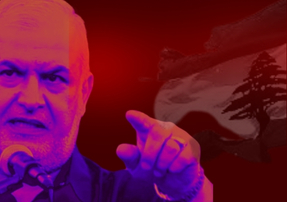
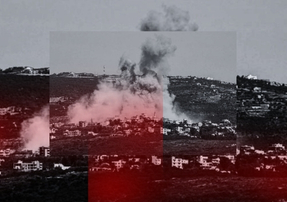
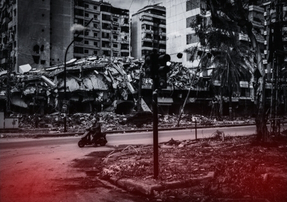
These introductory reflections provide a theoretical framework for examining the society of Hezbollah in Lebanon after the most recent war between Hezbollah and Israel in 2024, and the collective shocks and existential crisis produced by that war—crises whose contours can be discerned in the behavior of the community and in what lies beneath that behavior.
By “Hezbollah society,” this text refers to the broader social body that encompasses both its elites and its supporters: that collective entity whose imagined self-image has been constructed upon historical, religious, and political reference points, all presented within the unified framework of the doctrine of Wilayat al-Faqih (Guardianship of the Jurist). Through its logical implications and structural necessities, this doctrine constitutes one of the central foundations upon which Hezbollah society’s imagined self-image has been built. It serves as the framework within which historical, religious, and political references are integrated and presented to followers as a politico-jurisprudential theory that transcends considerations of place—and even of time.[1] Running parallel to this doctrine is another crucial element: Hezbollah’s own narrative, through which it presents the history of the Shiites in Lebanon—before Hezbollah, with Hezbollah, and after Hezbollah—as well as the party’s place within the present and future of this sect.
[1] On this idea, see: Political Shiism Against Its Opponents: Reflections on Ten Years of Violence, UMAM Documentation and Research, January 2026, pp. 19–20.
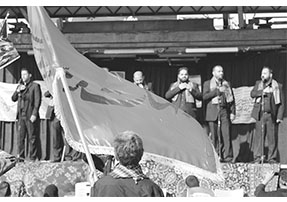
The way people engage with an event—whether historical or contemporary—depends first and foremost on how they imagine the event itself and the nature of their relationship to it. From this perspective, the first Ashura commemorations after the war (June 27 – July 6, 2025) differed from all previous commemorations in terms of the ability to project Karbala—with all its symbolism and tragedy—onto the horrific reality under whose weight most of the Shiite community now lives.
A large proportion of those attending the Ashura gatherings organized by Hezbollah and Amal Movement—if not the majority—had lost a relative or friend, or had themselves been wounded during the war. Consequently, their ability to summon the tragedies and sufferings of Karbala and project them onto themselves reached its peak. This is especially true given that Hezbollah society, particularly its younger generations, was raised and socialized through a discourse built upon identifying with Karbala and projecting it onto the self.
From this perspective, the Ashura commemorations of 2025 may be described as the second collective migration into history, following the first migration that occurred on the eve and day of the funeral procession for Hezbollah’s former Secretary-General, Hassan Nasrallah, on February 23, 2025. During that moment, a process unfolded in which the events and symbols of Karbala in general—and the figure of Imam Hussein in particular—were projected onto the person of Nasrallah.[1]
An important distinction emerges here in the way history and its figures are approached, one that differentiates the “elites” from the “public” within Hezbollah society. While the broader public tends to invoke the figure of Imam Hussein and project it onto Sayyed Nasrallah—who is at times described as “the Hussein of the عصر” (“the Hussein of our age”) and “the Master of the Martyrs of the Nation,” a title inspired by the epithet “Master of the Martyrs” traditionally associated with Imam Hussein—a segment of the “elites” tends instead to invoke historical Shiite leaders who do not possess sacred status, most notably the figure of Nasif al-Nassar.[2]
Indeed, comparisons between al-Nassar and Nasrallah have themselves become the subject of debate among certain Shiite intellectual circles outside the framework of Hezbollah.[3]
[1] For more on this idea, see: “Nasrallah’s Funeral… The ‘Hussein of the Age’ Dies Twice!”, by Najib al-Attar, Janoubia, February 24, 2025.
[2] It is worth noting that the “Qabas Association for the Preservation of Religious Heritage in Lebanon,” affiliated with Hezbollah, in cooperation with the Union of Municipalities of Bint Jbeil, erected a memorial to al-Nassar at his burial site in Yaroun in 2014.
[3] See: “From the Sheikh to the Sayyed: A Reading Through the Lens of Failed Bets,” by Bahaa al-Husseini al-Amili, Van No. 4, Issue 22, June 3, 2025, p. 8.
Running parallel to this collective migration into history—which becomes especially visible during occasions dominated by emotional and affective dimensions—we can observe a growing interest within Hezbollah society in the history of the Shiites in Lebanon. This interest had existed previously, but before the latest war it was far less noticeable. In many cases, it functioned merely as a tool within internal political polemics driven by Hezbollah’s relationship with Iran, rarely going beyond rhetorical one-upmanship and point-scoring in political debate.
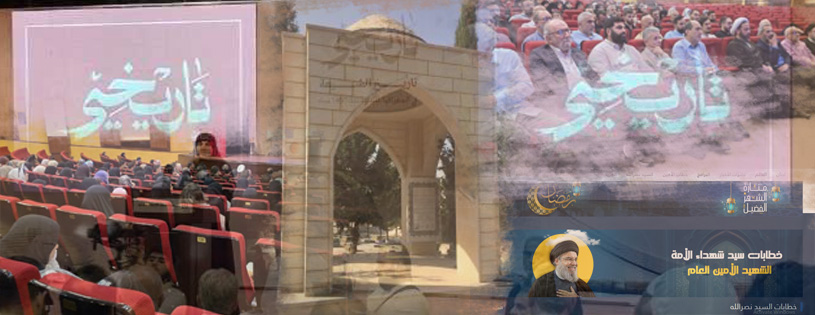
One of the clearest motivations behind this renewed interest appears to be the existential crisis experienced by the Shiite community in Lebanon after the war, even if Hezbollah society itself has become the segment most exposed to that crisis and to the anxieties it imposes upon the Shiite present—regardless of how realistic those fears may be or whether they are likely to materialize. It is within this context that Hezbollah, through the “Simia Foundation for New Media,” launched a podcast titled Tarikhi (“My History”) as a form of response to the existential crisis that has begun to affect its social environment. At the same time, the podcast emerged amid increasing accusations questioning Hezbollah’s Lebanese identity and portraying its allegiance to Iran as superseding its allegiance to Lebanon. It is worth noting that the cultural and moral activity of any political party cannot be discussed in isolation from that party’s broader political project. The same applies to Hezbollah, just as it does to other political parties in Lebanon. On October 9, 2025—during the atmosphere surrounding the second anniversary of Hezbollah’s entry into the “Support War”—the Simia Foundation for New Media announced the launch of the Tarikhi program, written and hosted by Ayman Zghib, during an event held at the Ghobeiry Municipality Cultural Center, at Risalat Theater.[1]
According to the foundation, the launch of the program came “in fulfillment of the recommendations of the Master of the Martyrs of the Nation and his Hashemite confidant regarding the priority of documenting the history of the Shiites in Lebanon.” By the time of writing this report, the Tarikhi podcast channel on YouTube had published an introductory episode, four episodes hosted solely by Zghib, and two episodes featuring researcher Ali Jaber.
Before proceeding further with presentation and analysis, it should be clarified that this text is not concerned with critiquing the historical narrative itself or investigating whether it is true or false. Rather, it is concerned with examining the manner in which the program—and the other materials discussed in this text—engages with history and historical narratives. Consequently, any discussion of the accounts presented therein is intended as a discussion of the broader methodology of approaching history as a discipline governed by methods, tools, and logical principles, rather than as an ideology.
The Tarikhi podcast is laden with symbols and suggestions, alongside clear indications of a significant degree of direction and both direct and indirect presence of Hezbollah’s narratives concerning the Shiites in Lebanon—or, more precisely, concerning Hezbollah’s place within the Shiite community in Lebanon.
An attentive viewer can hardly overlook the symbolism embedded in the program’s opening sequence and the questions it raises. The intro displays a map of modern Lebanon surrounded by the double-edged sword attributed to Imam Ali ibn Abi Talib and an old-style rifle dating back to the Ottoman and French periods—a clear reference to the narrative that links the Shiite community, almost inseparably, to warfare throughout history under the banners of “jihad” and “resistance,” or their equivalents.
The sequence concludes with the phrase “I bear witness that Muhammad is the Messenger of God,” taken from a call to prayer recited in a Persian-accented style by the Azerbaijani chanter Sayyed Taleh Boradigahi, widely known as “Sayyed Taleh.” The first question that may arise here is: what is the purpose of using the call to prayer in a Persian accent, specifically with the phrase “I bear witness that Muhammad is the Messenger of God”? One might have expected instead the inclusion of “I bear witness that Ali is the Friend of God,” given that the podcast concerns the Shiites, whose call to prayer is distinguished by the so-called “third testimony.”
Furthermore, what does the Persian accent signify within a discussion centered on a community whose “founding fathers—the ancestors of the people of southern Lebanon,” as the program’s host Ayman Zghib states in his introduction, belong to the Arab Amila tribe?
That very introduction also attempts to answer the question posed by its title: “The History of the Shiites in Lebanon… Why Tell It Now?”
The introduction opens with a speech by Musa al-Sadr which, according to the program, dates back to his famous address at the Tyre Festival on May 5, 1974. In it, al-Sadr declares: “I will not accept that the skies of Beirut, the North, and the Beqaa be violated every day by Israeli aircraft before those of the South.” Such an opening reflects the impact of the reality produced by the latest war and the role these outcomes played in generating Hezbollah’s sudden interest in narrating the history of the Shiite community in Lebanon.
If the motive behind including al-Sadr’s speech lies in his status as the “founder” of the Shiite political condition in Lebanon according to the narratives of both Hezbollah and Amal Movement, then the specific choice of this excerpt from among his many speeches is precisely what justifies linking the consequences of the recent war to this renewed interest in historical narration. Numerous methodological problems may therefore be raised concerning what appears in this introduction, which is presumably intended to establish the broader framework and method through which the podcast will proceed in narrating history.
The first methodological problem lies in the term “the Shiite community,” which the program’s host employs in a manner that effectively reduces the entire Shiite sect to Hezbollah—a problem that has long accompanied both the party’s discourse and political practice.
According to Ayman Zghib, the “Shiite community” whose history the program seeks to narrate is today asking four questions “repeatedly, either directly or subconsciously.” These questions are:
“Was Sayyed Hassan the first historical leader of the Shiite community?”
“Was he the only historical leader who left a renaissance-like impact on the community’s condition?”
“Was he the first historical leader of the Shiite community to be martyred?”
“Did the Shiite community disappear with the loss of its historical leader?”
Zghib’s answer to all four questions is “No.”
Quite apart from the debates these questions themselves may provoke—particularly regarding the notion of a “renaissance-like impact”—the reduction of the sect to the party becomes evident in the fact that the questions ignore a basic reality: that Hassan Nasrallah was a historical leader of Hezbollah alone, not of the Shiite community in Lebanon as a whole.
Beyond the Shiite groups opposed to Hezbollah, who do not regard Nasrallah as their leader, even Amal Movement—despite the considerable respect many of its supporters held for him—did not generally see him as their historical leader. Some among them instead viewed him as a rival to Amal’s own historic leadership embodied in its head, Nabih Berri. Consequently, these questions concern no one except Hezbollah society itself, a society struggling with the immense void left by the assassination of its historical leadership.
After addressing these questions, Zghib concludes by stating:
“The Shiite community is capable, at the appropriate time and within the appropriate geography, of producing a new historical leader.” This statement appears to carry two implicit objectives. The first is to reinforce the logic of “sacrifice” that has governed the behavior of this community since 1982. The second is to prepare the “community” psychologically for the future loss of yet another historical leader.
It is difficult to ignore the fact that the only historical leader remaining for this community at a level comparable to Nasrallah is the Iranian Supreme Leader Ali Khamenei, who today faces existential threats and challenges directed both at his regime and at his own person.[1]
The second methodological problem lies in the program’s approach to history itself. The histories of communities and nations cannot simply become objects of pride, just as they should not become instruments of reproach. One of the major causes of crises and catastrophes in the Arab and Islamic worlds has precisely been the transformation of history into a weapon and tool within political confrontation. This problem appears clearly when Zghib states that if he had to describe the history of the “Shiite community” in Lebanon in two words, they would be: “miracle” and “pride.”
Regardless of whatever “justifications” may exist for using such terms, approaching history as a scholarly discipline—and especially the history of political communities—necessarily limits the possibility of treating it as a source of collective glorification. Pride may perhaps be justified in relation to a particular event or a specific historical figure. But to approach an entire historical trajectory extending across “1,400 years,” as the program claims,[2] from the standpoint of pride is fundamentally an ideological position rather than a scholarly one.In this regard, one may return to the first and second chapters of The History of the Shiites in Lebanon, Volume One, published by UMAM Documentation and Research, which examines the differing views regarding the Shiite presence in Lebanon. Added to the previous two methodological problems is a third, revealed in Zghib’s assertion that he intends to narrate history “not as you have read it, nor as you have heard it, but as it actually happened.”
It is difficult to imagine a genuine historian embracing such a task—the task of recounting history “as it actually happened.”
In contrast, the contours of the existential crisis and the state of disorientation that struck Hezbollah’s broader narrative following the latest war become visible through several indicators, most notably the following: In the introduction to his program, Ayman Zghib states that the podcast is not concerned with “providing reassurances about what will happen in the coming days. Its role is not to ask whether the Shiite community will triumph in the future.” Rather, he argues, the question the program can ask—and answer—is:
“Does the Shiite community possess the ability to confront present and future challenges?”
To which he immediately replies:
“Yes, it does. What is the proof? The historical CV of this community.”
Here, it becomes clear that the narrative structure that existed before the war is now facing genuine challenges, to the extent that it is no longer sufficient on its own to absorb collective shocks and reassure the party’s “environment.” This has pushed Hezbollah society toward searching for reassurance about the future of the “community” within its own “historical CV,” despite Zghib himself denying that the program’s purpose is to “provide reassurances.”
Further evidence that the postwar reality—with all its consequences and disputes with domestic rivals—is a primary motivation behind this turn toward historical narration appears in Zghib’s statement that the program “provides answers to the same questions raised by political programs,” except that history’s answers, he claims, are deeper because they rely on historical events and “facts.” Thus, the podcast appears as an extension of the process of broadcasting and diversifying the narratives already circulated through Hezbollah’s official and unofficial political media platforms. Some of the sensitive issues confronting Hezbollah within Lebanon also emerge clearly here, most notably the discourse questioning the party’s Lebanese identity. This becomes evident in Zghib’s remark:
“When someone tells you: ‘You’re a Lebanese Shiite? Then go back to Iraq,’”
or:
“Go back to your Supreme Leader or to Safavid Iran.”
Regardless of whether such rhetoric is legitimate or accurate, it clearly constitutes a challenge for Hezbollah within the broader context of the tensions surrounding its relationship with Iran and its ability to justify that relationship through means other than purely ideological arguments.
The extent to which present political pressures shape the thinking of the program’s creators becomes even clearer in Zghib’s address to the “Shiite” viewer: “Your sense of dignity should not rest upon the opinion of others about you—whether they approve of your political positioning or not—but rather upon your historical depth.”
The question of loyalty to Iran also appears prominently in Zghib’s discourse. He urges Lebanese viewers to focus on two important points. The first is that the original wali al-faqih was Lebanese: the jurist al-Muhaqqiq al-Karaki, who was also the maternal ancestor of Supreme Leader Ali Khamenei. The implication is that the Shiites of Lebanon were the original theorists of Wilayat al-Faqih, rather than the Iranians.
The second point concerns the shrine of Imam Ali al-Rida in the Iranian city of Mashhad. According to Zghib, visits to the shrine traditionally begin with a visit to the tomb of the renowned Shiite scholar known as Sheikh al-Baha’i, who originated from the town of Iaat in Baalbek. Zghib adds that visitors “seek permission” from the Lebanese Sheikh al-Baha’i before visiting Imam al-Rida.
In reality, the postwar period witnessed the growing circulation of precisely this portrayal of the relationship between Iran and Hezbollah’s Shiites: namely, the idea that the Shiites who historically lived in Lebanese geography—such as al-Muhaqqiq al-Karaki—were the ones who “Shiified Iran,” rather than Iran being the force that Shiified them.
I recall hearing discussions during the period of the “Support War” among some Hezbollah supporters in which one participant argued that the party itself had helped Iran develop its drone capabilities. Some even used the expression that “the brains” behind these developments were Lebanese—most notably Hezbollah military commander Hassan al-Laqis, who is often described as the “engineer of the party’s drones” and who was assassinated outside his home in Hadath, Beirut, on December 3–4, 2013.
Thus, the Tarikhi podcast—with its manner of approaching Shiite history within Lebanese geography, along with all the methodological problems and narratives it carries—constitutes, in its entirety, a model of Hezbollah’s attempt to search within Shiite history for a “reassuring” future for its community. In this sense, it may be regarded as a central component of the broader intellectual and ideological system the party presents to its supporters.
This idea can be felt clearly in one final quotation from the Tarikhi podcast, in which Ayman Zghib states:
“History repeats itself.”
He then adds:
“This phrase itself is an answer to a question the Shiite community has been asking itself repeatedly in recent times: ‘Has what happened to us now happened before?’”
He immediately answers:
“Yes, it has happened before. You only need to change the names of the heroes.”
The message conveyed here to Hezbollah’s supporters is indirect but unmistakable:
“Do not lose faith in us. This is not our first catastrophe, nor is it the first time we have lost our historical leaders.”
[1] It should be noted that this text was written before the outbreak of war against Iran on February 28, 2026, and before the assassination of Iranian Supreme Leader Ali Khamenei. In order to preserve the integrity of the text, no modifications were made to account for developments that occurred after its writing; hence this clarification.
[2] There remains a methodological problem requiring discussion regarding the notion of a Shiite history predating the formal establishment of Shiism as a distinct school with Imam Ja‘far al-Sadiq (d. 765 CE), and later with Shaykh al-Mufid (d. 1022 CE).
[3] Youssef Jaber, “‘Simia’ Launches the Program Tarikhi: Facts and Documents on the History of the Shiites in Lebanon Presented for the First Time,” Al-Ahed News, October 9, 2025.
Hezbollah’s turn toward history is not limited to the distant Shiite past in Lebanon. Interest has also increased in modern Shiite history—that is, the history extending from the beginning of the twentieth century onward—as well as in the foundational period of Hezbollah itself and of Political Shiism more broadly.
What is striking here is that Hezbollah’s previous interest in Shiite history generally emerged within the framework of its interest in its own history. On the fortieth anniversary of its founding in 2022, for example, the party organized several activities documenting its own trajectory in Lebanon under the title “Forty Springs.”
What has now begun to intensify, however, is interest in the “history of the Shiites in Lebanon” as such—a formulation that Hezbollah itself did not previously employ so explicitly or so frequently. Instead, the preferred term had long been “the Resistance.”
In other words, before the war, Hezbollah presented the history of “the Resistance” in Lebanon—a history which, from the party’s perspective, effectively corresponded to its own history within Shiite geography, since Hezbollah monopolizes not only the practice of “resistance” but also the definition of the term itself. After the latest war, however, Hezbollah began using the phrase “the history of the Shiites in Lebanon” in a direct and explicit manner.
Thus, the Tarikhi podcast was not Hezbollah’s first entry into the realm of Shiite history in Lebanon within the framework outlined above. Alongside a large quantity of visual and audio material, articles, and everyday political polemics, one notices that the number of books produced in this field remains relatively limited.
The two most prominent examples are:
- Hezbollah: The Idea and the Journey, from the Founding Fathers to Al-Aqsa Flood
- The Shiites of Lebanon: The Religious-Cultural Formation 1900–2022
The two books were published roughly two months apart: the first on May 25, and the second on April 9, 2025.
Both devote significant attention to the periods preceding the emergence of Political Shiism with Musa al-Sadr and later with Hezbollah itself.
The relative scarcity of books may partly reflect the broader decline in readership and the growing preference for visual and audio media over written material, though other reasons may also be involved.
There also exists a relatively large number of media platforms producing episodes under the banner of “The History of the Shiites in Lebanon.” Among them is:
- The Mubeen podcast, featuring Sheikh Akram Barakat. The first episode aired on January 23, 2025, hosted by Mohammad Nasr from Al-Manar. The opening episode, titled “Confused Concepts After the Battle of the Mighty,” discusses several concepts that are themselves subjects of dispute between Hezbollah and its opponents—such as defeat and victory—while also offering a reading of the war within its broader context.
On May 23, 2025, the platform began broadcasting a series on the history of the Shiites as both a religious sect and a political community within Lebanese geography, this time with a new host. By the time of writing this study, four episodes had aired under the title:
“The Journey of Shiism: From the Documentation of Heritage to the Theory of State-Building.”
The first episode begins with Shiism as a religious doctrine before moving, over the following three episodes, into the history of the Shiites in Lebanon. According to the platform, a fifth and final episode in the series remains forthcoming.
- The Al-Mahatta platform: Journalists Hassan Aliq, Radwan Mortada, and others present episodes on a variety of subjects. As such, the platform—which has been broadcasting since June 2012—does not specialize in the history of the Shiites in Lebanon in the same way as the Tarikhi podcast.
However, in the period following the war, Al-Mahatta began revisiting the modern history of the Shiites in Lebanon—the history that contributed to shaping Political Shiism and, more specifically, Hezbollah—through a new program broadcast by the platform titled The Dividing Line, hosted by journalist Ghassan Jawad.
The first episode aired on August 30, 2025, under the title “When Was Lebanon Independent?”—a topic that aligns closely with Hezbollah’s narrative surrounding sovereignty, which forms the central theme of the episode just as it forms a major axis of the political disputes between Hezbollah and its opponents.
The second episode, aired on September 7, 2025, was titled “Are the Lebanese Phoenicians or Arabs?”
The third episode, “Resistance and the State in Lebanon and the Arab World: Lessons from History,” discusses several issues, including the emergence of the “Palestinian resistance movements” and Hezbollah itself. In the episode, Jawad raises the following question:
“Does integration between the state and the resistance represent an opportunity to protect nations, or a threat to their existence?”
This question, too, clearly emerges from Hezbollah’s own narrative, through which it advocates “integration between the state and the resistance” via its particular understanding of a “defense strategy” and the formula it calls the “Golden Trilogy”: “Army, People, Resistance.”
The fourth episode, aired on October 1, 2025, was titled “The Story of the Israeli Invasion of Beirut in 1982.” In it, Ghassan Jawad hosted Rafi Madoyan, the son of former Lebanese Communist Party Secretary-General George Hawi.
In addition, Jawad presented an episode on November 24, 2025, titled “The History of Jabal Amel’s Steadfastness: 1781–2024.” The episode traced the period from the Battle of Yaroun in 1781—during which the Shiite leader Nasif al-Nassar was killed, followed by what became known as the Shiite “Nakba” in the South at the hands of Ahmad Pasha al-Jazzar—to the “Battle of the Mighty” in 2024, which produced outcomes resembling, in form, that first catastrophe.
- The Second Narrative podcast: The platform’s YouTube channel was launched on May 28, 2025. It features a series of episodes which its creators describe as:
“Opening closed files and redrawing the scene from Tehran to Beirut.”
The platform focuses primarily on the affairs of the so-called “Axis” extending from Iran to Beirut.
The episodes host various guests discussing different topics. On October 5, 2025, the platform published an episode with Sheikh Akram Barakat titled “Wilayat al-Faqih,” which explored the history and roots of the doctrine, its evolution after 1979, and the reasons behind Hezbollah Shiites’ embrace of it in Lebanon. The episode also raised the idea that Lebanese Shiites themselves originated the theory, while Ruhollah Khomeini merely implemented it rather than inventing it.
Another episode, published on August 20, 2025, under the title “Iran in Lebanon: A Historical Relationship or an Occupation?” featured journalist Mohammad Shams. The discussion centered on the history of relations between Iran and Lebanon before and after the emergence of Hezbollah, as well as the relationship between Lebanon’s Shiites and Iran during the period of Musa al-Sadr’s presence in Lebanon, the participation of Amal Movement in the Iran-Iraq War on Iran’s side, and eventually Hezbollah’s relationship with Iran.
The platform also aired an episode on August 1, 2025, with Palestinian journalist Kamal Khalaf titled “Why Did Iran Intervene in Syria?” The episode discussed the history of Syrian-Iranian relations, Hezbollah’s involvement in the Syrian war, and the history of the party’s relationship with the Syrian regime under both Hafez al-Assad and Bashar al-Assad.
In addition, the platform published nine other episodes addressing various topics related to Iran’s relationship with the region, where historical narratives and political narratives heavily intertwine.
- Al Mayadeen: The channel began broadcasting documentaries on the history of Hezbollah in Lebanon and its conflict with Israel.
For example, on November 9, 2025, the channel began airing a documentary series titled The Road to Freedom. Its first part discussed the Ansar detention camp and its establishment in 1982, featuring “rare archival footage and exclusive images from inside the prison,” alongside testimonies from former detainees and from Hezbollah figure Samir Kuntar, who was killed in Syria in 2015. The documentary also addressed the Khiam detention center and the operations of various Palestinian and Lebanese “resistance” movements.
The second part focused primarily on the case of Israeli soldier Ron Arad, in addition to prisoner exchange operations in 1996 and 1997. The third part covered the period between 1997 and May 2000, while the fourth—and latest—installment dealt with the years 2000 to 2002.
On February 16, 2026, marking the forty-first anniversary of Hezbollah’s founding, Al Mayadeen released another documentary on the “martyrdom operation” carried out by Ahmad Qasir in 1982 under the title:
“Operation Khaybar 1982: Secrets Behind Planning and Executing the ‘Earthquake of ’82’ in Lebanon!”
The documentary included filmed testimony from Hezbollah’s Southern Front commander Ali Karaki (Abu al-Fadl), whom Israel assassinated alongside Hassan Nasrallah on September 27, 2024.
It is worth noting that even before the war, Al Mayadeen had already shown considerable interest in broadcasting documentaries related to Hezbollah’s history and, more broadly, to the Iranian “Axis.”
In addition to these numerous visual programs, a large number of articles and polemics have emerged re-narrating Shiite history in Lebanon from within Hezbollah’s broader orbit.
For instance, the newspaper Al-Akhbar published a series of articles by writer As’ad AbuKhalil totaling thirty-two articles between April 26, 2025, and January 24, 2026, under the title:
“A Critical Review of Hezbollah’s Political and Military Experience.”
The newspaper also published four additional articles between January 31 and February 21, 2026, under the title:
“The Role of Shiite Leaders in Contemporary Lebanon: The Memoirs of Kazem al-Khalil.”
Two days after the death of Dr. Saadoun Hamadeh—one of the most prominent and controversial writers on Shiite history in Lebanon—Al-Akhbar published an article on September 3, 2025, titled:
“Saadoun Hamadeh… The Resistance Historian Who Corrected Lebanon’s History”
alongside another article published the same day titled:
“Returning to the Most Important Lesson of History: The Displacement of Resistance Fighters as a Continuing Policy.”
What is striking is that, during a quick review of Al-Akhbar’s archive, we found virtually no mention of Saadoun Hamadeh—the man said to have “corrected Lebanon’s history”—outside these two articles alone. Of course, room remains both to dispute the accuracy of this observation and to draw whatever conclusions one might from it should it prove correct.
As for the political polemics taking place between Hezbollah-affiliated media figures and those aligned with its opponents, nearly all the themes mentioned above recur constantly in these exchanges.
The two most frequently debated subjects in daily disputes—even among social media influencers—are the antiquity of the Shiite presence in Lebanon and the relationship with Iran. One repeatedly hears phrases such as:
“We Shiified Iran,”
or
“We brought Shiism to Iran.”
Anyone researching the subject can hear such formulations directly from influencers or from historically minded members of Hezbollah’s public.
Naturally, anyone familiar with Lebanese political polemics understands that these statements are not made out of a sense of superiority over Iran or claims of precedence. Rather, they function primarily as responses to the rhetoric telling Hezbollah supporters to “go back to Iran.”
Returning to a phrase mentioned earlier in the introduction to the Tarikhi podcast—that “history repeats itself”—perhaps the most immediate question that arises is: does history truly repeat itself?
The answer is, most likely, yes. It often does.
But the more important and necessary question is this: should history repeat itself? Must we merely “change the names of the heroes,” as the program’s host Ayman Zghib invites us to do?
In reality, answering this question forms part of the answer to another question altogether: why study history in the first place?
The study and philosophy of history are, above all else, humanity’s primary means of preventing history from endlessly reproducing itself. On this point, the late Iranian thinker Ali Shariati—who considered history to be one of the four prisons of the human being—states in a lecture titled The Four Prisons of Man that:
“If the human being, with the help of historical knowledge and the philosophy of history, succeeds in discovering the movement of history and the laws governing it; and if he is able to discover the factors of history and how they shape my formation—as a human being or as a people—intellectually, volitionally, emotionally, and morally…”
then humanity may become capable of escaping what Shariati calls “the determinism of history.”[1]
But if we instead adopt the theory of merely “changing the names of the heroes,” whereby history endlessly reproduces itself through the eternal “struggle between truth and falsehood,” through the idea that “blood triumphs over the sword,” and through the belief that the “Shiite community” survives despite successive catastrophes while only the names of its heroes change—
yesterday the hero was Imam Ali, then Hussein; later it was Nasif al-Nassar; today it is Hassan Nasrallah; tomorrow it may be Ali Khamenei; and the day after tomorrow, the “Shiite community,” “at the appropriate time and within the appropriate geography,” will produce yet another historical leader, in Zghib’s words—
then all of this may indeed produce a certain stability for Hezbollah’s narrative within the minds of its community. It may plant in the hearts of supporters a sense of reassurance about the future under the party’s leadership, even if that reassurance is false. It may restore some confidence in the party and its choices among those whose faith in it was shaken or weakened by the latest war.
All of this may happen.
But at the very same time, it also constitutes a promise of another Nakba—and of yet another “hero” for whom history will once again repeat itself, indifferent to the deaths of thousands more and the destruction of new villages.
Perhaps it would be better for any community not to possess a history at all than to carry a history that knows nothing except the repetition of massacres, slaughter, and catastrophe.
Perhaps it would be better for the Shiite sect itself—and for the preservation of its blood—to begin its history and existence in Lebanon anew from today, rather than continue carrying a history with which it can engage only through a logic that summons calamity from every direction, and through a worldview that finds comfort only in endlessly reenacting The Maqatil al-Talibiyyin—the chronicles of the slaughter of the descendants of Abu Talib.
[1] See: Man and Islam, Dar al-Amir, second edition, p. 181.
In the later phase of Political Shiism, interest in the old and modern history of this sect has increased dramatically, each according to their own motives and objectives. One could say that, after the latest war between Hezbollah and Israel, the subject of “the history of the Shiites in Lebanon” has become an increasingly attractive theme not only for Shiites themselves, but for others as well—particularly through podcasts and audiovisual material more generally. The reasons behind this interest vary according to the viewers and the purposes motivating their engagement.
As for Lebanese Shiites themselves, their interest in history may be said to have begun as an interest in the history of Shiism as a religious doctrine before gradually evolving into a more specialized concern with their own history as Shiites within Lebanese political geography.
This shift in the nature of that interest appears, to a considerable extent, to stem from the interaction of this sect with the political upheavals and transformations unfolding across the region.
It is therefore essential that the history of the Shiites become a subject of study and inquiry—and that such inquiry be conducted in a rigorous, critical, and courageous scholarly manner. Not in a way that merely tells us that the Shiite sect is capable of surviving the catastrophes it repeatedly brings upon itself whenever nations clash, but rather in a way that explains how future catastrophes might be prevented.
It is necessary to study the history of this sect and to dismantle and reconstruct it anew—not simply to recite it endlessly—in order to understand why this sect, collectively, has failed to prevent a history saturated with catastrophes from endlessly repeating itself without any real change other than the “names of the heroes.”