.png)
Did Lebanese Shiites truly possess the ability to choose? And can choosing between the bad and the worse really be considered a free choice? If options are absent or severely limited, does that absolve people of responsibility?
These are questions for which we may not yet have answers. Perhaps a time will come when the dust settles and the picture becomes clearer, allowing us to discover whether our readings and positions were right—or wrong. And then the more difficult question will emerge: will we dare to re-examine ourselves?
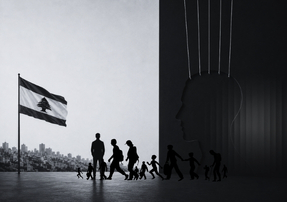
If we try today to think calmly, away from emotion, and without sinking into the distant history of communities—a history that will neither fully acquit nor fully condemn anyone—what do we find? Perhaps we find that Lebanese Shiites, like other Lebanese communities, were not always masters of their own decisions over the past hundred years. Rather, they were often commas and pauses within larger regional and international texts that shaped their choices, directed their trajectories, and determined their roles.
Yet even within this context, the question remains open:
Is the absence of choices enough to absolve the actors involved? Or does responsibility persist, in one form or another, no matter how narrow the margins may be?
Since the establishment of Greater Lebanon in 1920, the incorporation of the regions of Jabal Amel into the emerging state was not the result of a clear collective choice. Rather, it came through a Mandate decision that imposed the inclusion of these areas within the new state for reasons tied to their economic and geographic structure, including securing agricultural and water resources.
Regardless of how one evaluates the alternatives available at the time, this moment remains foundational to understanding a relationship with the state that emerged less from explicit will than from imposed incorporation.
The sectarian system in Lebanon was never merely a framework for organizing diversity, as many observers too easily describe it. Rather, it was—and remains—a structure that legitimizes the exposure of communities to external interventions and facilitates outside influence over them.
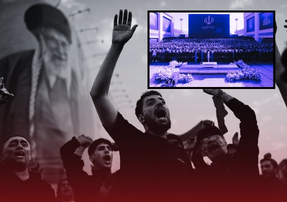
Within this context, Iranian political influence within the Lebanese Shiite environment began during the era of the Shah—and even earlier—through the religious seminaries (hawzas). It deepened further after 1979 under the Islamic Republic. The arrival of Musa al-Sadr in Lebanon in 1959 marked a pivotal moment in the political and social reorganization and institutionalization of the Shiite sect, a process that gradually came to include elements of mobilization, militarization, and involvement in the civil conflict.
This trajectory, together with subsequent regional transformations, contributed to the integration of part of this social environment into the project of Wilayat al-Faqih (“Guardianship of the Jurist”), introducing an ideological dimension into Iranian involvement in Lebanon.
At the same time, broader historical transformations were already reshaping the very conditions of life itself. The establishment of Israel in 1948 was not merely a distant political event or a general regional issue. It was a moment that severed the natural economic extension of southern Lebanon and pushed the region onto a path of marginalization—without the Lebanese state responding through meaningful policies of compensation or development. This was not a choice made by the inhabitants of the region, yet it gradually drove them into the center of a conflict whose terms they had not set.
Within the same context, the relocation of the Palestine Liberation Organization to southern Lebanon directly inserted the region into a broader regional and international equation. Lebanese Shiites did not play a decisive role in making this decision or shaping its course, yet they found themselves at the heart of its consequences, paying its security and social costs, as well as enduring occupation for more than eighteen years. It was one of the clearest examples of the difference between being present at the center of an event and possessing the ability to control it.
Within this reality, attempts emerged to reshape the community’s internal position, yet they were never sufficient to break free from the broader conditions governing the overall trajectory. With the outbreak of the Lebanese Civil War, this entanglement became even more complex, and involvement in the conflict appeared as a mixture of self-defense and submission to larger regional equations. Over time, the political and military role expanded, and the community’s position shifted from the margins to the center of power—but without ever freeing itself from the regional networks that had contributed to its formation. On the contrary, it increasingly became an instrument through which those networks governed the Lebanese internal scene.
Yet this very trajectory now seems to be reaching a harsh moment of exposure. The balances that shaped Lebanon after the Civil War—balances that stabilized the roles of various forces within broader regional and international understandings—no longer appear to exist today. Amid the rapid transformations sweeping the region, the structures and instruments forged in an earlier era seem to have lost their validity and are moving toward reconfiguration, preceded by phases of chaos and collapse.
Once again, Lebanese Shiites find themselves at the center of a storm whose course they do not fully control, yet whose costs they bear directly—security-wise, economically, and socially—in ways resembling a catastrophe crushing the foundations of their existence.
It is as though the very trajectory that once granted them a position of power now returns to confront them with the consequences of those same choices, at a moment when the region and the international order alike are undergoing profound reconfiguration. This pattern, however, does not appear unique to a single community. If this analysis were rewritten with another Lebanese group substituted in place of the Shiites, one would find the same experience repeating itself in different forms. The Lebanese system, as a sectarian coalition, never truly produced independent spaces for political decision-making. Instead, it exposed communities to external intervention and rendered their involvement in conflicts larger than themselves almost permanent—an involvement that repeatedly led to violent and extremist outcomes.
And yet, none of the above absolves anyone of responsibility. Even within these conditions, communities were never merely victims. Whenever they reached positions of power—often through external backing or shifting regional dynamics—they themselves exercised forms of domination over others, relying on an excess of security, political, symbolic, or financial power. At the same time, they transformed their own supportive environments into networks of profiteers and beneficiaries, ultimately trapping those environments in isolation once the broader balance of power began to shift.
Each time, the balance of power appeared stable—until the equation reversed itself once again, turning the strong into the weak and the weak into the strong, within a cycle that endlessly repeats without ever altering its underlying logic.
Here, the more urgent question emerges:
Can this cycle be broken?
Can there be a different moment—one in which those who possess power choose not to reproduce it in the form of domination?
Until that happens, the question remains open—not only about the past, but also about what we will do once the picture becomes clear: Will we merely explain what happened, or will we possess the courage to re-examine it?