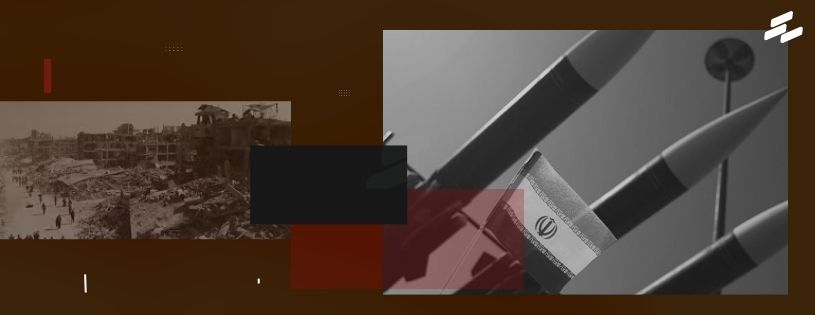
The month of February 2026 witnessed the continuation of the limited-engagement pattern along the Lebanese front, without any major qualitative shift in the nature of the confrontation. Israeli strikes remained within the framework of near-daily, limited-scale pressure, consisting of scattered airstrikes, precision targeting operations, artillery shelling, and intensive drone overflights.
This balance, however, remained in place only until the final days of the month, when the outbreak of war between the United States and Israel on one side and Iran on the other shifted the scene from a tightly managed daily confrontation inside Lebanon to anticipation surrounding an open regional decision-making process that reshuffled political and military calculations alike.
First: The Nature and Evolution of Israeli Strikes
Field data during February indicates a relatively stable and low-intensity pattern of Israeli operations, characterized by the following:
- Near-daily and limited airstrikes targeting villages and towns in southern Lebanon and the Bekaa Valley, without any notable expansion in depth or scale of destruction.
- Drone strikes targeting individuals, particularly against cars and motorcycles, reflecting a focus on specific targets rather than broad infrastructure.
- Ongoing artillery shelling targeting border villages, especially frontline communities, within a framework of sustained pressure.
- Intensive low-altitude drone flights aimed at reconnaissance and maintaining a constant aerial presence.
- Limited incursions and engineering operations, including bulldozing, demolitions, and localized reinforcements along the border, without major field changes.
Second: Hezbollah’s Position
Throughout the month, Hezbollah maintained a consistent discourse centered on the idea that resistance remains a necessity and that its weapons are not open to discussion as long as Israeli attacks continue.
Its discourse focused on:
- The continuation of the resistance option.
- Rejecting any discussion of disarmament before the cessation of Israeli aggression.
- Presenting Israeli attacks as proof of the continued need for weapons.
- Avoiding any explicit declaration of intent to escalate.
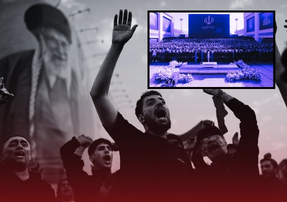
The most significant shift, however, came at the end of the month following the targeting of Iran, when Hezbollah’s discourse entered a phase of ambiguity:
- No explicit announcement of retaliation.
- Yet no clear exclusion of such a possibility either.
This created the impression that the decision was no longer entirely local.
This reflected a transition from a tightly controlled decision-making process to calculations increasingly tied to the broader regional context.
Third: The Position of the Amal Movement
The Amal Movement remained broadly aligned with what it describes as the “option of resistance,” while maintaining a more balanced and cautious tone.
Its discourse emphasized:
- That Israeli attacks target Lebanon as a whole.
- The importance of the role of the state, the Lebanese army, and official institutions.
- The necessity of avoiding a slide into full-scale war.
The coverage also highlighted the role of Nabih Berri as a political balancing figure—or a “safety valve”—through attempts to keep communication channels open and maintain internal stability amid rising tensions.
Fourth: The Positions of Shiite Opponents
February witnessed a gradual escalation in the discourse of Shiite opposition figures and groups, focusing on the following themes:
- That weapons outside state control expose Lebanon to continued attacks.
- That southern Lebanon is bearing the social and economic cost of the confrontation.
- The necessity of insulating Lebanon from regional axis conflicts.
- Rejecting the monopolization of political representation within the Shiite community.
Following the targeting of Iran, this discourse shifted into a more direct warning against dragging Lebanon into a war over which it has no real decision-making power.
Fifth: The Positions of the Government and Sovereignist Forces
The government and sovereignist political forces maintained their traditional position, centered on:
- The necessity of restricting weapons exclusively to the state.
- The full implementation of the ceasefire agreement.
- Viewing the continued existence of weapons outside state institutions as a lasting source of danger to Lebanon.
Toward the end of the month, however, warnings intensified over the risk of a broader confrontation, particularly if Hezbollah were to respond to the targeting of Iran.
In sum, February 2026 can be described as a month of field stalemate and escalating rhetoric.
Militarily, the confrontation remained within the framework of a low-intensity conflict, characterized by near-daily but limited Israeli strikes. Politically, however, debate intensified over Hezbollah’s weapons, the role of the state, and the broader cost of the confrontation.
The end of the month nevertheless marked a turning point, as the scene shifted from a tightly managed Lebanese framework to an open regional horizon, placing Lebanon in a phase of anticipation and uncertainty over a decision that could reshape the trajectory of the confrontation.