The month of January 2026 witnessed a marked increase in the pace of Israeli strikes on Lebanese territory, accompanied by intensifying domestic political debate, particularly over the weapons of Hezbollah and the role of the state, amid sharp divisions among political forces.
First: The Nature and Evolution of Israeli Strikes
Field data during this month indicates an escalating and diversified pattern of Israeli operations, including:
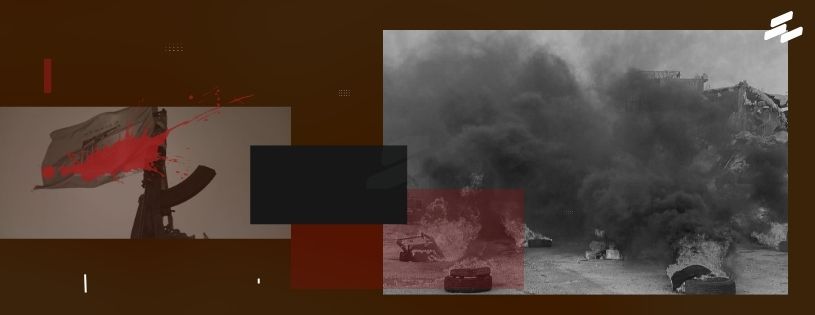
- Intensive airstrikes: Israeli warplanes and drones targeted multiple towns in southern Lebanon and the Bekaa Valley, including Ansar, Kharayeb, Kfour, Jarjouh, Qanaarit, Sarafand, Khirbet Selm, and Tayri, in addition to strikes deep inside areas north of the Litani River.
- Assassinations and precision strikes: carried out through drones targeting cars and motorcycles, resulting in deaths and injuries, with Israel claiming in the vast majority of cases that those targeted were Hezbollah members.
- Artillery shelling and machine-gun fire: targeting the outskirts of border towns such as Yaroun, Aitaroun, Kfarkela, and Dhayra.
- Limited ground incursions and operations: including infiltration operations and the demolition of homes in towns such as Kfarkela, Adaisseh, and Khiam, in addition to the construction of fortifications and the placement of barbed wire inside Lebanese territory.
- Targeting of homes, vehicles, and facilities, alongside the dropping of warning leaflets and sound bombs, as well as intensive drone overflights.
Israel consistently framed these strikes as efforts aimed at preventing Hezbollah from rebuilding its capabilities and at imposing new field realities, while keeping the escalation below the threshold of full-scale war.
Second: Hezbollah’s Position
Hezbollah maintained a consistent discourse built around several key pillars:
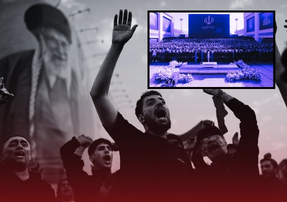
- Emphasizing the continuation of the resistance: Its leaders, most notably Secretary-General Naim Qassem, stressed that the option of resistance remains unwavering and that the party would not relinquish its weapons, considering them an integral part of Lebanon’s protection.
- Holding Israel and the United States responsible: Hezbollah argued that the attacks were being carried out with direct American backing and that their objective was to impose political concessions after failing to achieve military goals.
- Rejecting disarmament: The party strongly confronted calls for its disarmament, describing them as an attack on Lebanon itself, and accused certain officials—including the foreign minister—of adopting rhetoric that serves Israeli interests.
- Prioritizing an end to the aggression: Hezbollah insisted that any internal discussion must begin with ending Israeli attacks and securing Israel’s withdrawal from occupied territories.
- Reorganizing its internal structure: Reports indicated that the party was undertaking organizational and military restructuring, while also addressing internal matters such as compensation files, reflecting preparation for a prolonged phase of confrontation.
Third: The Position of the Amal Movement
The positions adopted by deputies from the Amal Movement largely intersected with those of Hezbollah, albeit with some distinctions:
- Supporting the resistance option: The movement affirmed that Israeli attacks target all of Lebanon and that the resistance constitutes a central element of strength.
- Nabih Berri’s balancing role: Nabih Berri emerged as a figure attempting to maintain balance, emphasizing support for the Lebanese army while pointing to Lebanon’s commitment to the ceasefire agreement in contrast to ongoing Israeli violations.
- Criticism of the government: The movement criticized certain governmental positions, particularly those perceived as justifying Israeli strikes or calling for political concessions.
- Openness to a political role: Some analyses suggested that Berri could play a role in the issue of disarmament, reflecting his position as both an internal and external mediator.
Fourth: The Positions of Shiite Opponents
During this month, Shiite opposition groups and figures demonstrated notable activity, expressed through:
- Emphasizing the exclusive control of weapons by the state: Positions issued by The Gathering of Lebanese Shiites, Coalition of Lebanese Democrats, and other groups stressed the necessity of restricting security and military decision-making to the state alone.
- Rejecting the monopolization of Shiite representation: These groups emphasized pluralism within the Shiite community and rejected the dominance of Hezbollah and the Amal Movement.
- Calling for political and economic reforms: Their discourse focused on issues such as corruption, social justice, and the distribution of financial losses.
- Rejecting Lebanon’s alignment with regional axes: They criticized Hezbollah’s ties to Iran and called for an independent foreign policy.
Fifth: The Positions of Other Political Blocs and Forces
The Lebanese political scene witnessed sharp polarization during this period:
- The government and some sovereignist political forces: called for the disarmament of Hezbollah and the full implementation of the ceasefire agreement, arguing that the existence of weapons outside state control exposes Lebanon to danger.
- Statements by Foreign Minister Youssef Raji: became a major point of controversy after he described Hezbollah’s weapons as illegitimate and suggested that Israel might view its continued strikes as justified in light of the agreement’s incomplete implementation.
These positions were met with sharp criticism from Hezbollah, the Amal Movement, and Shiite religious authorities, which considered them an infringement on national sovereignty.
- Positions of Shiite religious figures: including Jaafari Mufti Ahmad Qabalan and Deputy Head of the Supreme Islamic Shiite Council Ali al-Khatib, who stressed the priority of confronting Israel and rejected any discourse perceived as weakening the resistance.