.jpg)
The beginning of December 2025 witnessed a noticeable increase in security tensions along the southern front, coinciding with mounting international pressure to push forward a negotiation process within the framework of the “Mechanism” committee, alongside intensifying domestic debate over Hezbollah’s weapons and the role of the Lebanese state.
The coverage reveals a clear overlap between escalating field confrontations, warnings of a possible broader war, and attempts to consolidate negotiating mechanisms, amid significant divergence in the approaches adopted by political and media actors.
First: The Nature and Evolution of Israeli Strikes
Field data during this period indicates a continued pattern of multi-layered Israeli operations, including:
- Airstrikes and drone attacks: targeting areas in southern Lebanon and the Bekaa Valley, including buildings that the Israeli army stated contained weapons depots, in addition to strikes on border areas and the outskirts of border towns.
- Artillery shelling and gunfire barrages: targeting the outskirts of border towns such as Kfarkela, Khiam, Shebaa, Kfarchouba, and Beit Lif.
- The dropping of sound bombs and explosive materials: via drones over towns such as Aitaroun, Dhayra, and Ras al-Naqoura.
- Intensive drone and warplane overflights: at low altitude above Beirut’s southern suburbs, southern Lebanon, and the Bekaa, with daily violations of Lebanese airspace recorded.
- Targeting of homes and residential neighborhoods: prompting municipal and public condemnations regarding the nature of these strikes.
- Assassinations of individuals: whom the Israeli army stated were members of Hezbollah.
The coverage reflects that Israel links these operations to the objective of preventing Hezbollah from rebuilding its capabilities, while simultaneously signaling the possibility of broader escalation, alongside continued rhetoric about keeping operations below the threshold of all-out war.
Second: Hezbollah’s Position
The coverage indicates that Hezbollah’s discourse during this period revolved around several key themes:
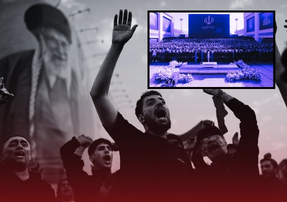
- Emphasizing the priority of confronting Israeli attacks: while portraying the continued violations and threats as the primary factor shaping its position.
- Rejecting any discussion of a negotiation track between Lebanon and Israel: particularly regarding the inclusion of civilians in the “Mechanism” committee, which was described in some speeches as a negative development.
- Maintaining adherence to the “weapons of the resistance”: presenting them as directly tied to the reality of ongoing threats, while linking any internal discussion on the matter to the cessation of Israeli aggression first.
- Highlighting social engagement and openness: notably through participation in the reception of the Pope, reflecting an attempt to project an image of interaction and openness toward Lebanon’s different communities.
- Maintaining an internal mobilizational discourse: including the commemoration of martyrs and affirmations of organizational continuity.
Third: The Position of the Amal Movement
The coverage reflects the presence of the Amal Movement primarily through the role of its leader, Nabih Berri, with emphasis on several key points:
- Prioritizing a ceasefire and addressing Israeli violations as the entry point for any political process.
- Supporting the negotiation track under specific conditions: while stressing its technical nature and rejecting any transformation into a normalization process.
- Maintaining commitment to the institutional role of the state: while emphasizing the importance of the Lebanese army and international resolutions.
- Preserving internal balance: by avoiding escalation within the Shiite community and attempting to regulate media discourse and political messaging.
The coverage highlights Berri’s effort to present himself as a political mediator seeking to balance the requirements of de-escalation with the preservation of what he describes as national constants.
Fourth: The Positions of Shiite Opponents
The coverage reflects the presence of Shiite opposition or alternative positions, expressed through:
- Calls for the exclusive control of weapons by the state and for the implementation of international resolutions.
- Emphasis on integration into the state project and adherence to state legitimacy.
- The promotion of a discourse advocating dialogue instead of armed confrontation.
Political and religious messages also emerged emphasizing the rejection of carrying weapons as a permanent option, alongside calls to address the crisis within the framework of the state.
Fifth: The Positions of Other Political Blocs and Forces
The coverage reflects a clear political divide over several key issues:
The Negotiation Track with Israel
- The government and some political forces expressed support for activating the “Mechanism” committee and pursuing dialogue.
- In contrast, reservations and outright rejection were voiced by other political actors.
The Issue of Hezbollah’s Weapons
International and regional pressure emerged in favor of disarming Hezbollah or placing its weapons under tighter control.
Domestically, positions varied between those calling for the exclusive control of arms by the state and those linking the issue to ongoing security conditions.
The International Role
- A clear American presence was evident in efforts to advance the negotiation track.
- International positions generally supported dialogue and called for de-escalation.
The coverage also reflected a media divide between sources speaking of pressure aimed at preventing war and others focusing on the possibility of further escalation.
Socially
At the social level, indicators of growing public anxiety over the deterioration of the situation became apparent, particularly through the rising demand for housing as a result of ongoing security tensions.