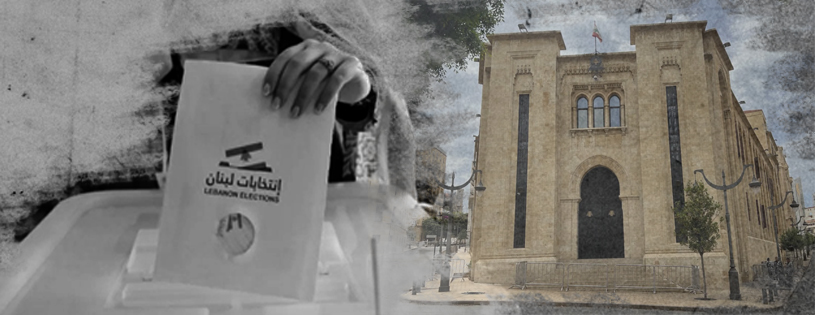
As Lebanon approaches its parliamentary elections, debate is once again intensifying over the position of Shiite women in political life. This discussion unfolds within a partisan–sectarian structure that exercises tight control over the public sphere and confines women to monitored and limited roles. Contrary to superficial assumptions that attribute women’s underrepresentation to a “lack of interest” or “absence of opportunities,” a feminist deconstructive approach reveals the issue to be structural—rooted in the intersection of religious, partisan, and familial power, and in a sectarian system that regulates women’s place and continually reproduces their exclusion.
Suad Joseph’s analysis in Gender and Citizenship in the Middle East highlights how the Lebanese sectarian system reshapes citizens’ rights according to the logic of loyalty to the communal group. In this model, citizenship is anchored in obedience rather than freedom. Such a structure reinforces the constraints placed on women—particularly within sects marked by rigid patriarchal formations—where women are burdened with upholding the “moral symbolism” of the community.
From this perspective, the absence of Shiite women from Parliament is not an incidental occurrence but a direct outcome of a power structure that confines their presence to service-oriented or mobilization roles, while closing off pathways to decision-making.
Ali Hamadeh’s research on South Lebanon shows that Shiite women have participated since the mid-20th century in education and civic work, while politics remained an exclusively male domain.
With the rise of Amal and Hezbollah in the 1980s, women’s presence within party institutions increased, yet remained limited to social, religious, and outreach roles. Lara Deeb documents this dynamic in An Enchanted Modern, demonstrating how women’s participation in Beirut’s southern suburb functions to reinforce the party’s social capital rather than grant women political authority.
Despite the closed political scene within the Shiite community and the dominance of rigid partisan structures, the 2018 and 2022 parliamentary elections witnessed attempts by independent women to enter the race—symbolic breakthroughs in a landscape long perceived as entirely sealed. A number of women put forward their candidacies from outside the system of partisan obedience and traditional leadership networks, challenging norms that confine political decision-making to men.
Although these initiatives remained limited in number and did not translate into parliamentary seats, they were significant political events in themselves. They shattered the illusion of unanimity within the sect and demonstrated that alternatives outside the Shiite partisan duo are not impossible.
These women faced an array of social and political pressures that reflect the nature of the sectarian system itself. The experiences emerging from the South, the Bekaa, and Beirut revealed the high cost borne by women who choose independent candidacy: soft intimidation, smear attempts, family pressure, indirect threats, and coordinated digital campaigns targeting their reputation or “morality” rather than their political platforms.
Election-monitoring reports—such as those issued by LADE—show that women who run outside established alignments face a double resistance: political resistance because they threaten partisan structures, and social resistance because they “deviate” from the roles expected of them within the sect.
Lebanese political forces—chief among them Amal and Hezbollah—reject the adoption of a women’s quota, invoking “constitutional equality.” Yet, reports by Carnegie and LCPS make clear that this rejection is not a defense of equality but an effort to preserve a male-dominated political order that monopolizes parliamentary seats and fears the introduction of an element not fully controlled politically or ideologically.
Within the Shiite sect specifically, the rejection is even sharper, as parliamentary seats are pre-allocated through fixed understandings. Introducing a woman would require removing a man from the circle of partisan loyalty.
The Most Effective Tool for Controlling Women
LADE’s 2022 reports show that political violence against female candidates is not marginal but structural—operating as a deterrent mechanism against any woman who considers entering electoral competition.
Political violence targeting women in elections takes multiple forms, all aimed at preventing them from entering the public arena in the first place. It begins with moral campaigns used to defame the candidate and question her “intentions” or “behavior,” continues with direct intimidation through informal messages hinting at job loss or threats to family members, and extends to organized digital attacks that focus on the candidate’s personal life rather than her political platform.
In many cases, the family also becomes a source of pressure—fearing stigma or the reputational impact of political participation on the household within the local community.
Election-monitoring bodies such as LADE affirm that these practices are not isolated incidents but part of a social–political governance system that continually reminds women that politics is not an open space for them, and that stepping beyond the boundaries of obedience comes with significant personal and social costs.
In her seminal article “Bargaining with Patriarchy,” Deniz Kandiyoti explains how patriarchal systems punish women when they step outside the established order. This applies directly to the Lebanese Shiite context, where women’s political participation is treated as a threat to the moral system and to the legitimacy of male leadership.
The independent female candidate is seen as a danger because she demonstrates the possibility of political life outside the paradigm of obedience—and because she embodies an alternative model to the narrative of the “disciplined woman.”
The upcoming elections may not produce a Shiite woman MP, but the reality of participation has changed. The independent Shiite women who ran in 2018 and 2022 reshaped the image of women within the community and opened the door to a new political narrative.
The rejection of a women’s quota, the intensification of political violence, and the campaigns of smear and intimidation—all are indicators of the system’s fear of losing its monopoly on representation.
Yet, what these candidates initiated marks the beginning of a transformational trajectory in which women’s participation becomes an act of political resistance—not merely an electoral candidacy.
The greatest value of these experiences lies in how they disrupt the system from within and build a new narrative for Shiite women: agents, independent, and courageous in breaking the boundaries of imposed obedience.
The exclusion of Shiite women from politics is closely tied to the nature of Lebanese legislation, which places women in a legally vulnerable position—particularly in matters of marriage, divorce, custody, and inheritance, all of which fall under the authority of religious courts. This system reinforces the perception of women as “dependents” or “minors,” a perception that directly influences their acceptance in decision-making spaces.
Reports by KAFA and Human Rights Watch show that the absence of laws protecting women from domestic, sexual, and political violence makes female candidates especially vulnerable to targeting—particularly within closed partisan environments where religious and social arguments are used to silence them. In this way, the legal system becomes an indirect tool of exclusion, increasing the cost of candidacy for independent women within the Shiite community and placing them before a legal structure that offers them no real protection.
Despite these challenges, women’s entry into political competition has opened a new trajectory within the community. Yet the future of their participation remains contingent upon political and legislative reform that guarantees their rights within both the family and the state.
This raises a pivotal question:
Will the upcoming elections bring meaningful change—through the adoption of a women’s quota and the empowerment of Shiite women to become part of the decision-making process?