(1).jpg)
The relationship between thought and behavior is one of mutual influence. The thoughts a person holds and believes about himself and others are reflected in his behavior and reactions. At the same time, behavior also changes thoughts through experience, practice, and the resulting consequences in real life. Thus, changing thoughts can lead to a change in behavior, and vice versa.
This is the interactive relationship between thought and behavior, and the same applies to reality and the consequences resulting from behavior and thoughts. Here too, the relationship is interactive with reality according to the consequences.
Unlike those who attribute authenticity to their own thoughts and disregard all other beliefs and ideologies, the realistic person is one who gives authenticity to reality, which is known through its tangible effects, and evaluates his own thinking on this basis. It is illogical for a person to continue with his intellectual approach and follow its dictates if the resulting consequences, in reality, lead to undesirable outcomes. This is what happens with those who are bound by blind faith and who see no value in anything other than what they believe, even if reality proves it false. Among these is Hezbollah.
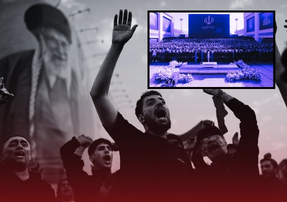
In terms of the principle of religious obligation, and its role in regulating behavior, Hezbollah has linked it to blind obedience to the Supreme Leader, considering complete submission to his decisions a manifestation of faith and loyalty. They have connected this “submission” to the authority of the infallible Imams, viewing the Supreme Leader and his representatives as an extension of that sacred authority. Thus, religious obligation has become a reflection of the will of the Supreme Leader and a means of implementing it. They have long promoted this to people on various cultural, social, and religious occasions.
The words of the former Secretary-General of Hezbollah, Sayyed Hassan Nasrallah, confirm this: “As for the period of the Major Occultation, it is the courageous, competent, knowledgeable, insightful, and decisive Supreme Leader, present among the nation, who determines our divine obligation.” He also linked obligation and obedience, saying: “Religious obligation means responsibility, and responsibility means obedience.” He even went further in an interview, stating that in Hezbollah, “they do not wait for the Supreme Leader to ask them to do something; rather, if they know that it is his wish, they carry it out. Likewise, they do not wait for him to ask them to refrain from something before they refrain; simply knowing that he does not want or does not like something, they do not do it.”
Thus, the process of obligation and obedience eliminates the role of critical thinking or political judgment based on national interest. The Supreme Leader is the one who determines their divine obligation. They follow him step by step and inch by inch,; even if he were to enter a Lizard’s hole, they would follow him there.
Imam Khomeini believed in the principle of acting according to divine obligation, regardless of the necessity of achieving the desired consequences from that action. He used to say, “We are commanded to perform the obligation and duty, and we are not commanded to achieve the consequences,” and “we do not act for the sake of the outcome; we act for the sake of fulfilling the divine obligation.” This is the religious obligation according to him, and the religious obligation is the divine obligation, for there is no obligation except from God.
Following in Khomeini’s footsteps, Hezbollah has proceeded with unwavering conviction. They now make choices they deem appropriate in terms of obligation, regardless of whether the objective is achieved or not, even though these choices may in fact backfire not only on them but on everything in the country. In their view, the consequences are in God’s hands, and He is the one responsible for them, and they have simply fulfilled their duty. This approach can be inspired by numerous speeches by Sayyed Hassan Nasrallah and Sheikh Naim Qassem. It is also prevalent in various aspects of the Party’s cultural activities and is uttered by those responsible for spreading the Party’s culture, such as Sheikh Akram Barakat and others.
According to this way of thinking and this belief, obtaining knowledge is neither necessary nor a prerequisite for the inevitable achievement of the goals they desire when undertaking what must be undertaken for religious or moral reasons, as these goals may or may not be achieved. This contradicts the conduct of the Imams according to Twelver Shiites, who were mindful of the repercussions of the actions they would take. Therefore, they neither participated in nor called for revolutions against the existing ruling after the Battle of Karbala, despite the numerous Shiite revolts that occurred during the Umayyad and Abbasid periods, most of which were led from within the Alid family. The Imams acted in this way based on their prior understanding of the consequences that would result from such actions.
This was also the case with the 2006 July War, where they saw it as their religious obligation to liberate the Lebanese prisoners held in Israeli prisons, regardless of the consequences of the actions they might take for this purpose. This led to the death, destruction, and political repercussions that followed, not least of which was the Resolution 1701. The same thing happened in the recent war, which began on October 08, 2023, as a war of attrition for Gaza, and ended with an exchange of fire between “Arrows of the North” and “Mighty Ones” from September 23, 2024, until November 27 of the same year.
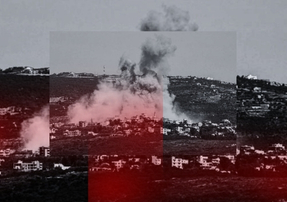
Based on the concept of obligation, we can understand Hezbollah’s justifications for entering the war of attrition for Gaza just one day after it began on October 07, 2023, even though they repeatedly stated that they were unaware of it and were surprised by what happened. They considered that they had fulfilled their religious and moral obligation in this matter and were not necessarily required to achieve the desired consequences from this intervention. The consequence was a second historical Shiite disaster, approximately 100 years after the first one, which occurred after the French Colonel Nieger’s invasion of Jabal Amel following the Wadi al-Hujeir conference and its resolutions in 1920. This new disaster resulted in the killing of thousands of civilians and fighters and the wounding of many more, including those who lost their sight and limbs. It also resulted in the complete destruction of entire southern border villages, extensive damage to the villages in the hinterland, the Beqaa, and the Southern Suburb of Beirut (Dahieh), and a mass exodus of people, all in addition to the enormous economic losses.
In the recent war, Hezbollah adopted this ideological option, disregarding other religious and jurisprudential principles that follow a different path. They chose the path of religious obligation, disregarding the rules of “conflict of interest,” which has been the practice of Shia jurists throughout history, and which they themselves have consistently employed for years in matters with less harmful consequences, such as when confronting the demands of people striving for a just and inclusive State based on citizenship and free from corruption, theft, and other such things. But there is little one can do in the face of a ready-made answer, whether declared or implied: We are the ones who diagnose and identify the religious obligation and the conflict of interest!
Thus, according to their understanding, which disregards the consequences, the religious obligation associated with obedience becomes desirable in itself, regardless of the consequences. Here, the religious obligation is no longer a path to desired consequences, to a sought-after goal, but rather it has become the desired end and the cornerstone of authenticity in thought and action. This is their philosophy on the subject of moral and religious commitment. This approach shows a disregard for the logic of life and a willful blindness to the laws of reality, which spare no one. Any action taken by anyone, especially someone in a position of responsibility, without a clear understanding of the consequences, is recklessness. It reveals a lack of wisdom and rationality in that person’s character. A wise and rational person weighs the consequences and assesses the impact of a decision.
On the other hand, stemming from their disregard for the real external consequences, the concept of defeat has no place in the ideology of Hezbollah. Victory is contingent upon fulfilling one’s religious obligation and assuming responsibility, regardless of the consequences, even if they are catastrophic and lead to death, or “martyrdom” according to Hezbollah’s culture. As for what others perceive as defeat, according to their way of thinking, only those who view things from a materialistic perspective and lack true insight would consider it a defeat. It is therefore not surprising that the culture that glorifies decisions that have led to devastating human and material losses continues to prevail among them and in their environment. For it was Nasrallah who said, “We are not defeated. When we win, we win, and when we are martyred, we rise victorious.”
Yes, this is the public discourse culture of Hezbollah, directed at its own audience, even though its repercussions affect the general public, who are not consulted about the fateful steps it takes, steps that leave their mark on the entire country. This is something that no other Lebanese, not even those Shiites who do not adhere to its ideological and loyalist path, agree with. It is a discourse that reveals its political and ideological behavior, which is based on sacred, unseen belief. It is an ideology that makes the rest of the Lebanese, those who do not adhere to its doctrine, prisoners of its choices, both now and in the future.
This is what happens to us in Lebanon, when our decisions are in the hands of those who plant because it is their obligation to plant, and they do not necessarily expect a harvest. And this is what happens to us when failure always becomes success, when responsibilities are placed on God, and the consequences are considered fate, and religious obligation becomes an act of worship.