.jpg)
This analysis does not aim to address all Lebanese militias and groups benefiting from the informal economy. However, in the aftermath of October 7th, a re-evaluation of issues impacting Lebanese society has become essential, particularly those connected to entities involved in the «Support Front,» specifically Hezbollah.
Hezbollah is defined as an independent militia that has maintained influence within the Lebanese parliament, even though the balance of power has shifted slightly following the recent «Support Front.» Hezbollah has developed an unofficial economy, allowing it to create a parallel space to the state's economic system.
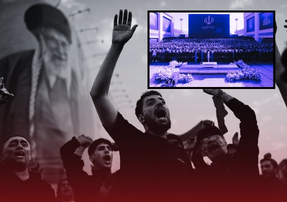
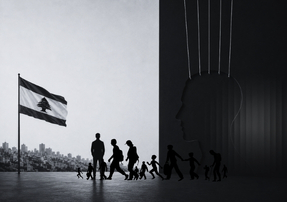
This parallel economy has enabled Hezbollah to cultivate a segment of the population living outside the formal Lebanese system, often referred to as »shadow citizens.« These individuals have a complex relationship with the party, drawing political legitimacy from it while simultaneously undermining the legitimacy of the Lebanese state.
Hezbollah has fostered a model of citizenship managed from the periphery rather than the center, based on absolute obedience and loyalty. Hezbollah has often exploited the discontent of broad segments of the Lebanese population, particularly within its Shia base, transforming economic and social anger into political capital serving its agenda.
Hezbollah has leveraged its political position and parallel economic network to tighten its grip on decision-making. It can now make critical decisions, such as those related to war and peace, independently of the weakened state, as demonstrated in the recent «Support Font.»
Hezbollah engages in both legal and illicit economic activities. It manages multiple networks, including institutions used to cover and finance more shadowy operations, such as money laundering and drug trafficking outside Lebanon, alongside domestic NGOs that support it militarily and support the beneficiary Shia social classes.
These activities provide livelihoods for party members and attract new recruits, while also providing social services to supporters, especially in areas under its control, such as Southern Lebanon, the Southern Suburb of Beirut, and parts of the Bekaa Valley. Consequently, «shadow citizens» increasingly depend on Hezbollah's diverse institutions, at the expense of official state institutions.
Ideologically, members of this militia believe that the managed economic activities are not merely a means of survival but a religious duty under the banners of jihad and resisting the enemy, leading up to the larger project of building the state of Imam Mahdi.
The question arises: Is Hezbollah truly waging a battle against imperialism as it claims, or is it reproducing it? How can its economic policies be interpreted from the perspective of recycling funds and reintegrating the Shia community within different power dynamics?
On the night of October 16, 2025, Israel launched a series of raids targeting a site belonging to an environmental association known as "Green Without Borders," claiming that Hezbollah uses the association as a cover to rebuild infrastructure belonging to it in southern Lebanon under a civilian guise.
The U.S. Office of Foreign Assets Control (OFAC) has previously imposed sanctions on this association and its head, noting that it has provided services to Hezbollah and its military operations along the Blue Line.
«Green Without Borders» was established in 2013 with the stated goal of protecting the natural environment, including reforestation activities. However, several reports later revealed that the association is used as a front for military activities such as storing weapons and military equipment in secret warehouses and tunnels spread across more than 12 locations in southern Lebanon.
Some local disputes have erupted as a result of Hezbollah's encroachment on private property, in addition to converting areas of public land into restricted zones.
In a related context, the U.S. Treasury Department accused Wafiq Safa, the security official in Hezbollah, in 2019, of exploiting Lebanese ports and crossings to facilitate the movement of Hezbollah officials and the smuggling of funds and weapons. Previous reports indicated that he was injured in the recent Israeli attack on Lebanon.
In September 2025, Syrian sources indicated that Hezbollah has intensified its activity on the Syrian-Lebanese border, with the aim of smuggling light and medium weapons and transferring them from Syrian territory after the fall of the Bashar al-Assad regime. The same source mentions that Hezbollah relies on local smuggling networks active in smuggling fuel and food, and estimates that their number is large, making it difficult to prosecute them.
The source also pointed out that the warehouses that belonged to Hezbollah in Damascus during the era of Bashar al-Assad have become a target for local smuggling gangs, some of which are associated with former members of the agencies affiliated with the Bashar regime, and are now working in coordination with Hezbollah within a shadow network, in an attempt to recover part of the weapons to the Lebanese interior.
Going back to the past and to understand more broadly, specifically in 2008, an initiative of the American Drug Enforcement Administration (DEA) was launched known as Project Cassandra. This initiative aimed to track and disrupt Hezbollah's financing networks, which it claims are involved in the international drug trade in addition to money laundering. Despite uncovering many networks that operated in several countries around the world, including South America, Europe, and even Africa, the project sparked wide controversy that raised questions about the slowness of its work as a result of the political conditions that the United States was witnessing and its impact on regional issues, especially the issues related to the Iranian nuclear file.
Project Cassandra focused on Hezbollah's activities in South America and claimed that it had uncovered the involvement of many individuals affiliated with Hezbollah with drug cartels responsible for promoting huge quantities of cocaine in the American and European markets. The financial profits are collected and transferred through a complex financial network, where millions are transferred through intermediaries and financial corridors to the Middle East. A large part of these proceeds are laundered in Lebanon with the assistance of a network that includes banks and individuals in Lebanon.
The economic embargo imposed on Iran has pushed Hezbollah to expand its financial sources, increasing its activity in Latin America and engaging in money laundering and drug trafficking, especially in the tri-border area between Paraguay, Brazil, and Argentina.
Over the years, Hezbollah has built huge operational and financial networks and forged alliances with transnational criminal organizations, allowing it to access sources of funding that go beyond the scope of international restrictions imposed on it and the Iranian state.
In September 2025, the United States delivered a significant blow in the Caribbean Sea off the coast of Venezuela, stating that it aimed to dismantle what it described as the growing "narco-empire" of both Hezbollah and the Islamic Republic of Iran in Venezuela. According to U.S. authorities, the «Tren de Aragua» organization operates in coordination with the «Cartel of the Suns,» a network comprising an elite group of Venezuelan military officials accused of transporting cocaine in collaboration with Hezbollah. The report indicated that Hezbollah's role, although not publicly visible, remains pivotal within these networks, as it undertakes essential financial and logistical tasks that cannot be ignored.
Some reports claim that Hezbollah has recently tended to use cryptocurrencies, especially USDT, as an alternative means of transferring funds. Evidence shows that Hezbollah is increasingly using digital assets through intermediaries and companies directly or indirectly linked to it.
In 2023, the U.S. Office of Foreign Assets Control (OFAC) imposed sanctions on a company called BCI Technologies C.A. owned by Samir Akil Reda, a man holding Colombian and Lebanese citizenships. The office claimed that Samir is accused of financing networks affiliated with Hezbollah and is known as a member of Hezbollah, and was previously associated with drug trafficking. The sanctions also included his brother Amer Akil Reda, a Hezbollah leader who oversees plans related to exporting coal from the border triangle between Argentina, Paraguay, and Brazil.
These sanctions indicate the involvement of Hezbollah members in the unofficial cryptocurrency markets, especially in Venezuela and other areas of Latin America.
The office also added the Huion group in Cambodia to the lists of American sanctions, for its role in laundering billions of dollars of illicit proceeds, including funds related to the Yemeni Houthi groups supported by Iran, which shows the extent of the unofficial financial networks that link these parties together.
U.S. authorities believe that Nazem Ahmad manages a complex business network in cooperation with his partners, aimed at obtaining valuable works of art from American artists and galleries, in addition to benefiting from services related to diamond appraisal in the United States.
According to the American Office of Foreign Assets Control (OFAC), the value of the works of art and those related to diamonds that passed through the American financial system amounted to about $160 million. The office indicates that Ahmad is linked to high-ranking members of Hezbollah, and his activities range from real estate development and international diamond trade, as well as his participation in buying and selling works of art at the international level.
In 2023, British authorities, at the request of the United States, arrested one of Ahmad's partners accused of involvement in such operations. The office also mentioned Ahmad's involvement in smuggling «blood diamonds» and that he stores part of his money in expensive works of art.
It should also be noted that Hezbollah's diamond smuggling network extends to the African continent through merchants and companies, most of which are linked to members of Hezbollah. The talk about the conflict between Hezbollah and Israel that broke out in recent years in Africa cannot be limited to this article.
The economy cannot be considered an independent base that determines what is above it from structures, as is the case in the traditional mechanical Marxist understanding, and as the Slovenian philosopher Slavoj Žižek says, the economy is not an entity in itself, but rather it is distributed within various social structures such as politics through power relations, and culture embodied in symbols and ideology with its meanings and representations, and in law as well.
Slavoj Žižek describes the relationship between economics and politics as a vase or two faces: either you see two opposite faces or you see a vase in the middle. You cannot see only one thing at the same moment. In the same way, when we observe political phenomena, we do not see the economic structure directly, and when we try to focus on the economic structure, we neglect the ideological and political structures that reshape it. For this reason, linking economics with politics and others urges us to a broader understanding of social situations.
In the context of Hezbollah, the economy that it has sought to build over the years can be seen as an ideological fantasy, presenting itself as an entity resisting imperialism, but at the same time deeply involved in financial and smuggling networks across borders, which it uses to build its military capabilities and also to tighten its control over its social strata.
From this reality, a class of the «Nouveau riche», that is, the new rich, has arisen, which has no roots in the Lebanese aristocratic class, but rather accumulated its rapid wealth through the shadow economy, that is, through unofficial paths linked to Hezbollah's influence. It must be noted that this phenomenon is not exclusive to the Shia sect, as Lebanon has known the emergence of a class of new wealthy people from other sects under different circumstances, but the focus here on the Shia classes is related to the subject of the article.
Hezbollah has also used its economy as an authoritarian, political, and cultural tool. It has established economic support cards, such as the Al-Nour and Al-Sajjad card in its areas of influence, to enable families to purchase goods at low prices, often imported from Iran. It also provided large discounts on a wide range of foodstuffs, which allowed Hezbollah's stores to offer competitive prices compared to the market. In terms of public health, access to the drug market has become easier thanks to the presence of a health minister usually associated with Hezbollah, which enabled it to provide many medicines, as well as pumping Iranian medicines into the market. It also provided educational services through its affiliated educational centers, as well as providing some school and university grants, which made it an attractive option, especially for families affected by the stifling economic crisis that Lebanon is suffering from.
Providing these daily needs was met with political loyalty, creating an effective network of subjugation, and thus keeping the social classes affected by the economic collapse within a circle of mutual dependence. Slavoj Žižek refers in this context to the concept of fetishism, as these services, funded by the shadow economy and illicit money, act as tools of attraction that create unconscious loyalties.
These services that act as a fetish tempt the social classes and link their identity to Hezbollah, so that loyalty becomes part of daily interaction. These «fetishes« also extend to include religious symbols, where Hezbollah links its religious narrative between preparing for the establishment of the Mahdi's state and the necessity of building this economy and absolute loyalty.
Today, we are witnessing a new stage that raises great questions in light of the erosion of the old fetishes, especially with the collapse of Hezbollah's military structure following the recent support war and the economic blockade imposed on it by several countries. However, based on Žižek's thesis, it is difficult to completely dismantle ideological illusions, as it is difficult for them to disappear completely. Therefore, the challenge lies in reorienting these fetishes toward new ideological goals, and here the role of the Lebanese state is manifested: either it fails in that, or it succeeds in reintegrating the Shia classes within its institutions and its social and economic structure.